


When assessing industrial chemicals, safety professionals frequently ask about exposure limits. Formaldehyde is a highly toxic, volatile organic compound (VOC). Major global health and environmental organizations classify it as a known human carcinogen. Despite these severe hazard classifications, the substance remains a foundational chemical. Manufacturers heavily utilize it in resin production, pressed-wood products, and medical fields. Managing chemical risks requires strict adherence to complex safety regulations. Unmanaged exposure can lead to severe health consequences. This article transitions from basic hazard awareness to a strategic framework. Environmental Health & Safety (EH&S) and procurement teams will learn how to evaluate compliance effectively. We will explore how to manage operational risks and implement robust safety solutions across your organization. You will discover actionable steps to protect your workforce. We also detail specific handling protocols for liquid solutions.
Toxicity Classification: Formaldehyde is a known human carcinogen, with risks scaling by concentration and duration of exposure.
Regulatory Thresholds: Strict adherence to OSHA’s Permissible Exposure Limit (PEL) of 0.75 ppm is a legal requirement, not a guideline.
Material States: Managing liquid formaldehyde (formalin) presents different operational risks (contact/spills) compared to its gaseous state (inhalation/off-gassing).
Strategic Mitigation: Continuous air monitoring, engineered ventilation, and proper PPE are the primary evaluation criteria for ensuring operational safety.
Major health organizations agree on the dangers of this chemical. The Centers for Disease Control and Prevention (CDC), the Environmental Protection Agency (EPA), and the American Cancer Society maintain a strong scientific consensus. They explicitly define its severe toxicity profile. You cannot treat this chemical as a standard nuisance irritant. The scientific community recognizes it as a confirmed human carcinogen.
Understanding the difference between immediate and long-term effects helps facilities prioritize safety measures. Human bodies react violently to sudden spikes in concentration. They also suffer cumulative damage over time.
Acute Exposure: Immediate symptoms include severe eye, nose, and throat irritation. Workers often experience sudden respiratory distress. Direct skin contact frequently causes painful dermatitis and blistering.
Chronic Exposure: Long-term inhalation leads to permanent respiratory impairment. Decades of research link ongoing exposure to rare cancers. These include myeloid leukemia and nasopharyngeal cancer.
Toxicity is inherently dose-dependent. A higher concentration dictates a faster onset of severe symptoms. You must establish accurate workplace measurement as your baseline safety strategy. Guesswork has no place in chemical management.
Common Mistakes in Symptom Evaluation
Many floor managers dismiss early warning signs like watery eyes or coughing. They wrongly assume workers just have seasonal allergies. Ignoring acute symptoms allows chronic exposure to compound over time.
Industrial leaders face a massive business problem regarding exposure. Unmanaged chemical risks lead directly to regulatory fines. They cause unexpected operational downtime. Furthermore, they expose companies to severe employer liability lawsuits. You must actively identify where exposure happens inside your facility.
Emissions originate from several distinct processes. You must map these sources to control them effectively.
Manufacturing Off-Gassing: Facilities producing pressed-wood products generate massive VOC emissions. Glues, adhesives, and resin manufacturing processes continually release hazardous vapors into the workspace.
Healthcare and Laboratory Environments: Medical professionals use chemical stabilizers daily. Tissue preservation, embalming, and sterilization protocols rely heavily on strong chemical agents.
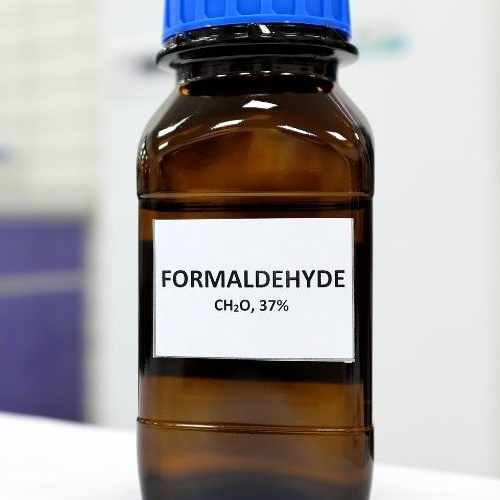
The chemical presents two distinct hazard profiles depending on its physical state. You must treat volatile gas emissions differently from bulk liquid storage. Volatile gas off-gassing creates an invisible inhalation hazard. It spreads quickly through shared ventilation systems. Conversely, handling, storing, and transporting Liquid Formaldehyde brings immediate contact risks. These aqueous solutions typically contain 37% active chemical by weight. Liquid spills require entirely different emergency protocols than gas leaks.
You must rigorously evaluate your current operations against legal standards. Regulatory bodies do not accept ignorance as an excuse for non-compliance. Your EH&S team must navigate multiple overlapping jurisdictions.
The Occupational Safety and Health Administration (OSHA) enforces strict atmospheric limits. You must keep ambient concentrations below these legal thresholds.
Regulatory Standard | Concentration Limit | Compliance Trigger and Operational Impact |
|---|---|---|
Permissible Exposure Limit (PEL) | 0.75 ppm | Calculated as an 8-hour Time-Weighted Average (TWA). Exceeding this violates federal law. |
Short-Term Exposure Limit (STEL) | 2.0 ppm | Measured over any 15-minute period. Protects workers during chemical transfers. |
Action Level | 0.5 ppm | Triggers mandatory medical surveillance and required employee safety training. |
Facilities face secondary compliance layers beyond basic OSHA rules. California’s Proposition 65 demands strict consumer warnings. The EPA heavily regulates structural composite wood products. They mandate specific emission standards and dictate precise disposal protocols for hazardous waste. You must document your waste manifests thoroughly.
Building a robust safety infrastructure requires shortlisting specific mitigation technologies. We categorize these solutions into monitoring devices and engineered controls.
You cannot fix what you do not measure. Monitoring technology determines how quickly you respond to a leak.
Comparison Chart: Air Monitoring Solutions
Technology Type | Scalability | Data Logging | Sensor Drift Risk |
|---|---|---|---|
Passive Badges | High (easy to distribute) | Poor (requires lab analysis) | Low (single-use nature) |
Active Real-Time Sensors | Moderate (requires installation) | Excellent (continuous audit trails) | Moderate (requires regular calibration) |
Passive badges work well for baseline sampling. However, active real-time sensors provide immediate alerts. They ensure data logging for compliance audits. You must regularly calibrate active sensors to prevent sensor drift.
Ventilation serves as your primary defense mechanism. Source capture exhaust systems remove vapors before they reach the worker. Fume hoods and downdraft tables capture heavy off-gassing effectively. For larger operations, you need chemical scrubbing systems. Specialized activated carbon filtration strips the VOCs from exhaust air.
Do not base procurement decisions purely on initial purchase prices. Look for verifiable third-party sensor accuracy. Ensure the abatement technology integrates smoothly with your existing HVAC infrastructures. A disjointed system creates dangerous dead zones in air circulation.
Facilities actively using the chemical need highly practical implementation steps. Operational safety requires strict adherence to physical handling rules.
You must utilize temperature-controlled environments. Cold storage prevents dangerous chemical polymerization. Heat causes excessive vaporization, turning a liquid hazard into an airborne crisis. You must also install secondary containment systems. These physical barriers catch leaks before they reach floor drains.
Standard safety glasses offer inadequate protection. You must justify and enforce the necessity of advanced Personal Protective Equipment (PPE). Workers require chemical-resistant aprons to prevent skin absorption. They need specialized goggles to stop vapor burns to the eyes. Most importantly, you must provide full-face respirators. These respirators must use specific cartridges rated for this exact chemical.
Best Practices for PPE
Always implement a strict fit-testing program for full-face respirators. Inspect cartridges daily. They lose their filtration capacity rapidly once exposed to ambient air.
Your team needs an actionable framework for containing liquid spills. Panic leads to poor decision-making during an emergency. First, evacuate unprotected personnel. Next, responders must use neutralizing absorbents. Standard clay absorbents do not neutralize the off-gassing vapors. Finally, you must safely dispose of the resulting hazardous waste according to EPA guidelines.
Forward-thinking organizations constantly evaluate safer material substitutes. Replacing a hazardous chemical eliminates the risk entirely.
Assess the viability of less toxic alternatives against your performance criteria. Medical facilities often test glutaraldehyde for sterilization. Manufacturers evaluate quaternary ammonium compounds. You must weigh these alternatives against production speed and product quality requirements.
You need a structured plan to upgrade facility safety. Follow these sequential steps to establish a compliant environment:
Conduct an immediate industrial hygiene audit: Hire an independent hygienist to measure current exposure levels across all shifts.
Upgrade from periodic sampling to continuous monitoring: Install active sensors near high-risk emission zones.
Review and refresh employee HazCom training: Ensure every worker understands the specific symptoms of exposure and spill response duties.
Formaldehyde remains a highly toxic but necessary industrial chemical.
Strict adherence to OSHA’s 0.75 ppm PEL prevents severe legal and financial penalties.
Handling liquid solutions requires distinct strategies compared to managing gaseous emissions.
Industrial risks are manageable through rigorous compliance and active engineered controls.
Do not wait for a regulatory inspection to discover safety gaps. Schedule a professional exposure assessment this quarter. We strongly encourage you to request a demo for enterprise-grade continuous air monitoring solutions today.
A: Yes, in industrial contexts, they are closely related. Formalin is an aqueous solution made by dissolving formaldehyde gas into water. It typically contains 37% of the chemical by weight. Manufacturers often stabilize formalin with methanol to prevent polymerization during storage.
A: Sensitive individuals experience acute symptoms at very low levels. Eye irritation and airway discomfort can begin at concentrations as low as 0.1 to 0.5 ppm. This highlights why the OSHA Action Level triggers at 0.5 ppm.
A: Avoid consumer-grade testing kits due to their low accuracy. You must use NIOSH-compliant industrial hygiene monitoring. Professional hygienists deploy active air sampling pumps or install real-time continuous monitoring sensors for legal compliance.
A: No. Standard N95 masks only filter solid particulates and droplets. They do not filter hazardous gases. Proper protection requires a half-mask or full-face respirator equipped with specific, color-coded chemical cartridges designed for VOCs.


