
Views: 0 Author: Site Editor Publish Time: 2026-08-12 Origin: Site


Industrial-grade Hydrogen Peroxide (H2O2) serves as a highly effective, versatile Oxidizing Chemical across modern manufacturing. Industries today face intense regulatory pressure. They must rapidly replace halogenated chemicals, such as chlorine, to meet strict environmental standards. Traditional oxidizers often leave behind toxic byproducts. These residues demand expensive downstream cleanup and pose severe ecological risks. You need a sustainable alternative.
Hydrogen peroxide solves this challenge directly. It degrades into only water and oxygen. This unique trait eliminates hazardous residue entirely. Our article provides chemical engineers, procurement officers, and plant managers with a vital technical framework. You will learn how to evaluate, specify, and safely implement this powerful chemical in large-scale operations. We will explore physical properties, industrial applications, efficacy metrics, and strict handling requirements. This knowledge ensures you maximize process efficiency while maintaining absolute safety compliance.
Hydrogen peroxide is a powerful oxidizing chemical whose only decomposition products are water and oxygen, eliminating costly downstream residue cleanup.
Primary industrial applications include pulp and paper bleaching, wastewater treatment (Advanced Oxidation Processes/Fenton’s reagent), and chemical synthesis.
Evaluating the total cost of ownership requires factoring in storage infrastructure (vented containers, compatible materials) alongside baseline chemical costs.
Selecting the right concentration (typically 35% to 70% for industrial use) and grade (standard, food, electronic) is critical for process efficiency and safety compliance.
Hydrogen peroxide exhibits an exceptionally high oxidation potential. Its molecular structure contains a weak, highly reactive peroxide bond (O-O). The cleavage of this specific bond drives rapid oxidation reactions. When it encounters organic or inorganic pollutants, the bond breaks easily. This action generates reactive oxygen species. These species strip electrons from target molecules. This electron transfer fundamentally degrades the contaminant structure. It operates faster and more aggressively than many conventional alternatives.
You must contrast hydrogen peroxide against traditional oxidizers. Sodium hypochlorite and potassium permanganate dominate legacy systems. However, sodium hypochlorite generates toxic chlorinated byproducts. Potassium permanganate leaves behind heavy metal sludge. Both require secondary remediation steps. Hydrogen peroxide offers a zero-toxic-byproduct profile. Upon completion of the oxidation process, it yields only pure water (H2O) and oxygen gas (O2). This green chemical footprint simplifies environmental compliance. It allows facilities to meet stringent discharge limits effortlessly.
Facility integration requires precise engineering data. You must design pumps, piping, and storage tanks around specific physical metrics. Concentration levels drastically alter density, freezing points, and boiling points. Engineers rely on these baseline metrics to size metering pumps and calibrate thermal control systems.
Physical Properties of Standard Industrial Solutions
Property parameter | 35% Concentration | 50% Concentration |
|---|---|---|
Density (at 20°C) | 1.13 g/mL | 1.20 g/mL |
Freezing Point | -33°C | -52°C |
Boiling Point | 108°C | 114°C |
Dynamic Viscosity | 1.11 mPa·s | 1.17 mPa·s |
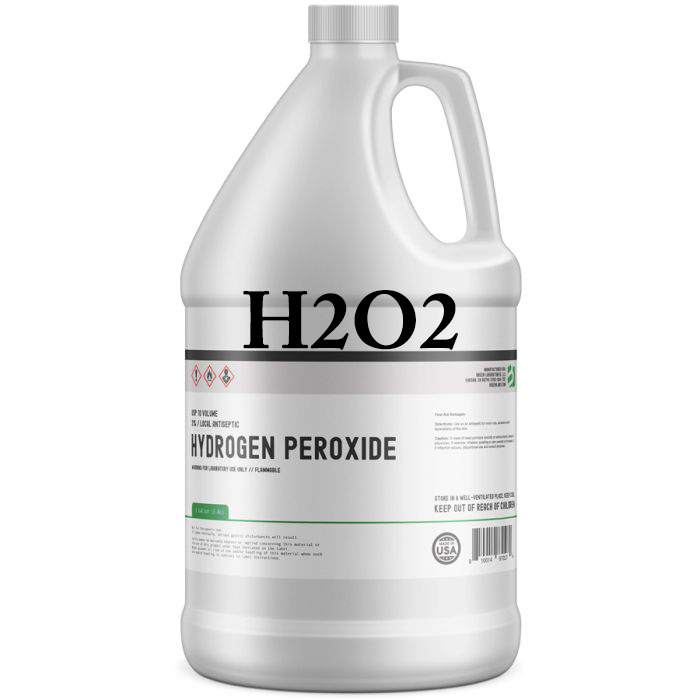
The pulp and paper sector relies heavily on this chemical. It plays a foundational role in totally chlorine-free (TCF) bleaching sequences. It also supports elemental chlorine-free (ECF) methods. Manufacturers use it to brighten mechanical and chemical pulp. The chemical protects delicate cellulose fibers from degradation. This maintains paper strength while achieving high brightness stability. Furthermore, replacing chlorine directly reduces effluent toxicity in paper mill discharge.
Wastewater management utilizes advanced chemistry to meet environmental standards. Facilities apply Advanced Oxidation Processes (AOPs) to degrade recalcitrant organics. AOPs generate highly reactive hydroxyl radicals. You can also deploy Fenton’s reaction for targeted pollutant destruction. This involves combining the solution with ferrous iron catalysts. It breaks down complex, toxic molecules into harmless components. Additionally, treatment plants use it for rapid odor control. It oxidizes hydrogen sulfide rapidly, eliminating noxious gas emissions.
Chemical producers depend on it as a versatile reagent. It drives commercial epoxidation and hydroxylation reactions. For example, manufacturers use it to synthesize propylene oxide. This is a critical building block for polyurethane plastics. It also functions as an effective initiator in polymer production. The chemical triggers polymerization reactions without introducing foreign metal contaminants into the final plastic resin.
Food safety requires absolute sterility. Aseptic packaging lines use vaporized or liquid high-purity grades for sterilization. Machines spray or vaporize the chemical onto packaging materials. This treats PET bottles, foil pouches, and paper cartons. Rapid heat then flashes off the liquid. It kills all microbial life instantly. Because it decomposes into harmless water vapor and oxygen, it never compromises food integrity.
You must define strict success criteria before deployment. Engineers establish performance baselines to measure true chemical efficacy. Reaction speed dictates the necessary size of treatment vessels. You must calculate the exact required dosage per ppm of target contaminant. These calculations prevent chemical waste. Furthermore, final effluent compliance serves as the ultimate metric. The treatment must consistently hit local discharge parameters under varying load conditions.
While this chemical acts powerfully, it rarely works alone for complex organics. Maximizing its efficacy often requires supplementary process adjustments. Operators frequently modify system pH to optimize reaction environments. Some facilities introduce ultraviolet (UV) light to forcefully cleave the peroxide bonds. This generates massive amounts of hydroxyl radicals. Alternatively, you might add transition metal catalysts to initiate specific degradation pathways. Process designers must factor these necessary catalysts into the overarching system architecture.
Industrial concentrations demand profound respect. You must adhere strictly to global safety guidelines. Direct skin or eye contact causes severe, immediate chemical burns. Tissue damage occurs within seconds of exposure. Inhalation of vapors deeply irritates the respiratory tract. Occupational safety standards specify rigid exposure limits. The Permissible Exposure Limit (PEL) remains strictly at 1 ppm over an eight-hour shift. Immediate first-aid protocols require extensive flushing of affected areas with massive volumes of water.
The chemical carries significant exothermic decomposition risks. It is naturally unstable when exposed to certain triggers. Catalytic decomposition occurs rapidly upon contact with common contaminants. You must strictly avoid heavy metals, dirt, and dust. High pH environments also trigger rapid breakdown. This decomposition releases oxygen gas and heat simultaneously. In a sealed container, this rapid gas generation causes catastrophic over-pressurization. It can easily rupture tanks and piping systems.
System design dictates long-term safety. You must select approved materials for all storage and piping.
Primary Storage Materials: Use highly polished 316L stainless steel for bulk tanks. High-density polyethylene (HDPE) suits smaller totes. Polytetrafluoroethylene (PTFE) provides excellent gasket and seal compatibility.
Mandatory Passivation: You must chemically passivate all metal surfaces. This removes free iron molecules that would otherwise trigger decomposition.
Pressure Relief: Install pressure relief valves on all rigid storage vessels. You must use vented caps on all transport drums and totes.
Containment: Construct secondary containment dikes around all storage areas to manage accidental spills.
Government agencies regulate transport and storage heavily. DOT classifications label concentrations above 8% strictly as hazardous oxidizers. OSHA demands comprehensive labeling and rigorous employee safety training. Facilities storing bulk volumes often trigger specific environmental reporting thresholds. You must consult local fire codes regarding the maximum allowable storage quantities inside enclosed buildings.
You must compare standard industrial strengths carefully. Markets typically offer 35%, 50%, and 70% concentrations. Choosing the right strength involves balancing logistics against plant safety. Higher concentrations offer distinct freight savings. You ship less water and more active chemical. However, higher strengths drastically decrease handling safety. A 70% solution poses severe fire and explosion risks if contaminated. Most standard wastewater and paper operations default to 35% or 50% solutions to balance these factors.
Chemical grades vary based on distinct manufacturing purity standards.
Standard/Technical Grade: This serves best for wastewater treatment and general pulp bleaching. Manufacturers add proprietary stabilizers to prevent premature degradation during transport.
High-Purity/Electronic Grade: Semiconductor manufacturing requires this specialized variant. It features ultra-low trace metal limits, often measured in parts per trillion.
Food/Aseptic Grade: Chemical companies engineer this specifically for direct food contact. It utilizes FDA and EPA-compliant stabilizers suitable for packaging sterilization.
Sourcing involves more than checking the lowest unit price. You must evaluate regional supply chain stability. An unreliable supplier can shut down your entire treatment process. Look for vendors who offer robust technical support. They should help you design custom dosing systems tailored to your exact needs. Assess their bulk delivery capabilities carefully. Determine if they reliably deliver via small totes or if they can manage large-scale iso-tanks.
Adopting hydrogen peroxide represents a strategic move toward sustainable, high-efficiency oxidation. It empowers modern facilities to eliminate toxic byproducts while achieving aggressive operational targets. However, successful implementation hinges entirely on rigid safety protocols. You must ensure strict material compatibility across all infrastructure. Matching the exact chemical grade and concentration to your specific process requirement guarantees optimal results.
Take proactive steps to modernize your treatment processes today. Download a comprehensive technical data sheet (TDS) for specific physical metrics. Request a professional safety consultation to audit your current storage infrastructure. Contact technical sales engineers for process-specific dosing recommendations and start optimizing your chemical applications.
A: Industrial solutions typically maintain stability for 12 months under proper storage conditions. Manufacturers add chemical stabilizers to prevent breakdown. However, these stabilizers degrade slowly over time. You should store the chemical in cool, well-ventilated areas away from direct sunlight to maximize shelf life.
A: No. You must never mix it indiscriminately. It reacts violently with incompatible substances. Strict warnings apply against mixing it with organics, transition metals (like iron or copper), and strong bases. These mixtures can trigger explosive decomposition and rapid heat generation.
A: You must dilute the chemical heavily with large volumes of water. Depending on the concentration, you may need to neutralize it cautiously before discharge. Always conduct disposal procedures in strict accordance with local environmental regulations to prevent sewer system damage.
A: Pharmacy solutions contain a weak 3% concentration designed for minor topical use. Industrial solutions range from 35% to 70%. These high concentrations are highly corrosive and dangerous. They require specialized handling, extreme regulatory compliance, and industrial-grade personal protective equipment.


