
Views: 0 Author: Site Editor Publish Time: 2026-08-12 Origin: Site


The natural decomposition of Hydrogen Peroxide is not merely a chemical inevitability. It represents a critical supply chain and safety variable for commercial buyers. Unmanaged degradation leads to rapid loss of product efficacy. It also causes significant financial waste. More importantly, it creates severe safety hazards. These hazards include dangerous pressure buildup and combustion risks within containment vessels.
Properly evaluating a commercial supply requires understanding these decomposition triggers. You must identify the stabilizing technologies manufacturers use. You also need to know the specific infrastructure required to store it safely. In this guide, we explore the thermodynamic mechanisms behind chemical degradation. We will unpack the critical variables accelerating this process. You will learn how to evaluate commercial stabilizers. We will also detail mandatory facility requirements for safe bulk storage. By the end, you will know exactly how to audit your suppliers and logistics operations.
Hydrogen peroxide naturally degrades into water and oxygen, driven by thermodynamic instability.
Temperature, UV light, pH levels, and transition metal contaminants are the primary accelerators of decomposition.
Commercial grades require specific chemical stabilizers, requiring buyers to balance shelf-life with application purity.
Safe bulk storage necessitates specialized infrastructure, including passivated materials and vented containment systems.
Supplier selection should heavily weigh batch-testing transparency and transport vessel preparation.
Chemical degradation is an ongoing, irreversible physical process. It begins the moment the manufacturer produces the chemical. Understanding this process requires looking closely at the underlying thermodynamics.
The fundamental breakdown is an exothermic reaction. The chemical equation is simple: 2H2O2 → 2H2O + O2. This means two molecules break apart to form two molecules of water and one molecule of oxygen gas. This reaction releases heat. The release of heat further accelerates the breakdown cycle. It is a self-feeding loop. Once it begins rapidly, it becomes difficult to stop.
The physical consequences of this reaction are severe. The release of oxygen gas expands rapidly in confined spaces. One volume of a 35% Hydrogen Peroxide Solution can produce roughly 100 volumes of oxygen gas. This massive expansion creates extreme pressure risks. Unvented containers will inevitably swell. Eventually, they will rupture or explode. This presents massive dangers to warehouse personnel and transport drivers.
Theoretical Oxygen Generation by Concentration Level
Concentration Level (%) | Volumes of Oxygen Gas Released (per volume of liquid) | Risk Level in Unvented Containers |
|---|---|---|
3% (Consumer Grade) | ~10 Volumes | Low |
35% (Standard Industrial) | ~100 Volumes | High |
50% (High-Strength Commercial) | ~140 Volumes | Critical |
70% (Specialty Application) | ~200 Volumes | Extreme |
You might wonder how fast this happens under perfect conditions. Establish clear baseline degradation rates for highly pure, undisturbed solutions. Typically, you will see less than a 1-2% active oxygen loss per year. This assumes ideal conditions. Ideal conditions mean strict temperature controls and absolute purity. In the real world, commercial logistics rarely provide perfect conditions. This makes active management essential.
Even highly stable formulations remain sensitive to environmental factors. Operators must monitor four critical variables. Each variable can independently trigger a runaway decomposition event.
Heat shares an exponential relationship with decomposition rates. The rule of thumb in chemistry applies here. Every 10°C increase in temperature roughly doubles the rate of degradation. Warmer climates pose severe logistical challenges. Controlled-climate logistics become absolutely mandatory for higher concentrations. If left baking in a summer freight yard, an entire shipment can degrade before reaching your facility.
Best Practice: Always store bulk tanks in shaded, climate-controlled environments away from direct heat sources.
Transition metals are rapid catalysts for breakdown. Watch out for iron, copper, silver, and manganese. Even parts-per-million (ppm) trace amounts cause violent reactions. We emphasize the risk of microscopic contamination constantly. A single unpassivated brass fitting can ruin an entire tank. Transfer hoses, pumps, and valves must be completely free of these metals.
Common Mistake: Using standard steel tools or multi-use transfer hoses during fluid unloading procedures.
Light energy destroys chemical bonds. Specifically, UV exposure breaks the weak oxygen-oxygen (O-O) bond. This process is called photochemical cleavage. Once this bond breaks, radical formation accelerates the breakdown process. This necessitates completely opaque packaging. It is why you never see these solutions stored in clear glass or translucent plastics.
Acidity levels define the stability threshold. The chemical is most stable in mildly acidic conditions. Manufacturers typically adjust it to a pH between 1.0 and 3.0. It degrades rapidly in alkaline environments. Introducing a high-pH substance into the storage tank initiates rapid breakdown. Operators must isolate the product from caustic chemicals like sodium hydroxide.
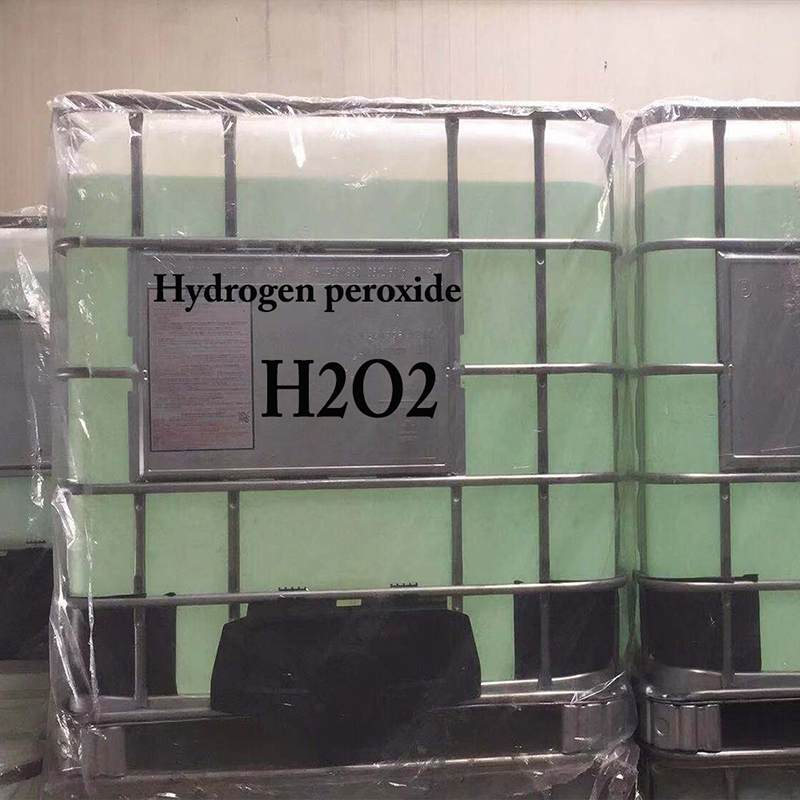
Manufacturers do not sell pure formulations for standard commercial use. Pure formulations are too volatile for standard freight. Instead, they rely on chemical stabilizers.
Manufacturers use highly specific additives to protect the product. Common stabilizers include colloidal stannate, sodium pyrophosphate, and various chelating agents. These additives perform a vital job. They bind with catalytic impurities. They surround microscopic metal ions and neutralize their catalytic effects. This mechanism significantly delays decomposition during transit and storage.
Buyers must balance their needs carefully. You must match the specific grade to your end application. More stabilizers mean better stability but lower absolute purity.
Industrial & Environmental Grades: These are heavily stabilized. They withstand long transit times. They offer high-temperature tolerance. They are perfect for wastewater treatment or paper bleaching.
Food & Electronics Grades: These require minimal to zero stabilizers. Semiconductor manufacturing demands absolute purity. Therefore, they require tighter cold-chain logistics. They demand exceptional handling controls at every step.
Do not accept generic product data sheets. Advise your procurement teams to demand specifics. Request precise data on the stabilizer package used. You need to know if these additives impact downstream manufacturing processes. For instance, stannate stabilizers can foul certain delicate catalytic processes in chemical synthesis. Always verify compatibility before purchasing.
Proper chemistry means nothing without proper hardware. Facility infrastructure dictates the ultimate safety of your operations.
You face an absolute necessity regarding compatible materials. Never guess on piping or tank materials. Acceptable materials include passivated 304L or 316L stainless steel. High-density polyethylene (HDPE) works for smaller totes. Pure aluminum (minimum 99.5%) is also an option. Using non-compatible materials like brass, copper, or standard carbon steel guarantees a catastrophic reaction.
You cannot use a brand-new stainless steel tank immediately. Storage vessels must be chemically treated first. We call this passivation. The process usually involves an acidic wash. It removes free iron from the metal surface. It leaves behind a protective chromium-rich oxide layer. You must complete this step before introducing the chemical. Skipping passivation leads to immediate, violent degradation.
Sealed containment is a fatal error. We outlined mandatory safety features to prevent structural failures.
Vented Caps: Intermediate bulk containers (IBCs) and drums must have breathable, vented caps to release slow gas buildup.
Pressure Relief Valves (PRVs): Bulk tanks require properly sized PRVs or rupture disks to handle sudden expansion events.
Secondary Containment: Concrete berms must surround tanks. They must hold at least 110% of the tank's volume. Keep them free of organic debris like leaves or wood, which can combust upon contact.
Your setup must meet the law. Align storage setups with standard chemical safety compliance. In the US, this means following OSHA guidelines. The EPA also mandates specific spill reporting protocols. Check your regional equivalent guidelines. Non-compliance invites severe fines and operational shutdowns.
Not all chemical distributors are equal. Their logistics protocols directly dictate the quality of the product arriving at your dock.
Always demand proof of stability. Recommend requiring a formal Certificate of Analysis (CoA) for every single batch. This CoA must include recent stability testing. It should show active oxygen tests, not just basic concentration percentages. A high concentration means nothing if the active oxygen is actively rapidly depleting during transit.
Evaluate how a supplier maintains their fleet. This framework separates the best vendors from the rest.
Dedicated Fleets: Do they use dedicated tank trucks? Multi-use vessels carry massive cross-contamination risks.
Cleaning Protocols: If they use multi-use vessels, request their wash tickets. Examine their specific cleaning and passivation protocols between loads.
Pump Systems: Verify they use compatible, dedicated offloading pumps and hoses.
Evaluate vendor partnership potential. The best vendors provide dedicated engineering support. They help design on-site storage and handling systems. They tailor these systems to their specific formulation. If a supplier simply drops off a tank and leaves, find a better partner. Reliable suppliers conduct site audits to ensure your setup is safe before the first delivery.
Managing chemical stability is a predictable science. It requires rigorous facility infrastructure. You must make careful grade selections based on your specific use case. Natural degradation happens, but you can control the rate entirely through proactive environmental management.
We highly emphasize that the lowest-cost supplier is often a liability. If their stabilization formulations are weak, your process suffers. If their transport protocols compromise safety, your facility faces extreme risks. Cheap chemistry often leads to expensive accidents.
Take action today. Prompt your teams to audit current storage materials. Request detailed stability data from your current distributor. Ask for their official passivation protocols. By tightly controlling your infrastructure and demanding transparency, you secure both operational efficiency and total facility safety.
A: Yes. Even highly stabilized solutions slowly degrade into water and oxygen over time. They typically retain peak efficacy for 1 to 3 years. This shelf life depends entirely on storage conditions. Heat, light, and contamination shorten this lifespan significantly.
A: In bulk, operators use titration or specialized test strips. These tools accurately measure active concentration. Visually, you can test it on organic matter. A lack of reactive fizzing upon contact indicates severe degradation. The solution has likely reverted mostly to water.
A: You must block ultraviolet light. UV light provides the activation energy necessary to break the chemical bonds. This triggers rapid decomposition. Clear containers expose the liquid to ambient and solar UV rays, destroying the product rapidly.
A: Colder temperatures slow down the degradation rate. However, standard commercial solutions have varying freezing points based on concentration. Freezing and thawing cycles sometimes lead to localized concentration spikes. This causes long-term instability. Standard cool storage is highly preferred over freezing.


