
Views: 0 Author: Site Editor Publish Time: 2026-06-28 Origin: Site


Trace amounts of naturally occurring acid exist in our environment. However, modern industrial applications demand high-purity, highly concentrated chemical manufacturing at a massive scale. Securing a reliable bulk supply of nitric acid for chemical synthesis, metallurgy, or agricultural production is no simple task. You must understand exactly how the chemical is synthesized, graded, and stabilized for transport before placing an order. Degradation, contamination, and mishandling can ruin entire production runs or endanger personnel.
This guide provides procurement and engineering teams with a clear overview of commercial origins. We will explore the dominant manufacturing processes used worldwide today. You will also learn the critical criteria for evaluating commercial suppliers. Matching your specific concentration needs with a supplier’s logistics footprint ensures maximum safety, high batch consistency, and reliable chemical integration.
Commercial nitric acid is almost exclusively produced via the Ostwald process, which converts anhydrous ammonia into HNO₃.
Standard industrial manufacturing yields an aqueous solution of up to 68% concentration; higher concentrations require specialized dehydration processes.
Selecting a supplier requires evaluating trace impurities, stabilization methods, and logistics capabilities, as nitric acid degrades over time and poses severe transport risks.
Regulatory compliance (EPA, OSHA) and strict adherence to Safety Data Sheets (SDS) are non-negotiable when planning facility storage and integration.
Nature generates its own supply of corrosive compounds. During thunderstorms, intense lightning strikes deliver immense heat. This thermal energy breaks the strong triple bonds of atmospheric nitrogen gas. Free nitrogen atoms immediately bond in the presence of atmospheric oxygen. They form nitric oxide, which quickly oxidizes further into nitrogen dioxide. Rainfall captures these nitrogen oxides, forming highly dilute HNO₃ droplets. These droplets fall to the earth, subtly enriching soil nitrogen levels.
While atmospheric generation sustains natural ecosystems, it falls drastically short of industrial needs. You cannot harvest rain to support global agriculture or advanced manufacturing. Commercial supply chains require millions of tons annually. Modern fertilizer production alone consumes vast quantities of the chemical. Aerospace sectors depend on highly concentrated variants for propulsion. Polyurethane and nylon manufacturing rely heavily on specialized nitration steps. Therefore, natural occurrence remains a mere scientific curiosity. Modern industry completely depends on massive-scale chemical engineering to synthesize predictable, high-purity volumes.
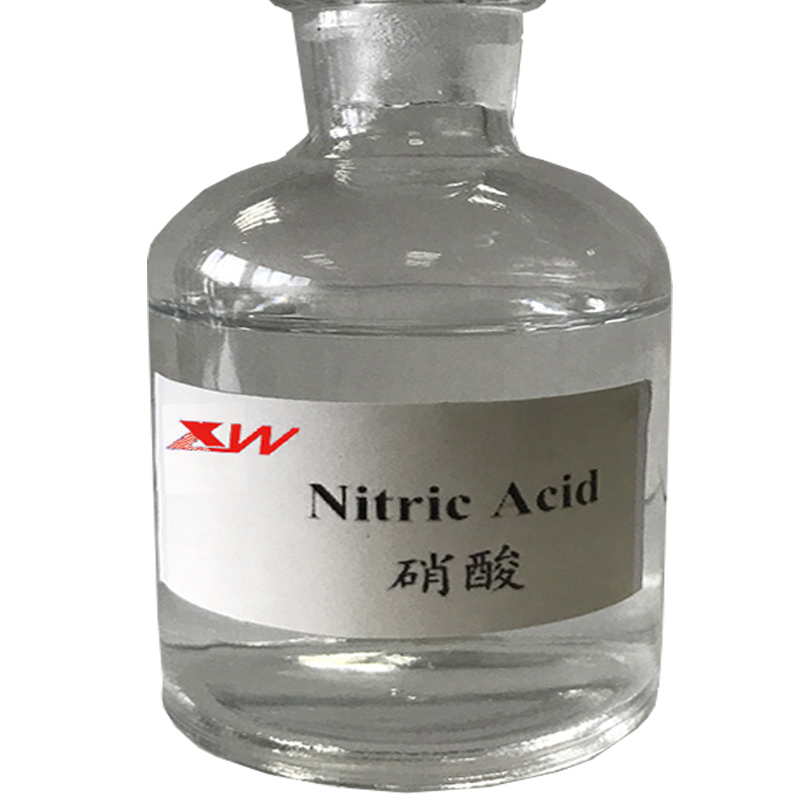
Chemists developed the Ostwald process in the early 20th century. Today, it remains the absolute global standard for manufacturing commercial nitric acid. The process relies on ammonia as its primary feedstock. By pushing ammonia through multiple stages of extreme heat, oxidation, and absorption, facilities can continuously yield massive chemical volumes.
Production begins by mixing anhydrous ammonia gas and purified air. Facilities pump this mixture over a specialized catalyst bed. This bed usually consists of woven platinum-rhodium gauze. The reaction chamber maintains extreme temperatures around 800 to 900 degrees Celsius. Under these conditions, the ammonia oxidizes rapidly. This highly exothermic reaction yields nitric oxide (NO) and steam. Precision temperature control is critical here. If the heat fluctuates, secondary reactions can destroy the yield.
The newly formed nitric oxide exits the catalyst chamber. Engineers then cool the gas stream rapidly. Cooling prevents unwanted chemical breakdown. As temperatures drop, the nitric oxide reacts naturally in the presence of residual oxygen. This secondary oxidation step forms nitrogen dioxide (NO₂). The process transforms the invisible gas into a distinctively brown, toxic vapor. This vapor serves as the direct precursor to the final aqueous solution.
The final phase involves specialized absorption towers. Facilities direct the nitrogen dioxide gas into the base of a tower. Simultaneously, pure water cascades downward from the top. The counter-current flow forces the gas to dissolve in the water under elevated pressure. This absorption phase yields a standard aqueous solution. Depending on the exact tower parameters, the resulting concentration reaches between 50% and 68%.
Several operational variables directly impact chemical purity and final cost. Facility managers constantly monitor these efficiency metrics:
Catalyst Degradation: Platinum-rhodium gauze breaks down slowly over time. Catalyst loss reduces conversion rates and increases raw material costs.
System Pressure: Modern plants operate absorption towers at elevated pressures (up to 10 atmospheres). Higher pressure increases nitrogen dioxide absorption efficiency.
Temperature Control: Inadequate cooling before the absorption phase leaves unconverted gases. This causes harmful nitrogen oxide emissions.
Standard distillation cannot purify an aqueous solution indefinitely. Water and HNO₃ form a maximum-boiling azeotrope at approximately 68% concentration. At this precise point, the liquid mixture and its vapor share the exact same composition. Boiling the liquid further simply boils away both components equally. Standard distillation hits a hard ceiling here. You need specialized techniques to cross this chemical boundary.
The Ostwald process natively produces this grade. Most global demand relies on this exact concentration bracket. Facilities use 60% to 68% solutions to manufacture ammonium nitrate fertilizers. Metal fabrication shops use similar grades for passivation. Passivation removes free iron from stainless steel surfaces to prevent rust. Cleaning agents and etching solutions also utilize standard commercial grades due to their balanced reactivity and lower cost.
Aerospace and specialized explosives industries require concentrations far beyond the 68% azeotrope. Achieving 86% to 99% purity requires extractive distillation. Engineers introduce a strong dehydrating agent, typically sulfuric acid or magnesium nitrate. These agents bind to the water molecules. This allows distillation towers to separate out nearly pure acidic vapors.
You will encounter two primary fuming variants:
White Fuming Nitric Acid (WFNA): This nearly pure formulation exceeds 97% concentration. It contains maximum 2% water and minimal dissolved nitrogen dioxide (under 0.5%). WFNA is incredibly corrosive and emits thick white fumes upon exposure to air.
Red Fuming Nitric Acid (RFNA): This variant intentionally includes high levels of dissolved nitrogen dioxide (up to 15%). The dissolved gas gives the liquid a stark reddish-brown hue. RFNA serves as a hypergolic oxidizer. It ignites spontaneously upon contact in rocket propulsion systems.
Comparison Chart: Fuming vs. Commercial Grades | |||
Grade | Concentration | Key Characteristics | Primary Use Cases |
|---|---|---|---|
Commercial | 50% - 68% | Clear to slightly yellow, water-based solution | Fertilizers, metal passivation, cleaning |
WFNA | 97% - 99% | Emits white fumes, nearly anhydrous | Specialized nitration, explosive synthesis |
RFNA | 85% - 95% | Red hue, contains dissolved NO₂ | Rocket propulsion, hypergolic oxidizers |
Procurement teams must carefully scrutinize a supplier's Certificate of Analysis. The CoA proves batch purity. Look closely at acceptable thresholds for impurities. High chloride levels cause severe stress corrosion cracking in downstream stainless steel equipment. Heavy metals can poison sensitive chemical catalysts during later synthesis steps. Particulate matter indicates poor filtration or degraded storage tanks. Always demand a CoA matching your exact industrial specification before unloading any shipment.
Chemical stability presents a major logistical challenge. Exposure to ambient heat and ultraviolet light causes nitric acid to decompose slowly. It breaks down into water, oxygen, and nitrogen dioxide. The dissolved nitrogen dioxide gradually turns the clear liquid yellow. This decomposition alters the chemical concentration. It also increases vapor pressure inside sealed containers. Facilities must store bulk quantities in cool, completely dark environments to extend shelf life.
Transportation demands rigorous safety protocols. Corrosive failures during transit cause catastrophic environmental incidents. You must evaluate supplier transport methods carefully:
Bulk Tankers: Large-scale deliveries require specialized tanker trucks. Tanks must feature 304L or 316L low-carbon stainless steel to resist aggressive oxidation.
IBC Totes: Intermediate Bulk Containers offer flexible mid-sized deliveries. However, suppliers must construct these totes using high-density polyethylene (HDPE) only for lower concentrations. High concentrations melt standard plastics.
Drums: Smaller volumes travel in heavy-duty drums. Fuming grades strictly require specialized fluoropolymer linings (like PTFE) or heavy-gauge aluminum.
Audit your short-listed suppliers based on three operational pillars. First, prioritize geographic proximity. Shorter transit times reduce thermal degradation and lower the risk of accidents. Second, demand proof of batch consistency. Ask for historical CoA records to verify their quality control. Third, assess emergency response capabilities. A credible supplier provides immediate technical support and spill mitigation guidance if a transport container fails upon arrival.
Supplier Evaluation Metrics | ||
Evaluation Metric | Why It Matters | Audit Action |
|---|---|---|
Trace Chlorides | Prevents rapid equipment corrosion | Review routine CoA reports |
Packaging Material | Ensures safe transit of high concentrations | Verify UN ratings on IBCs/Drums |
Logistics Proximity | Minimizes photochemical decomposition | Map transport routes and times |
You cannot simply offload corrosive bulk liquids into standard warehouse tanks. Facility readiness requires dedicated infrastructure. Secondary containment is legally mandated. Your containment dikes must hold at least 110% of your largest storage vessel's capacity. Additionally, storage areas require dedicated exhaust ventilation. Fume scrubbers must capture any noxious off-gassing during transfer operations. Personnel must wear complete chemical splash suits, face shields, and appropriate respiratory protection during all handling procedures.
Operating a facility storing hazardous oxidizers means heavy regulatory scrutiny. The EPA strictly enforces emission standards regarding nitrogen oxide (NOx) off-gassing. Venting raw fumes into the atmosphere results in massive fines. Furthermore, OSHA mandates rigorous handling guidelines under hazardous materials protocols. Your facility must implement detailed Process Safety Management (PSM) programs if you exceed specific threshold quantities. Compliance is not optional; it dictates your basic right to operate.
Storage segregation prevents disasters. Keep this chemical isolated from all organic materials, bases, and reducing agents. Wood, paper, rags, and common solvents act as fuel. Because the chemical is a powerful oxidizer, contacting organics triggers immediate, highly exothermic reactions. Spilling concentrated liquid onto a wooden pallet often causes spontaneous combustion. Mixing it inadvertently alongside alkaline chemicals causes violent boiling and explosive vapor expansion. Always utilize dedicated, isolated storage zones.
Understanding exactly how modern manufacturing creates commercial chemical supplies ensures better procurement decisions. The Ostwald process standardizes base production, but the resulting grades, purity levels, and transport stability vary significantly across different manufacturers. High-purity fuming grades require entirely different handling logistics compared to standard commercial variants.
Procurement teams must carefully match specific application requirements against a supplier's technical capabilities. Evaluate their distillation methods, review their packaging materials, and assess their regional logistics footprint. Securing a reliable chemical supply chain minimizes internal process variations and protects your facility from catastrophic accidents.
Take immediate action to secure your supply lines safely. Request a detailed chemical specification sheet from your top candidates. Thoroughly review their Safety Data Sheets (SDS) to ensure facility compliance. Finally, contact a technical sales representative to discuss your specific bulk supply requirements and packaging constraints today.
A: Yes, historically, the Birkeland-Eyde process created it directly from atmospheric nitrogen and oxygen using giant electric arcs. However, this method is commercially obsolete today. It consumes massive amounts of electricity. Modern industry relies entirely on the ammonia-based Ostwald process because it is vastly more energy-efficient and scalable.
A: You will not find it sold directly to consumers in its pure form due to severe safety risks. However, it acts as an unseen precursor in daily items. It is essential for manufacturing agricultural fertilizers, polyurethane foams for furniture, nylon textiles, and specialized woodworking dyes.
A: Exposure to ambient light and elevated temperatures causes photochemical decomposition. The liquid breaks down, releasing dissolved nitrogen dioxide (NO₂) gas back into the solution. This dissolved gas gives the previously clear liquid a distinct yellow or brownish hue. Proper dark, cool storage mitigates this degradation.
A: Never pour it down a standard drain. It destroys plumbing and causes severe environmental damage. Disposal requires professional neutralization using a weak base like sodium carbonate under highly controlled, ventilated conditions. Always hire a licensed hazardous waste disposal company to handle and transport expired stock.


