


Hydrogen peroxide acts as a ubiquitous but highly variable compound. We see it everywhere. It sits quietly in basic household first-aid kits and powers heavy-duty industrial oxidation tanks. Despite its widespread use, decision-makers and informed consumers face a common evaluation gap. They often struggle to match the exact chemical concentration and stabilization profile to their specific use case. This mismatch causes serious problems. Using an incorrect formula can degrade expensive equipment, cause safety hazards, or leave harmful pathogens behind.
You must understand exactly what this molecule does to avoid these pitfalls. Grasping the underlying science is critical for selecting the right grade for your facility or home. It ensures you maintain strict compliance with occupational safety standards. Furthermore, selecting the proper concentration maximizes cost-effective efficacy. By exploring how this powerful oxidizer functions, you can make safe, informed choices for any sanitation or manufacturing application.
Mechanism of Action: H2O2 relies on aggressive oxidation to break down cellular walls and organic compounds, leaving only water and oxygen as byproducts.
Application is Grade-Dependent: Effectiveness and safety scale directly with concentration—from 3% household solutions to 35%+ industrial grades.
Operational Limitations: H2O2 is highly unstable when exposed to light, heat, or organic matter, requiring strict storage and handling protocols.
Credible Efficacy: While an excellent broad-spectrum surface disinfectant and bleaching agent, it should not be utilized as an internal remedy or unchecked skin treatment.
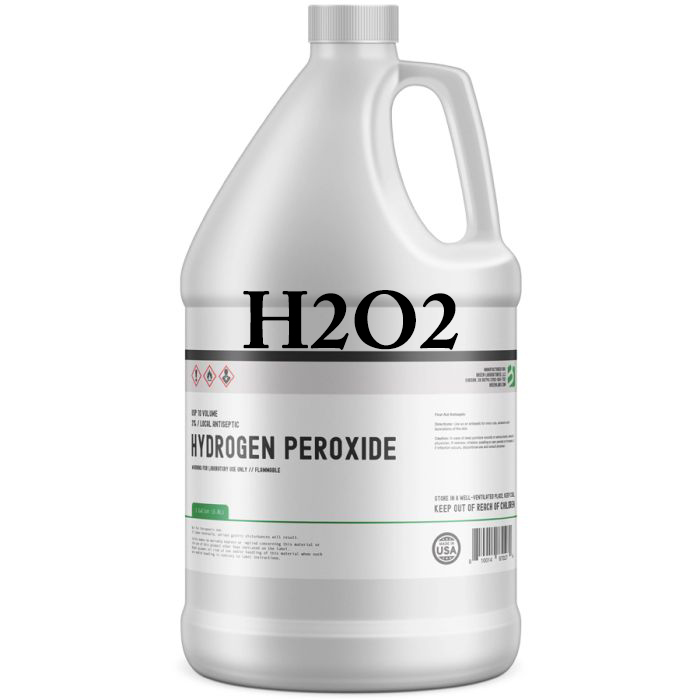
To understand its power, we must look at the molecular structure. Hydrogen peroxide consists of two hydrogen atoms and two oxygen atoms. This extra oxygen atom makes it inherently unstable. Understanding h2o2 in chemistry reveals why it reacts so rapidly. The molecule constantly seeks stability, which drives its intense oxidative properties.
Because of this instability, the liquid acts as an aggressive oxidizing agent. It generates Reactive Oxygen Species (ROS). These species steal electrons from other molecules. When applied to pathogens, this electron theft severely damages cellular walls. It destroys bacteria, fungi, and viruses at a structural level. The cell membrane ruptures, neutralizing the biological threat completely.
Most people recognize the familiar bubbling reaction on a scrape. We can easily demystify this foaming phenomenon. Human blood and tissue contain an enzyme called catalase. Catalase acts as a catalyst, rapidly breaking down the liquid into water and oxygen gas. The visible bubbles are simply oxygen gas escaping. While visually satisfying, this rapid breakdown means the chemical neutralizes quickly when it contacts biological tissue.
This rapid decomposition provides a major environmental advantage. After the oxidation process finishes, the compound leaves behind only water (H2O) and oxygen (O2). It produces no toxic chemical residue. Facility managers value this trait for strict environmental compliance. You do not need to perform a secondary chemical rinse, making it highly efficient for continuous operational use.
Effectiveness scales directly with concentration. Selecting the right grade of hydrogen peroxide ensures operational success and safety. We can categorize these solutions into four main tiers.
Standard 3% (Household & Medical): You will find this grade in most pharmacies. Consumers use it for minor topical wound cleaning and oral care. Dentists often recommend diluted versions for mouthwash formulations. It also serves as an excellent daily household surface disinfectant for countertops and bathroom fixtures.
Specialty 3% (Contact Lens Care): Optometrists use a specialized 3% solution to clean contact lenses. However, you cannot put this directly into your eye. It requires a neutralization catalyst. The storage case contains a platinum disc. This disc neutralizes the liquid over several hours, removing deep protein deposits without causing severe ocular burns.
6% to 12% (Cosmetic & Salon): The beauty industry relies on this mid-tier concentration. Stylists use it for cosmetic bleaching and hair lightening. Commercial cleaning services also utilize these percentages for low-tier sanitization, particularly in areas requiring stronger stain removal.
30% to 35%+ (Industrial & Food Grade): These high-concentration liquids are highly aggressive. Industrial facilities use them for wastewater treatment and paper bleaching. Food processors use them to sanitize large manufacturing equipment. They offer rapid kill times for heavy-duty commercial applications.
A dangerous misconception exists regarding "Food Grade" varieties. Many consumers wrongly believe they can safely ingest these solutions for health benefits. "Food grade" simply indicates the manufacturer omitted heavy metal stabilizers. It does not mean the liquid is safe for human consumption. Ingesting high concentrations causes severe internal organ burns and can be fatal.
Facility managers constantly evaluate chemical disinfectants. We must compare this oxidizer against traditional commercial alternatives to understand its true value.
Bleach remains a popular, cheap disinfectant. However, it carries significant drawbacks. Bleach produces toxic off-gassing and leaves a corrosive residue on certain metals. In contrast, our oxidizer leaves no toxic residue. It provides comparable pathogen kill rates without degrading indoor air quality. Bleach often requires longer wet contact times compared to advanced peroxide formulations.
Quats dominate the commercial cleaning industry. Unfortunately, widespread Quat usage contributes to antimicrobial resistance and environmental toxicity. Quats bind to fabrics and leave sticky residues. Conversely, peroxide is fully biodegradable. It breaks down naturally, mitigating long-term environmental impact and preventing pathogen resistance.
To overcome slow contact times, the industry developed Accelerated Hydrogen Peroxide (AHP). AHP technology blends standard solutions with proprietary surfactants. These surfactant blends dramatically lower required contact times. They cut sanitization wait times from ten minutes down to one minute. High-turnover healthcare environments rely on AHP to improve cleaning efficacy and speed up room transitions.
Feature | Standard H2O2 | Sodium Hypochlorite (Bleach) | Quats | Accelerated (AHP) |
|---|---|---|---|---|
Residue | None (Water & Oxygen) | Corrosive salts | Sticky film | None |
Environmental Impact | High biodegradability | Toxic to aquatic life | Contributes to resistance | High biodegradability |
Standard Contact Time | 5 - 10 minutes | 5 - 10 minutes | 10 minutes | 1 - 3 minutes |
Odor Profile | Odorless | Harsh, irritating fumes | Added synthetic fragrances | Mild to none |
Implementing any chemical program requires strict safety oversight. Due to its reactive nature, you must follow established protocols to protect staff and infrastructure.
This compound degrades rapidly when exposed to light, heat, or organic matter. You must store it in opaque packaging. Facilities should maintain cool storage environments away from direct sunlight. Additionally, industrial bulk containers require vented caps. As the liquid slowly degrades, it releases oxygen gas. Vented caps prevent dangerous pressure build-up inside the drums.
Vapor exposure presents a real risk in poorly ventilated settings. Authoritative bodies like the CDC and NIOSH set strict airborne exposure limits. The current baseline mandates an exposure limit of 1 part per million (ppm) calculated as an 8-hour time-weighted average. Facility managers must install adequate ventilation to keep vapor concentrations below this threshold.
Concentrations above 10% introduce severe handling risks. Accidental contact causes immediate skin burns and permanent eye damage. Inhalation of vapors triggers severe respiratory irritation. Furthermore, the liquid poses a significant fire hazard. While it does not burn directly, it acts as a powerful accelerant. If spilled on organic materials like wood or rags, it can spontaneously ignite.
Standard safety gear requirements scale with concentration levels. For household 3% solutions, standard cleaning gloves suffice. However, handling industrial grades requires comprehensive PPE. Workers must wear thick nitrile gloves, chemical-resistant aprons, and splash goggles. In unventilated industrial tanks, personnel may even require full face respirators.
Storing drums near heat sources or electrical panels.
Transferring solutions into unmarked, clear spray bottles.
Failing to replace vented caps tightly after decanting.
Ignoring minor spills on wooden pallets.
Procurement teams face a complex landscape when sourcing chemical supplies. Evaluating your operational timeline and material ecosystem will guide your final purchase decision.
When purchasing h2o2, you must choose between stabilized and unstabilized formulas. Manufacturers add chemical stabilizers to extend shelf-life. This works well for retail distribution and long-term facility storage. Unstabilized (high-purity) versions lack these additives. You should choose unstabilized formulas only if your application demands absolute purity, such as sensitive semiconductor manufacturing, and you plan to consume the product immediately.
Buyers must evaluate the financial trade-offs of delivery methods. Bulk concentrates offer significant per-ounce cost savings. However, bulk chemicals introduce liability. Your facility must pay for in-house dilution protocols, specialized equipment, and staff training. Ready-to-Use (RTU) products cost more upfront. Yet, RTU eliminates mixing errors, reduces safety liabilities, and requires minimal staff training.
Before implementing a new sanitation protocol, review your material compatibility. The liquid safely sanitizes glass, stainless steel, and specific hard plastics like high-density polyethylene (HDPE). Conversely, it causes severe oxidation on soft metals. Avoid prolonged contact with brass, copper, and zinc. Applying it to these metals will cause rapid discoloration and structural degradation.
Successful implementation requires methodical testing. First, advise your team to request Safety Data Sheets (SDS) from the supplier. Review these documents carefully. Next, conduct small-scale material compatibility tests in hidden areas before treating entire rooms. Finally, verify your supplier maintains rigorous Quality Assurance (QA) processes to guarantee accurate concentration levels upon delivery.
Understanding the molecular behavior of this powerful oxidizer transforms how you approach sanitation and industrial processing. It provides potent, environmentally friendly oxidation that leaves behind zero toxic residue. However, achieving these benefits requires you to match the specific concentration and stabilization profile to your exact task.
Facility managers and informed consumers must weigh these residue-free benefits against strict storage requirements. Proper handling demands opaque containers, temperature control, and appropriate PPE. Failing to respect these rules invites equipment damage and safety hazards.
Take proactive steps to upgrade your sanitation protocols today. Encourage your safety officers to consult your chemical supplier for concentration-specific SDS documents. If you operate a high-turnover commercial facility, request samples to test AHP formulations. Evaluating these advanced blends will help you achieve faster, safer, and greener sanitation results.
A: Yes. It degrades continuously into water and oxygen. Unopened bottles last about three years. Once opened, standard 3% solutions lose their effectiveness within six months. You can test viability using the "fizz test." Pour a small amount into a sink; if it bubbles vigorously, it remains active. If it produces no fizz, it has degraded to plain water and requires replacement.
A: Modern medical consensus advises against routine use on open wounds. While it kills bacteria, the aggressive oxidation also damages healthy skin cells. This damage delays the natural healing process and can worsen scarring. It is better suited for initial debris removal on minor scrapes. For ongoing wound care, wash with mild soap and clean water.
A: The difference lies in the stabilizers. Standard drugstore solutions contain chemical stabilizers, such as acetanilide or phenol, to extend shelf life. Food-grade versions omit these heavy metal and toxic stabilizers. Industrial food processors use food-grade formulas to sanitize equipment without leaving unsafe chemical residues behind. It does not mean it is safe to drink.
A: No. You should never mix them in the same container. Combining them creates peracetic acid. Peracetic acid is highly corrosive, toxic, and causes severe irritation to your skin, eyes, and respiratory system. If you want to use both for cleaning, apply them sequentially. Spray one, wipe the surface completely dry, and then apply the other.


