


When dealing with industrial chemicals, molecular geometry is rarely the first thing on your mind. You likely focus more on application results and safety protocols. However, understanding whether the molecule is polar answers critical questions about how it behaves inside your facility. The direct answer is yes—it is a highly polar molecule.
This polarity is not just a piece of textbook trivia. It acts as the fundamental characteristic dictating its solubility, its high reactivity as a powerful oxidizer, and its strict storage requirements. Ignorance of these chemical properties often leads to hazardous handling errors or highly inefficient process engineering.
This guide breaks down the chemical structure of the molecule to explain its polar nature clearly. We will explore how this asymmetry impacts industrial and laboratory applications. You will also get a practical framework for evaluating and sourcing the right grade for your specific operations.
Chemical Reality: H2O2 features an asymmetrical "open-book" molecular geometry, meaning its dipole moments do not cancel out, resulting in a permanent net dipole.
Operational Impact: Its high polarity makes it highly soluble in water and other polar solvents, which is critical for formulating solutions in commercial applications.
Evaluation Criteria: Choosing to implement hydrogen peroxide requires balancing required concentration (reactivity) with specific industry purity standards (e.g., technical vs. electronic grade).
Implementation Risk: The polar and highly reactive nature of the molecule mandates strict compliance with storage, handling, and transportation regulations to prevent degradation or hazardous events.
To understand the behavior of this chemical, we must first look at its atomic building blocks. The electronegativity difference between oxygen and hydrogen drives the entire system. Oxygen holds an electronegativity value of 3.44. Hydrogen sits much lower at 2.20. This significant gap creates individual polar covalent bonds. The shared electrons spend far more time orbiting the oxygen atoms. They leave the hydrogen atoms with a slight positive charge.
You might assume the molecule sits flat like water, but it does not. It adopts a very specific non-planar, skewed structure. Two oxygen atoms bond together in the center. One hydrogen atom attaches to each oxygen atom. Crucially, each oxygen atom carries two lone pairs of electrons. According to Valence Shell Electron Pair Repulsion (VSEPR) theory, these lone pairs repel each other aggressively. This intense repulsion twists the molecule out of a flat plane. It forces the structure into a skewed, three-dimensional "open-book" geometry. In a gas phase, the dihedral angle of this book shape measures approximately 111.5 degrees.
Because of this asymmetrical open-book shape, the individual oxygen-hydrogen bond dipoles point in entirely different directions. They cross planes and do not cancel each other out. This geometry guarantees a permanent net dipole. Studying h2o2 in chemistry reveals an impressive dipole moment of about 2.26 Debye. This is even higher than water, which sits at 1.85 Debye. This strong polarity defines every aspect of its interaction in physical environments.
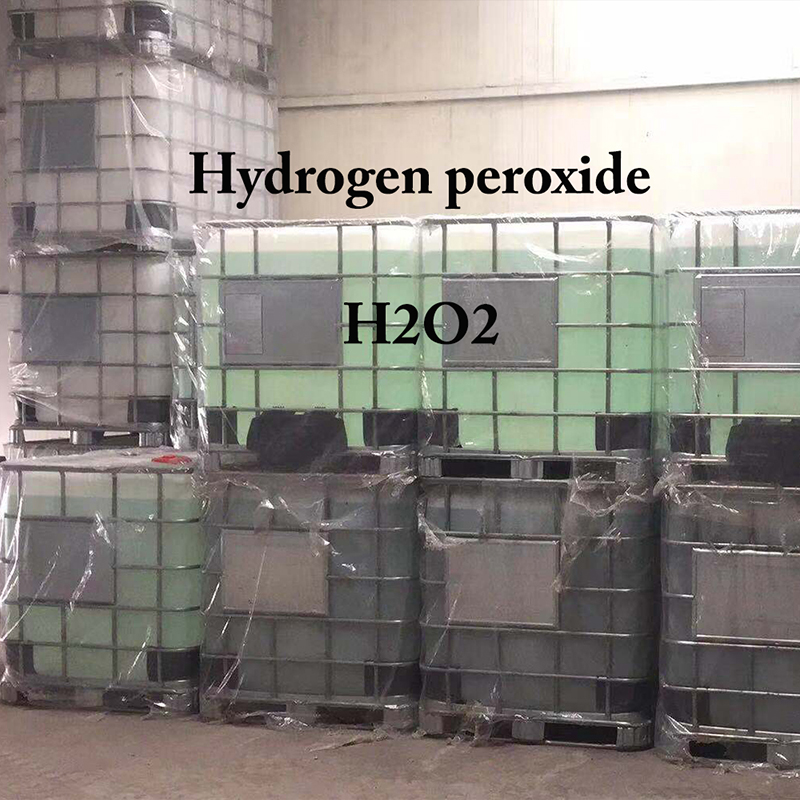
The old chemistry rule "like dissolves like" applies perfectly in this scenario. Because the molecule is highly polar, it interacts seamlessly with other polar substances. Water is the most common polar solvent. Therefore, the two liquids are entirely miscible. You can mix them together in any proportion without phase separation. This creates an extensive hydrogen bonding network. Formulators and engineers rely heavily on this complete solubility. It allows them to dilute highly concentrated chemical stocks safely into manageable aqueous solutions.
This same polarity also drives a highly aggressive reactivity profile. The strong dipole moment makes the molecule inherently unstable. It serves primarily as a powerful oxidizing agent. In some specific chemical environments, it can even act as a reducing agent. The skewed oxygen-oxygen single bond (the peroxide bond) remains relatively weak. It breaks easily under the right conditions to form highly reactive hydroxyl radicals. These radicals eagerly strip electrons from other molecules.
Process engineers must thoroughly understand these chemical traits. You need this structural knowledge to predict reaction kinetics accurately within your facility. It also dictates your material selection process. When you design process piping or mixing tanks, you must avoid incompatible materials. Transition metals like iron, copper, or manganese will catalyze rapid decomposition. The table below outlines basic material compatibility based on these reactive traits.
Material Category | Compatibility Level | Engineering Notes |
|---|---|---|
304L / 316L Stainless Steel | Excellent | Must be properly passivated using nitric acid before initial use to remove surface iron. |
High-Density Polyethylene (HDPE) | Good | Ideal for concentrations under 60%. Needs UV-opaque coloring for outdoor storage. |
Carbon Steel / Copper / Brass | Severe Risk | Highly incompatible. Triggers rapid, catalytic exothermic decomposition. |
PTFE (Teflon) | Excellent | Perfect for gaskets, O-rings, and specialized pump linings. |
You must align chemical properties directly with your intended business outcomes. The extreme polarity and reactivity of hydrogen peroxide open practical doors for various heavy industries. Operators leverage these traits to solve complex processing problems.
In wastewater treatment and environmental remediation, facilities use its oxidative power to execute Advanced Oxidation Processes (AOP). It efficiently breaks down stubborn organic pollutants into harmless byproducts. The reaction yields only water and oxygen gas. It leaves absolutely no toxic residues behind. This feature directly translates into lower hazardous waste disposal volumes and much easier environmental regulatory compliance.
The pulp, paper, and textile industries evaluate it as a highly scalable bleaching alternative. It actively replaces harsh chlorine-based chemicals. The bleaching process is highly effective because the polar aqueous solutions penetrate wood fibers and fabrics easily. It targets and oxidizes lignin without degrading the core cellulose structure.
Chemical synthesis and healthcare sectors also depend heavily on these properties. It acts as a foundational reagent for synthesizing organic peroxides. In healthcare, its solubility in polar environments makes it a premier sterilant. The liquid easily coats complex surgical surfaces to achieve high-level disinfection.
Breaks down complex organic hydrocarbons in industrial wastewater streams.
Provides environmentally friendly, chlorine-free delignification for paper mills.
Enables comprehensive surface sterilization in medical and pharmaceutical cleanrooms.
Acts as an oxygen source for specialized agricultural and aquaculture operations.
Shortlisting the right chemical supply requires clear logic and technical foresight. You need to balance operational scalability, worker safety, and strict regulatory demands. Procurement is never a one-size-fits-all process.
Concentration levels represent your first major decision. Standard industrial concentrations generally sit at 35% or 50%. These specific ranges balance transportation efficiency with manageable safety protocols. Conversely, High-Test Peroxide (HTP) exceeds 70% concentration. HTP offers immense oxidative power, often used in aerospace. However, it requires extreme safety infrastructure. You face a direct trade-off between shipping less water weight and managing significantly higher explosive risks.
Purity grades represent the second crucial factor. Manufacturers tailor different grades for specific industry applications. You must match the grade to your process requirements to avoid contamination.
Grade Type | Typical Application | Defining Characteristics |
|---|---|---|
Technical Grade | Wastewater, Pulp & Paper, Mining | Contains higher levels of heavy tin or phosphate-based stabilizers for long transit. |
Food / Aseptic Grade | Beverage Packaging, Food Processing | Requires specific FDA/EFSA regulatory compliance. Uses food-safe stabilizers. |
Electronic Grade | Semiconductor, Microchip Manufacturing | Ultra-high purity. Zero heavy metal contamination. Conforms to strict SEMI standards. |
When assessing a potential chemical supplier, look closely for technical transparency. A reliable partner should provide clear, batch-specific assay reports. Ask detailed questions about their stabilizer chemistry, as the wrong stabilizer can ruin your proprietary formulations. You also need an exceptionally reliable supply chain. Frequent shipping delays expose the chemical to heat, causing unacceptable degradation in transit.
Moving from procurement to active operation involves strict physical realities. You must mitigate implementation risks immediately upon delivery. The polar and reactive nature of the molecule demands precise handling infrastructure.
You must understand the inherent decomposition risks. The molecule naturally decomposes into liquid water and oxygen gas over time. This process is called disproportionation. Heat, direct ultraviolet light, or transition metal contaminants accelerate this process dramatically. Even a microscopic dust particle containing iron can trigger a runaway exothermic reaction. As the liquid decomposes, it releases heat, which only speeds up the reaction further.
This leads directly to your infrastructure requirements. Specialized storage is absolutely non-negotiable. One volume of concentrated liquid can generate roughly 600 volumes of oxygen gas during rapid decomposition. You must use specially designed vented caps on all drums and Intermediate Bulk Containers (IBCs). This prevents oxygen gas pressure from building up and violently bursting the container. Store all stock in opaque containers to completely block UV light. Rely only on tested, compatible materials like passivated stainless steel or specific plastics.
Regulatory agencies classify this chemical as a hazardous material. Adhering to safety protocols is not just a recommended best practice. It is a strict compliance requirement.
Ensure all storage tanks feature primary and secondary pressure relief venting systems.
Implement a strict segregation policy to keep organic materials and flammables far away from the storage zone.
Conduct regular chemical passivation on all stainless-steel piping to maintain a protective oxide layer.
Install dedicated temperature monitoring alarms in all bulk storage areas.
Train all operators on immediate dilution and containment procedures for accidental spills.
The highly polar nature of this molecule serves as the true driver behind its industrial versatility. Its asymmetrical open-book geometry ensures a permanent dipole. This structural reality dictates its complete solubility in water and its potent oxidative power. Understanding these chemical traits allows you to engineer safer processes and source the exact purity grade your operation demands.
Recognize that molecular polarity directly impacts solubility and material compatibility.
Match your procured concentration and purity grade strictly to your industry use case.
Never compromise on storage infrastructure; always utilize vented caps and compatible materials.
Consult your material safety data sheets (MSDS) today to verify your current handling protocols. Contact a specialized chemical procurement expert for a site-specific evaluation of your storage tanks. Request a small sample of your required grade to conduct independent lab testing before committing to bulk delivery.
A: Yes. Due to its asymmetrical open-book structure, the individual oxygen-hydrogen bond dipoles point in different directions. They cross spatial planes and do not cancel out. This unique, skewed molecular geometry results in a permanent and highly significant net dipole moment.
A: It remains highly polar across all physical phases. While the exact dihedral angle of the open-book structure shifts slightly between its gas, liquid, and solid states, the overall asymmetry persists. This ensures the molecule maintains its strong polar characteristics regardless of its state.
A: Its strong polarity contributes to extensive hydrogen bonding and high reactivity. It interacts readily with other polar substances and contaminants. Because of this, it must be stored in specific, controlled conditions. You need vented, cool environments away from organic materials to prevent rapid decomposition and dangerous gas pressure build-up.


