
Views: 0 Author: Site Editor Publish Time: 2026-06-23 Origin: Site


Is H2O2 the exact chemical formula for hydrogen peroxide? Yes, these two terms represent the exact same powerful compound. Many professionals hear the chemical name and mistakenly assume it refers to a different substance. This confusion often leads buyers to struggle when matching the right concentration to their specific commercial needs. Misunderstanding this compound causes severe safety risks and immediate compliance failures.
Decision-makers and procurement teams must move beyond basic high school chemistry. You need to thoroughly understand varying concentration levels. You must grasp strict safety mandates and commercial sourcing criteria. Successfully leveraging this chemical requires absolute precision. You must match the exact grade and concentration to your specific business, medical, or industrial outcomes. Furthermore, navigating complex shipping rules and handling compliance is mandatory. This guide will walk you through everything you need to know. We will cover chemical properties, available market grades, and crucial safety standards. You will also learn how to confidently shortlist suppliers for bulk procurement.
H2O2 and hydrogen peroxide are identical: H2O2 is simply the chemical notation for the compound.
Application dictates concentration: Purchasing decisions hinge on concentration levels, ranging from 3% (consumer/medical) to 50%+ (industrial/food-grade).
Compliance is non-negotiable: Storage, handling, and Hazmat shipping must align with EPA and CDC regulations.
Purity varies by grade: "Food grade" H2O2 lacks toxic chemical stabilizers found in standard grades, making it essential for specific agricultural and food-processing applications.
Let us look at the basic chemical structure. Pure water is H2O. It has two hydrogen atoms and one single oxygen atom. Adding one extra oxygen molecule creates h2o2 in chemistry. This seemingly small addition changes the physical properties entirely. The extra oxygen creates a highly reactive peroxide bond. This specific bond makes the substance a powerful oxidizing agent. It aggressively seeks to break down organic cell walls. It also reacts intensely rapidly alongside other organic materials.
However, this powerful molecular structure comes at a significant cost. The compound is inherently unstable. Over time, it naturally degrades. It breaks down entirely into plain water and oxygen gas. The chemical equation for this decomposition is 2H2O2 → 2H2O + O2. This decomposition process represents a baseline challenge for all commercial users. You cannot simply store the liquid indefinitely. It will eventually lose all chemical potency. Shelf-life considerations heavily influence ongoing business procurement strategies.
Professionals must understand these dual chemical properties clearly. The high oxidation potential determines the raw cleaning power. Meanwhile, the rapid decomposition rate dictates your strict storage timeline. Understanding this duality helps you manage inventory effectively. It prevents you from using degraded, ineffective solutions in critical operational environments.
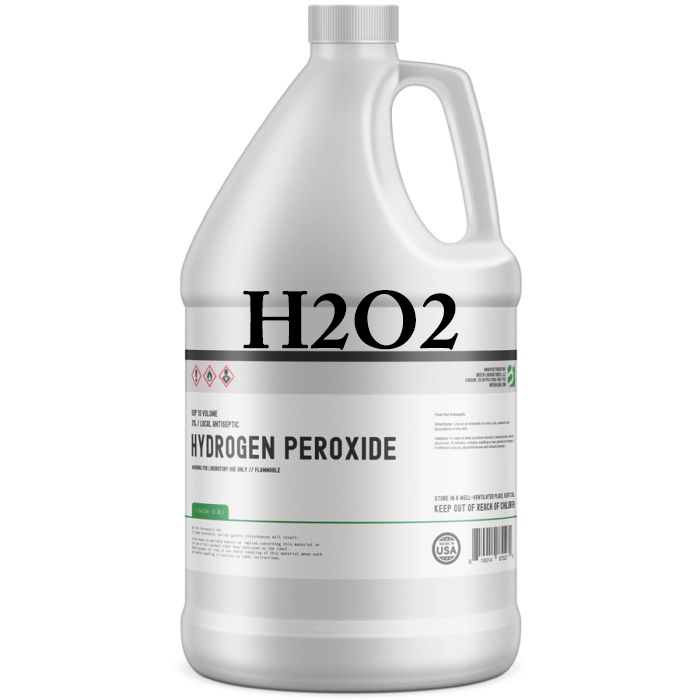
Buyers often struggle to choose the correct solution category. They frequently fail to distinguish between active concentrations and stabilizer additives. This common oversight frequently leads to expensive equipment damage. It can also cause severe regulatory compliance failures. You must absolutely select the precise grade for your intended application.
First, consider standard and cosmetic grades. These solutions typically range from 3% to 12% concentration. They work best for surface-level cleaning. You will also use them for minor medical applications and cosmetology procedures. Manufacturers usually add chemical stabilizers to these low-concentration liquids. Acetanilide is a very common additive. Phenol is another frequently used stabilizer. These chemicals prevent rapid degradation while sitting on store shelves.
Next, we have the 35% standard food grade. This specific concentration is mandatory for food processing facilities. Dairy farms use it to sanitize their stainless steel milking equipment. Large agricultural operations also rely heavily upon it. The term "food grade" can be quite misleading. It simply implies the complete absence of heavy metal stabilizers. It does absolutely not mean the liquid is safe for direct human consumption. You must dilute the chemical properly before routine use.
Finally, industrial and aerospace grades range broadly from 50% to 90%. These concentrated solutions are highly reactive. Facilities use them strictly for paper bleaching and complex chemical synthesis. Specialized manufacturing sectors depend entirely on these intense concentrations. Handling them requires extreme safety protocols and specialized training.
Here is a quick summary chart evaluating the different chemical grades:
Grade Category | Concentration Level | Common Stabilizers Used | Primary Commercial Applications |
|---|---|---|---|
Standard / Cosmetic | 3% - 12% | Acetanilide, Phenol | Surface cleaning, cosmetology, minor medical |
Food Grade | 35% | None (Zero heavy metals) | Dairy sanitization, food processing, agriculture |
Industrial Grade | 50% - 90% | Tin, Phosphates, Varies | Paper bleaching, chemical synthesis, textiles |
High-concentration solutions carry official classifications as hazardous materials. Improper handling presents severe, immediate operational risks to your staff. Direct skin contact causes painful chemical burns instantly. Accidental spills pose massive combustion risks. The liquid reacts violently upon touching certain combustible organic materials.
Your storage infrastructure must meet strict, regulated physical requirements. You cannot use standard sealed containers or basic shelving. Ensure your facility implements these mandatory storage protocols:
You must use specialized vented caps. The liquid constantly off-gasses pure oxygen. Vents prevent dangerous internal pressure buildup.
You must store the liquid inside opaque containers. UV light dramatically accelerates the chemical decomposition process.
You must maintain strictly climate-controlled environments. Heat causes rapid destabilization and significantly increases container rupture risks.
You must utilize compatible materials like 316L stainless steel or approved PTFE plastics for all piping and holding tanks.
Regulatory compliance requires constant vigilance from your management team. Facility managers must review all Safety Data Sheets (SDS) continuously. The Environmental Protection Agency (EPA) strictly monitors substance registry limits. You must track and report your total stored chemical volumes accurately. Furthermore, the Centers for Disease Control and Prevention (CDC) issues mandatory exposure guidelines. For example, OSHA permissible exposure limits typically sit around 1 part per million (ppm) for workplace air. You must enforce these workplace safety rules daily. Proper industrial ventilation and full personal protective equipment (PPE) remain strictly non-negotiable.
You need to match the chemical strictly to your defined operational goals. Different industries leverage its strong oxidizing power for completely different strategic outcomes. Using the wrong concentration wastes money and ruins output quality. Let us examine the primary commercial use cases.
Sanitization and Healthcare Environments: Medical facilities constantly evaluate various surface disinfectants. They often compare hydrogen peroxide against traditional bleach or quaternary ammonium products. The peroxide usually wins due to its clean, residue-free degradation. It breaks down entirely into harmless water and oxygen. This leaves zero toxic residue on sensitive diagnostic medical equipment.
Manufacturing and Industrial Bleaching: Industrial plants assess strict cost-to-yield ratios continuously. Pulp, paper, and textile operations consume massive bulk volumes of this chemical. It offers a much cleaner bleaching alternative compared to harsh chlorine-based agents. It prevents the formation of dangerous dioxins during paper manufacturing.
Water Treatment and Environmental Control: Municipalities increasingly view it as a greener alternative for modern wastewater treatment. It destroys organic pollutants effectively through advanced oxidation processes. Often, facilities combine it alongside iron catalysts to form Fenton's reagent. The entire process generates zero toxic byproducts. This makes environmental discharge compliance much easier to achieve.
We must also issue a firm skeptical note. This chemical is not a universal medical cure-all. Modern medical consensus advises heavily against using it for deep wound care. The aggressive oxidation process damages healthy tissue cells indiscriminately. It destroys helpful fibroblasts surrounding the injury. This cellular toxicity delays the natural healing process significantly. You should absolutely avoid it for treating deep cuts, burns, or surgical punctures.
Procuring bulk chemical supplies requires a highly systematic approach. You cannot simply order from the cheapest available vendor online. Poor quality control impacts your entire production line directly. Impure chemicals will damage your expensive processing equipment.
First, demand strict purity verification from all vendors. You should always request a current, batch-specific Certificate of Analysis (CoA). This critical document verifies the exact concentration percentage reliably. It also details the specific type of chemical stabilizers used inside the batch. You must confirm these stabilizers align perfectly with your internal industry regulations. A missing CoA is a massive red flag.
Second, evaluate logistics and complex hazmat transport factors. Suppliers must demonstrate proven capability to handle hazardous shipping safely. They must follow all legal transport mandates precisely. Regulators classify concentrations above 8% as Class 5.1 Oxidizers. Concentrations above 20% also carry Class 8 Corrosive labels. Remember to factor specialized hazmat freight costs into your overall procurement budget. Specialized transportation is rarely cheap or simple to arrange.
Third, scrutinize product shelf-life and your inventory cadence. As discussed previously, this chemical naturally degrades over time. Buying massive bulk quantities isn't always the smartest operational move. A large storage tank might lose its potency before you finish using it. Establish your vendor shortlisting criteria based on supplier lead times. Look closely at their minimum order quantities (MOQs). Negotiating frequent, smaller deliveries often ensures a much fresher, more reactive supply. Balancing delivery schedules prevents premature chemical degradation.
In summary, h2o2 and hydrogen peroxide are the exact same chemical substance. However, buying the correct version remains a complex operational decision. You must carefully balance concentration levels, stabilizer additives, and strict safety regulations. Handling errors can easily result in severe workplace injuries. Procurement mistakes will ruin expensive production batches.
Take immediate action to secure your chemical supply chain. Audit your current application needs thoroughly today. Identify exactly which concentration your equipment requires. Consult your facility's specific SDS requirements to verify full workplace compliance. Finally, request sample CoAs from shortlisted chemical distributors immediately. Review these documents meticulously before placing any large-scale bulk orders. Your operational safety and efficiency depend entirely on these proactive procurement steps.
A: The naming convention relies heavily on the specific chemical structure. The molecule features a direct bond between the two oxygen atoms. Chemists call this a peroxide bond (O-O). In chemistry, compounds containing this specific oxygen-to-oxygen linkage are classified exclusively as peroxides. This distinguishes them clearly from standard dioxides, where oxygen atoms bond individually to a central atom instead of each other.
A: Yes, it constantly degrades into plain water and oxygen gas. Once you open a bottle, it typically loses its effectiveness within six short months. Unopened, factory-sealed containers usually last between one to three years. The exact degradation timeline depends heavily on the concentration level, the presence of chemical stabilizers, and maintaining cool, dark storage conditions.
A: No, it is extremely dangerous in its pure, concentrated form. The 35% solution is highly corrosive to human skin and respiratory systems. You must wear appropriate personal protective equipment (PPE) when handling it. You must also heavily dilute the concentrated liquid before it ever comes into contact with any food preparation surfaces.


