


Hydrogen peroxide presents a unique chemical duality in modern life. You likely keep a familiar brown bottle in your bathroom cabinet for minor scrapes. Yet, massive industrial sectors rely on this exact substance as a highly reactive bleaching agent. This stark contrast creates widespread confusion regarding its true safety profile. Misinformation often blurs the critical line between benign topical applications and severe systemic toxicity. People sometimes adopt dangerous alternative health practices because they fundamentally misunderstand these concentration risks. We must address this knowledge gap immediately to prevent improper handling. This article provides an evidence-based, medically aligned framework for evaluating chemical toxicity. You will learn how concentration strictly dictates hazard levels across different environments. We also detail compliant safety protocols and essential emergency medical responses. By separating scientific fact from internet fiction, you can securely navigate both household and commercial applications.
Toxicity is concentration-dependent: Household solutions (3%) cause mild irritation, while industrial or "food-grade" concentrations (35%+) are highly corrosive and potentially fatal if ingested.
Exposure route determines the medical response: Ingestion poses the highest critical risk due to rapid gas expansion (oxygen gas embolism), whereas topical exposure primarily risks tissue damage.
Myth-busting is critical: Ingesting any concentration of H2O2 for "health benefits" lacks scientific backing and introduces severe medical risks.
Immediate triage saves lives: Inducing vomiting is contraindicated for H2O2 ingestion; contacting Poison Control or emergency services is the only medically sound next step.
Understanding the core mechanism of action remains absolutely crucial for personal safety. When examining h2o2 in chemistry, you see a remarkably powerful oxidizing agent. The molecule features an inherently unstable single bond between two oxygen atoms. It readily breaks down into plain water and free oxygen gas. This rapid decomposition releases significant thermal energy into the surrounding environment. It also drives the liquid's potent bleaching and antimicrobial properties. However, this exact chemical reactivity creates severe hazards for delicate human tissue.
You cannot evaluate potential toxicity without closely examining the concentration gradient. The proportion of the active chemical strictly dictates all required safety measures. A minor difference in percentage drastically alters the physical reaction inside the body.
Grade & Concentration | Primary Use Case | Toxicity Profile & Risk Level |
|---|---|---|
Household / Medical Grade (3% - 5%) | First aid, minor surface cleaning, weak antiseptics | Low risk. Ingestion causes mild gastrointestinal distress, stomach foaming, and nausea. |
Cosmetic / Hair Bleaching Grade (6% - 10%) | Hair dye processing, professional teeth whitening | Moderate risk. Causes significant mucosal irritation, potential dermal burns, and eye damage. |
Food-Grade / Industrial (>35%) | Commercial sanitation, heavy industrial bleaching | High toxicity/poisonous. Highly corrosive to human tissue; severe risk of fatal gas embolism upon ingestion. |
This clear concentration spectrum highlights a vital, non-negotiable safety rule. You must treat a 35% solution completely differently than a standard 3% solution. What acts as a mild antiseptic becomes a dangerous, life-threatening poison at higher strengths. Facilities must adjust their handling protocols based entirely on these percentage thresholds.
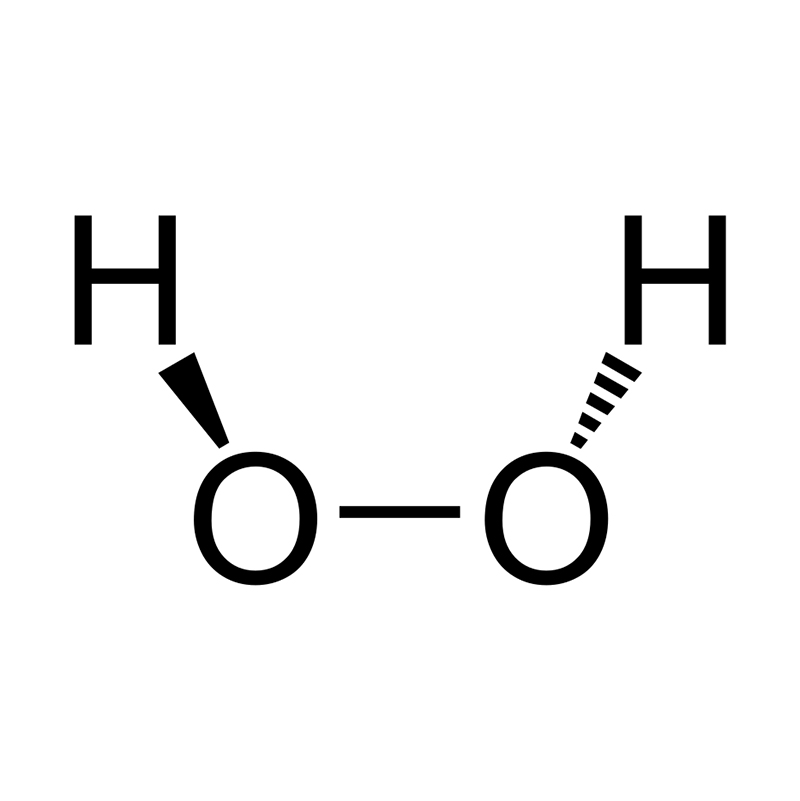
Workplaces and homes need clear hazard criteria established immediately. You must build these safety baselines based on chemical entry routes. Exposure paths drastically change the resulting clinical outcome for the patient. Understanding how the chemical infiltrates the body helps prevent severe long-term damage.
Drinking this chemical triggers a violent, immediate biological reaction. Human organ tissues contain a highly active natural enzyme called catalase. When hydrogen peroxide meets catalase, it rapidly decomposes on contact. This structural breakdown releases massive amounts of oxygen gas inside the body. A single milliliter of 35% liquid releases roughly 100 milliliters of expanding gas.
This explosive gas expansion creates severe physical internal trauma instantly. The stomach rapidly distends and can easily rupture from the sudden pressure. Furthermore, the expanding gas frequently forces its way into local blood vessels. This violent intrusion creates deadly oxygen gas embolisms inside the bloodstream. These lethal bubbles migrate quickly toward the brain or the heart. Such circulatory blockages cause severe strokes, sudden cardiac arrest, and often prove fatal.
Breathing ambient vapors from high-concentration solutions presents unique respiratory dangers. These volatile vapors strongly irritate the delicate mucous membranes inside your airways. Prolonged atmospheric exposure causes severe coughing, chest tightness, and acute shortness of breath. In severe industrial spill accidents, exposed workers might quickly develop pulmonary edema. This dangerous fluid accumulation in the lungs requires intensive, immediate medical intervention.
Direct skin contact yields widely varying clinical results based on liquid strength. Minor household splashes might cause temporary, localized skin whitening. This distinct physical reaction occurs because the chemical briefly compresses local capillary vessels. The affected skin usually returns to a normal color within a few hours. Conversely, liquid concentrations above 10% cause severe, immediate chemical burns upon contact. They rapidly destroy deep epidermal layers and leave painful, blistering tissue wounds.
Dangerous misinformation frequently circulates regarding alternative holistic health therapies online. Certain alternative medicine communities heavily promote drinking high-concentration "food-grade" formulas. They falsely claim drinking diluted drops cures chronic diseases through cellular hyperoxygenation. This growing online trend is incredibly dangerous and fundamentally flawed chemically.
We must rely on an evidence-oriented medical rebuttal here. The human digestive tract cannot safely process pure oxidizing agents. Drinking diluted or pure food-grade solutions offers absolutely zero proven health benefits. Instead, it introduces extreme, life-threatening medical risks to the consumer. The sudden internal oxygen release damages organ tissues irreversibly. Medical professionals strictly advise against consuming this reactive chemical in any form or dilution.
The industrial terminology itself misleads many well-intentioned consumers globally. We need completely transparent assumptions about industrial chemical naming conventions. "Food-grade" strictly refers to the chemical manufacturing and stabilization process. It simply means the manufacturer omitted toxic heavy metal stabilizers during production. Industrial food processing facilities require this high purity for cleaning food machinery. It absolutely does not mean the liquid is safe for human consumption. This fundamental misunderstanding alone causes numerous preventable poisoning cases every single year.
Common Mistake: People assume natural products cannot act as deadly poisons. While naturally occurring, concentrated oxidizing liquids destroy biological cells indiscriminately upon contact.
Commercial facilities and individuals must handle these chemicals securely and diligently. Scaling your usage requires strict adherence to established safety protocols. Implementation considerations must focus heavily on environmental containment and personal protection equipment.
Proper storage directly prevents dangerous chemical degradation and structural container failures. You must use designated storage containers equipped with specialized vented caps. These unique caps allow slowly accumulating oxygen gas to escape safely over time. Without proper venting, internal pressure steadily builds up until the bottle violently explodes. Furthermore, always store the liquid in light-proof, completely opaque containers. Ultraviolet light drastically accelerates chemical degradation and creates volatile, unpredictable reactions.
The Occupational Safety and Health Administration sets strict operational baselines for chemical handling. Safety Data Sheet documentation demands specific precautions for all industrial material handling. If you manage an industrial facility, you must implement the following safety protocols:
Enforce strict PPE requirements: Workers must always wear specialized chemical splash goggles. Standard safety glasses do not offer adequate side protection against liquid splashes.
Require appropriate hand protection: Nitrile or heavy-duty rubber gloves remain absolutely mandatory. Standard latex gloves offer insufficient chemical resistance against strong oxidizing agents.
Ensure eye-wash station proximity: Install emergency flushing stations within ten seconds of the primary handling area.
Implement secondary containment: Place large storage vats inside spill-containment pallets to catch accidental chemical leaks.
Following these simple compliance steps greatly reduces daily occupational hazards. Never bypass these essential physical safeguards for operational convenience or workflow speed.
Best Practice: Always rotate your chemical stock actively and consistently. Older liquid solutions slowly lose potency while building dangerous internal gas pressure. Use a strict "first-in, first-out" inventory management method to guarantee workplace safety.
When an unexpected exposure incident occurs, quick decision-stage logic genuinely saves lives. You need exceptionally clear triage criteria for immediate patient evaluation. A fast, medically appropriate response minimizes tissue damage and prevents complete systemic collapse.
Traditional at-home medical remedies often worsen the acute chemical situation rapidly. You must completely avoid certain common actions during an active emergency. Strongly communicate to everyone involved: never induce vomiting under any circumstances. This represents a critical, non-negotiable medical rule. Expelled oxygen gas can violently rupture the fragile esophagus during forceful emesis. Furthermore, the panicked individual might accidentally aspirate the foaming liquid directly into their lungs. This creates deadly secondary respiratory complications.
The correct emergency medical response depends entirely on the specific exposure route. You should follow these medically sound, proven guidelines immediately upon exposure:
Exposure Type & Liquid Strength | Immediate Action Required | Secondary Monitoring Action |
|---|---|---|
3% Household Ingestion | Drink a small amount of plain water or milk immediately. | Monitor the patient closely for severe spontaneous vomiting. |
>10% High-Strength Ingestion | Dispatch patient to the nearest emergency department immediately. | Call Poison Control en route. Do not wait for symptoms. |
Direct Eye Exposure | Flush the eyes continuously for a minimum of 15 to 20 minutes. | Hold the eyelids forcibly open during the entire flush duration. |
Direct Skin Exposure | Wash the area gently with mild soap and copious water. | Remove any chemically contaminated clothing items immediately. |
Keep your local emergency medical numbers permanently posted near your chemical storage areas. Immediate access to professional toxicological advice provides the absolute best defense against severe injury. Understanding exactly how h2o2 reacts dynamically inside the body guarantees a calmer, safer response to severe accidents. Educate your entire household or workforce on these specific emergency steps before an incident ever happens.
Low-concentration household formulas remain a perfectly safe topical staple for minor consumer needs. However, higher chemical concentrations are indisputably poisonous and require strictly regulated handling environments. We have clearly established why proper handling compliance prevents catastrophic, life-altering physical injuries effectively. Ingestion of potent industrial chemical grades triggers explosive internal gas expansion inside bodies. You simply cannot ignore the serious medical risks associated with alternative health myths.
You should immediately audit your household or commercial facility today. Ensure all active chemical containers feature clear, highly accurate hazard warning labels. Verify your storage areas strictly use appropriate vented, entirely light-proof bottles. Finally, post your local Poison Control contact numbers permanently near your chemical zones. Taking these proactive compliance steps ensures daily safety and prevents easily avoidable chemical accidents.
A: It is highly unlikely to be fatal, but it can cause stomach upset, vomiting, and mild internal irritation. Drinking a small amount of water helps dilute the chemical. However, you should still consult Poison Control if a child ingests even a 3% solution to ensure proper medical monitoring.
A: A small, accidental swallow of over-the-counter mouthwash (typically <1.5% concentration) generally only requires drinking a glass of water. You should simply observe for minor stomach distress. Because the concentration remains extremely low, it rarely causes serious harm. If sharp abdominal pain persists, seek medical advice.
A: Yes, it breaks down into simple water and oxygen gas. However, in enclosed bodily spaces like the stomach or bloodstream, the rapid expansion of that oxygen gas causes severe internal injury. This sudden internal pressure can violently rupture organs or create fatal gas embolisms inside your blood vessels.


