
Views: 0 Author: Site Editor Publish Time: 2026-06-17 Origin: Site


Navigating industrial chemical procurement often leads back to one fundamental question. Facility operators must understand exactly how an oxidizer functions to maximize its value. Many industries rely heavily on aggressive bleaching and cleaning agents. Few chemical options offer both extreme oxidation power and comprehensive environmental safety.
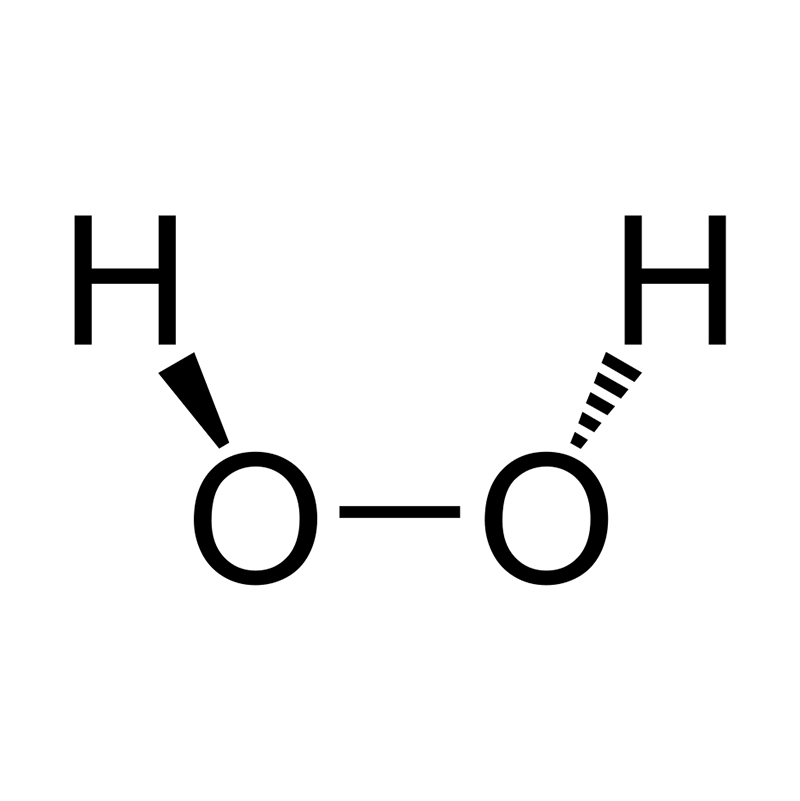
We must define exactly what is h2o2 in chemistry to fully grasp its commercial value. It is a simple inorganic compound composed of two hydrogen atoms and two oxygen atoms. Its inherent thermodynamic instability and potent oxidizing properties make it highly effective. It functions as a high-value, residue-free chemical for complex B2B applications.
This guide helps technical buyers, facility managers, and process engineers evaluate commercial grades. We will assess critical implementation risks and storage protocols. You will learn how to align these unique chemical properties directly with specific operational outcomes.
Chemical Advantage: H2O2 acts as a powerful oxidizer that decomposes into simply water and oxygen, eliminating harmful downstream byproducts.
Application Specificity: Efficacy is dictated by concentration and purity grades (ranging from 3% consumer limits to 35%+ industrial/electronic grades).
Compliance & Safety: High-concentration hydrogen peroxide requires strict handling infrastructure, specialized storage, and adherence to occupational exposure limits.
Procurement Logic: Choosing the right formulation requires balancing oxidation potential, stabilizer additives, and supply chain scalability.
Understanding the molecular behavior of this chemical helps facility managers predict its performance. The structure contains a characteristic peroxide bond connecting two oxygen atoms (O-O). This specific chemical bond is fundamentally weak. It constantly seeks to break down into a more stable state. When this cleavage occurs, it releases significant energy alongside reactive oxygen species. This exact tendency to degrade drives its massive industrial utility as a bleaching and oxidizing agent.
Modern industries face heavy scrutiny regarding environmental discharge. You can clearly see the "zero-residue" advantage when you contrast it with traditional chlorine-based alternatives. Chlorine compounds frequently leave behind toxic chlorinated byproducts, such as trihalomethanes (THMs). In contrast, hydrogen peroxide degrades cleanly. It leaves behind nothing but water and oxygen. This clean degradation solves major environmental compliance issues. It drastically reduces wastewater treatment overhead for large manufacturing plants.
However, operators must manage the variables of decomposition. Several external factors rapidly accelerate this degradation process. UV light exposure breaks the bonds quickly. Heat increases the kinetic energy, speeding up the reaction. Transition metals act as aggressive catalysts. Elevated pH levels severely destabilize the solution. You must set transparent assumptions about storage limitations. Managing these variables prevents rapid product loss and dangerous pressure build-up inside storage vessels.
Best Practice: Always store bulk containers away from direct sunlight and maintain ambient temperatures below 30°C to preserve chemical shelf life.
Not all peroxide solutions perform identically. Manufacturers engineer different grades to meet distinct industrial requirements. Technical-grade solutions represent the bulk of commercial shipments. They contain specialized chemical stabilizers designed to survive long transport routes and prolonged storage. Conversely, high-purity variants—like Food Grade or Electronic Grade—strip away these heavy stabilizers. Electronic grades require ultra-low particulate counts to wash semiconductor wafers without leaving molecular residues.
Concentration thresholds dictate the safe handling and specific use cases for each batch. Consumer formulations hover around 3%. They pose minimal risk. Industrial applications usually begin at 35% volume. This concentration offers strong bleaching capabilities for textiles and paper. Heavy chemical synthesis and specialized industrial processes utilize 50% to 70% concentrations. These high-strength solutions demand rigorous safety controls and specialized dilution equipment before daily use.
Buyers must understand the vital role of stabilizers. You face a constant trade-off between chemical stability and application purity. Manufacturers add proprietary tin-based or phosphate-based stabilizers to quench trace metals. These additives prevent premature decomposition. However, heavy stabilizers can interfere with delicate chemical reactions or leave unwanted residues on aseptic packaging. Certain proprietary stabilization technologies act as critical evaluation criteria during procurement.
Concentration Level | Grade Classification | Primary Industrial Use Case | Storage & Handling Complexity |
|---|---|---|---|
3% - 10% | Consumer / Mild Technical | Surface disinfection, retail medical use | Low. Standard opaque HDPE containers. |
35% | Standard Industrial / Food Grade | Wastewater treatment, aseptic packaging | Moderate. Vented caps required, dedicated PPE. |
50% | Heavy Industrial / Electronic | Pulp and paper bleaching, semiconductor cleaning | High. Passivated stainless steel tanks, containment dikes. |
70% | Chemical Synthesis Grade | Propellant manufacturing, complex organic synthesis | Extreme. Strictly controlled dilution protocols, thermal monitoring. |
Facility engineers leverage specific grades to achieve distinct operational targets. In wastewater treatment and environmental remediation, this oxidizer serves as a rapid solution for severe odor control. It actively destroys hydrogen sulfide compounds. It significantly reduces Biological Oxygen Demand (BOD) and Chemical Oxygen Demand (COD) in industrial effluent. Facilities also utilize it in Advanced Oxidation Processes (AOPs). Combining the solution with UV light or iron catalysts generates hydroxyl radicals. These radicals destroy highly recalcitrant organic pollutants.
The pulp, paper, and textile industries rely heavily on its bleaching capabilities. Mills need to achieve high brightness targets for premium paper products. Traditional chlorine bleaching degrades fiber integrity and violates strict environmental discharge regulations. Implementing Totally Chlorine Free (TCF) bleaching sequences protects the cellulose fibers. It maintains textile tensile strength while achieving desired color removal. This switch effectively future-proofs manufacturing operations against tightening environmental legislation.
Healthcare facilities and food manufacturers utilize specialized grades for aseptic packaging and sterilization. Regulatory standards enforce strict boundaries here. European Commission guidelines and FDA compliance frameworks dictate acceptable residual limits. Facilities deploy vaporized h2o2 (VHP) through specialized machinery. This cold sterilization method decontaminates sensitive medical instruments and seals food packaging. It guarantees microbial destruction without warping temperature-sensitive plastics.
Process Goal | Action Mechanism | Operational Benefit |
Wastewater Remediation | Hydroxyl radical generation (AOP) | Destroys complex organics without generating toxic sludge. |
Textile Bleaching | Targeted chromophore oxidation | Increases fabric brightness while retaining fiber strength. |
Aseptic Sterilization | Vaporized microbial destruction | Achieves cold sterilization for heat-sensitive materials. |
Aggressive oxidation power brings substantial handling risks. Facility safety managers must respect established toxicology and exposure frameworks. Standard safety benchmarks from the CDC and NIOSH provide clear guidance. The Permissible Exposure Limit (PEL) for inhalation typically rests at just 1 part per million (ppm) over an eight-hour shift. Inhalation of concentrated vapors causes severe respiratory tract irritation. Direct skin contact leads to immediate chemical burns and severe tissue bleaching. You must enforce strict Personal Protective Equipment (PPE) mandates.
Material compatibility forms the foundation of safe infrastructure. Pumping systems and storage tanks require objective engineering evaluations. Contact with incompatible materials triggers catastrophic catalytic decomposition. This rapid breakdown boils the solution and bursts enclosed pipes.
Review this material compatibility checklist carefully:
Approved Materials: 304L and 316L stainless steel (must be chemically passivated before use).
Approved Plastics: Specific high-density polyethylene (HDPE) and PTFE (Teflon) for gaskets.
Incompatible Materials (Do Not Use): Iron, mild steel, copper, brass, bronze, and zinc.
Contamination Risks: Dust, dirt, and organic greases act as catalysts and must be completely eliminated from the handling environment.
Facility requirements involve non-negotiable safety investments. You cannot simply place a storage tank in a standard warehouse. Upgrading your infrastructure requires meticulous planning.
Passive Pressure Relief Venting: Because the chemical constantly off-gasses microscopic amounts of oxygen, all storage vessels and piping segments between closed valves must feature pressure relief devices.
Secondary Containment: Concrete dikes must surround bulk tanks. These areas must hold at least 110% of the largest tank's volume. They must remain free of any organic materials or wooden pallets.
Temperature-Controlled Storage: Operators must install monitoring systems to track ambient temperatures. Significant temperature spikes indicate active decomposition inside the tank.
Dedicated Dilution Zones: Facilities mixing 50% solutions down to operational concentrations must utilize dedicated, isolated mixing stations to prevent cross-contamination.
Common Mistake: Using standard steel valves on a storage line. Even a tiny brass or mild steel fitting will aggressively catalyze the chemical, leading to a pressurized pipe explosion.
Procuring this chemical involves much more than placing a standard bulk order. Buyers must rigorously assess the technical data provided by potential partners. You should request and review both the Technical Data Sheets (TDS) and Safety Data Sheets (SDS) immediately. Do not accept generic documentation. Look specifically for the trace metal limits listed on the TDS. High trace metals indicate poor manufacturing quality control. Furthermore, request the exact stabilizer profiles. If your process involves delicate AOPs, heavy colloidal stannate stabilizers might hinder your reaction efficiency.
Supply chain infrastructure dictates long-term reliability. Evaluate vendor capabilities thoroughly. Can they handle safe bulk delivery using dedicated, passivated tanker trucks? A vendor using multi-purpose chemical trucks risks cross-contamination. Ask about their localized dilution facilities. If you require a 35% solution, a supplier who dilutes a 70% master batch locally can often provide better supply security. Investigate their driver safety training and transfer protocols. The moment the chemical transfers from the truck to your facility tank presents the highest risk for spills and contamination.
Sourcing requires aligning the chemical's strict handling needs with a supplier capable of transparent, high-quality logistics. Review their emergency response protocols. A reputable chemical manufacturer provides dedicated technical support to help you design your internal storage architecture. They should offer on-site audits to verify your material compatibility before they authorize the first delivery.
Understanding the fundamental chemistry of this powerful oxidizer represents only the first step in successful implementation. We have explored how its unique molecular structure delivers incredible bleaching power while degrading harmlessly into water and oxygen. However, capturing this environmental and operational advantage requires strict adherence to safety, material compatibility, and grading protocols.
As you move forward, audit your current oxidation and bleaching processes. Identify where heavy chlorinated chemicals currently create wastewater liabilities. Request detailed specification sheets from shortlisted chemical manufacturers. Finally, conduct small-scale pilot testing with specific stabilizer profiles to ensure the chemical integrates perfectly with your facility's unique operational demands.
A: The standard chemical name is Hydrogen Peroxide. In highly technical or academic chemistry nomenclature, it is sometimes referred to as dioxidane. It belongs to the peroxide family due to its signature oxygen-oxygen single bond.
A: Yes. Even highly stabilized industrial solutions degrade over time. Under optimal, temperature-controlled, and dark storage conditions, the chemical typically experiences a 1% to 2% loss of active oxygen per year. Poor storage drastically accelerates this expiration.
A: The chemical naturally and continuously decomposes into water and oxygen gas. Vented caps allow this off-gassing oxygen to escape harmlessly. Without vents, the trapped gas would build severe pressure, causing the container to swell and eventually rupture.
A: No, unless engineered under strictly controlled industrial processes. Mixing it randomly with other chemicals—especially strong acids, organic solvents, or heavy metals—can trigger violent, explosive, or highly hazardous exothermic reactions.


