


Pure hydrogen peroxide is inherently a weak acid. However, chemical manufacturers intentionally maintain commercial grades at a much higher acidity to guarantee stability during transport and storage. This precise chemical reality introduces significant operational risks for industrial facilities. Misunderstanding the acidic properties of these solutions frequently leads to severe material degradation. You risk triggering dangerous exothermic reactions and causing premature chemical decomposition inside your storage vessels.
We designed this comprehensive guide to solve these specific infrastructure challenges. Procurement managers, safety officers, and facility engineers require an evidence-based evaluation framework to make safe decisions. We will help you assess different chemical grades accurately. You will learn how to manage infrastructure compatibility and prevent catastrophic equipment failures. Finally, we provide actionable criteria to help you shortlist suppliers based on specific pH limits and stabilizer profiles.
Chemical baseline: Pure H2O2 is weakly acidic (pH ~4.5), but commercial solutions are stabilized to a pH of 1.0–3.0.
Infrastructure impact: The acidic and oxidizing nature of commercial hydrogen peroxide strictly dictates storage materials (e.g., 304L/316L stainless steel, specific HDPEs).
Application matching: Selecting the right product grade requires balancing necessary acidic stabilizers against the purity requirements of your end-use case (e.g., food processing vs. wastewater treatment).
Safety compliance: Mixing acidic H2O2 with strong bases or transitional metals triggers rapid, potentially hazardous decomposition.
You must understand the inherent properties of the molecule before designing industrial storage systems. The role of h2o2 in chemistry revolves around its behavior in aqueous solutions. It acts primarily as a weak acid. The molecule donates a proton to the surrounding water, forming the hydroperoxide ion (HO2-). This proton donation technically classifies the chemical as an acid. However, theoretical academic definitions often differ from practical industrial realities.
Pure solutions possess a theoretical pH of approximately 4.5. You will almost never encounter this pure form in an industrial setting. Unstabilized, high-purity solutions remain highly volatile. The chemical naturally wants to break down into simpler, more stable molecules. Therefore, evaluating the theoretical pH offers little practical value for facility engineers.
Operators must recognize the dual nature of this chemical. It registers as a weak acid on the pH scale, yet its dominant industrial trait is powerful oxidation. It aggressively steals electrons from other substances. This oxidizing power drives its utility in wastewater treatment, paper bleaching, and packaging sanitation. You must design your systems to handle both its acidic nature and its aggressive oxidizing capabilities.
Common Mistakes:
Treating the chemical solely as an acid and ignoring its oxidizing risks.
Assuming theoretical pH values apply to bulk industrial deliveries.
Using standard acid-resistant materials lacking specific oxidation resistance.
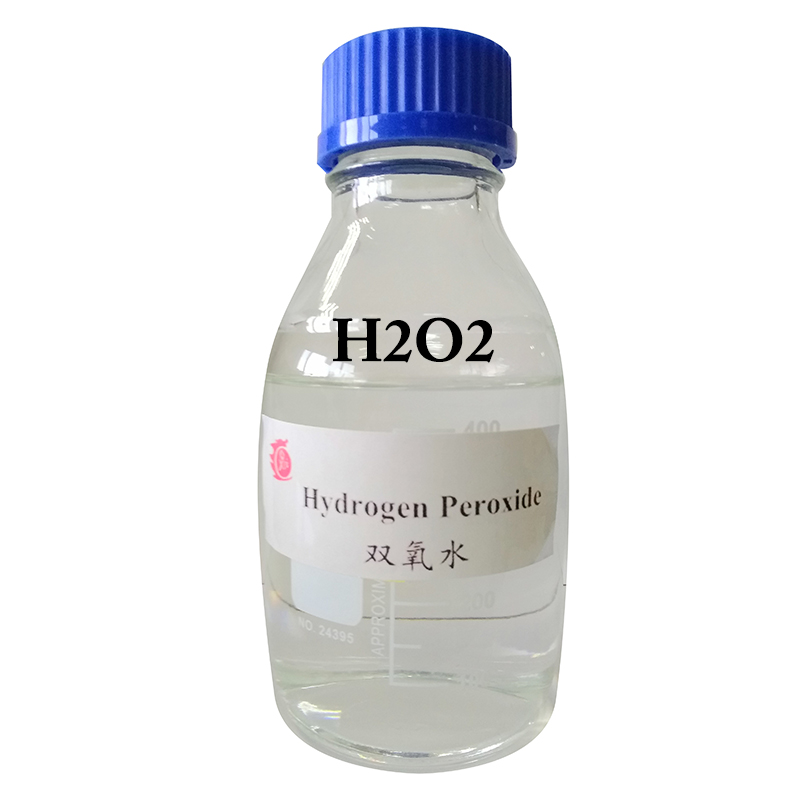
The supply-chain realities of bulk chemical transport force manufacturers to alter the natural state of the solution. Neutral or alkaline environments create severe decomposition risks. When the pH rises above 4.5, the chemical degrades rapidly. It breaks down into water and oxygen gas. This exothermic reaction releases substantial heat. The expanding oxygen gas creates massive pressure inside closed storage tanks. Under alkaline conditions, this degradation becomes potentially explosive.
Manufacturers prevent this catastrophic breakdown by adding specific acidic stabilizers. These compounds artificially lower the pH of the solution. This process extends the shelf life dramatically, allowing safe transit across long distances. Understanding these stabilizers helps buyers anticipate downstream process impacts.
Standard Industrial Stabilizers Include:
Phosphoric Acid: A highly effective, low-cost additive used to drop the pH and prevent transition metal catalysis.
Colloidal Stannate: Forms a protective complex around trace metals, preventing them from triggering decomposition.
Organic Phosphonates: Advanced chelating agents providing robust stability under varying temperature conditions.
This artificial acidification creates a direct procurement implication. A longer shelf life naturally requires a lower pH and a heavier stabilizer load. Buyers face a necessary tradeoff. Highly stabilized products transport safely but introduce foreign acids into your facility. These heavy stabilizers often interfere with sensitive downstream applications. You must account for these added compounds when calculating your final process chemistry.
Handling acidic oxidizing agents demands strict infrastructure control. You cannot rely on standard industrial piping. Incompatible materials suffer catastrophic failure rapidly. Worse, certain metals act as active catalysts. They force the h2o2 to decompose violently upon contact.
Copper, iron, brass, and mild steel present extreme hazards. Even trace amounts of these transition metals trigger dangerous gas expansion. Standard rubber gaskets degrade, become brittle, and eventually fail entirely under the dual acidic-oxidizing attack. Facility managers must strictly ban these materials from any contact zones.
Material Category | Approved Infrastructure | Strictly Incompatible |
|---|---|---|
Metals | Passivated 304L & 316L Stainless Steel, High-Purity Aluminum | Copper, Brass, Bronze, Mild Steel, Zinc, Galvanized Iron |
Plastics & Polymers | Teflon (PTFE), Specific High-Density Polyethylene (HDPE) | Nylon, Standard Polyvinyl Chloride (PVC), Acetal |
Elastomers (Gaskets) | Viton (fluorocarbon), PTFE-lined EPDM | Natural Rubber, Neoprene, Standard Buna-N |
Implementing approved materials requires specific preparation. You cannot simply install a 316L stainless steel tank and begin filling it. You must perform a rigorous passivation process first. Passivation involves treating the interior steel surfaces using a strong nitric acid solution. This chemical wash strips away free iron molecules left behind during welding and fabrication.
Best Practices for Implementation:
Always hire certified contractors to perform the initial passivation wash.
Test the passivated tank using a dilute, localized drop test before initiating a bulk delivery.
Replace all generic facility gaskets with verified PTFE or Viton alternatives.
Procurement teams need a structured framework for shortlisting chemical grades. You must base this decision on acidity tolerance and stabilizer makeup. The market categorizes solutions based on their intended end-use. Selecting the incorrect grade wastes budget or ruins product batches.
Standard Industrial Grade carries the heaviest stabilizer load. The pH typically ranges from 1.0 to 3.0. Manufacturers design this grade for heavy-duty applications. It excels in wastewater treatment, mining operations, and pulp bleaching. It represents the most cost-effective option available. However, the heavy phosphoric or stannate stabilizers leave trace residues. These residues make it entirely unsuitable for sensitive manufacturing.
Food and Aseptic Grade features tightly regulated stabilizer levels. Facilities use this grade specifically for packaging sanitation and food contact surfaces. The federal government strictly regulates these applications. You must verify compliance through FDA or EPA equivalent certifications. The pH remains low for stability, but the specific chemical additives differ to ensure human safety.
Semiconductor and Electronic Grade represents the pinnacle of purity. Manufacturers exclude traditional acidic stabilizers entirely. They use advanced, proprietary purification methods to maintain stability. The electronics industry uses this grade to etch microchips. It carries the highest unit price and demands the strictest storage conditions. Contamination of even a few parts per billion destroys its utility.
Industrial Grade Comparison Chart | |||
Chemical Grade | Typical pH Range | Stabilizer Load | Primary Applications |
|---|---|---|---|
Standard Industrial | 1.0 – 3.0 | High (Stannate/Phosphonic) | Wastewater, Pulp & Paper, Mining |
Food / Aseptic | 2.0 – 3.5 | Regulated (Food-Safe) | Beverage Cartons, Surface Sanitation |
Electronic / Semi | Variable (Ultra-Pure) | None / Trace Spec | Microchip Etching, Wafer Cleaning |
Advise your purchasing department to avoid over-specifying. Buying an electronic grade solution for a wastewater clarifier wastes massive amounts of capital. Conversely, under-specifying creates severe operational bottlenecks. Using industrial grades in food packaging risks massive product recalls due to heavy metal stabilizers.
Translating chemical knowledge into procurement action requires verifiable steps. You must scrutinize potential suppliers beyond their quoted price per gallon. Focus your evaluation on quality control transparency and logistics capability.
Start with Quality Assurance and Quality Control (QA/QC) verification. Instruct buyers to request a recent Certificate of Analysis (CoA) from the supplier. Scrutinize the specific pH ranges listed on the document. Verify the active oxygen concentration meets your exact specification. Check the maximum limits for heavy metals. A reliable supplier provides consistent, batch-to-batch CoA documentation without hesitation.
Next, evaluate the supplier's logistics and transport conditions. The acidic stability of the chemical means nothing if transport conditions fail. Assess their delivery fleet closely. Do they use vented caps on their drums and totes? Vented caps allow trace oxygen gas to escape safely. Closed caps risk pressure explosions during hot summer transit. Do they operate dedicated tanker fleets? Shared tankers frequently cause cross-contamination. Trace remnants of a previous basic chemical delivery will neutralize the acidic stabilizers instantly.
Finally, mandate a comprehensive facility audit before finalizing any new contract. Review your current infrastructure thoroughly.
Inspect all receiving piping for incompatible metal fittings.
Examine every pump seal transferring the chemical to day tanks.
Test your emergency pressure relief valves to ensure they actuate at the correct PSI.
Confirm your secondary containment areas feature compatible polymer coatings.
While the molecule remains intrinsically a weak acid in academic definitions, practical reality differs vastly. Buyers actually deal with an artificially acidified, highly reactive oxidizer. Recognizing this distinction prevents dangerous infrastructure failures. Commercial grades require low pH levels to suppress catastrophic decomposition during transport.
Successful procurement requires careful strategic alignment. You must match the specific pH and stabilizer profile of the chemical to your facility's physical infrastructure. You must simultaneously align those chemical properties with your end-product's purity tolerance. Failing to balance these factors leads to contaminated batches and degraded piping.
Take immediate action to secure your facility. Audit your current tank materials and transfer lines today. Download an industry-standard compatibility checklist for your engineering teams. Consult directly with a chemical application specialist to verify your current grade selection meets your operational safety limits.
A: No. Because it is acidic, it will turn blue litmus paper red (or slightly bleach the paper due to its strong oxidizing properties).
A: While you can add a base to raise the pH, doing so removes its stability. It will rapidly decompose into water and oxygen gas, rendering it useless and potentially causing dangerous pressure buildup.
A: Yes. Higher industrial concentrations (35%, 50%) generally have a lower pH (more acidic) because they require more robust stabilization to safely transport and store compared to standard 3% household solutions.


