
Views: 0 Author: Site Editor Publish Time: 2026-06-11 Origin: Site


Many people wonder if their cleaning supplies actually expire or simply sit safely in the cabinet forever. The quick answer is yes, hydrogen peroxide degrades over time, eventually turning into plain water and oxygen gas. This natural decomposition happens quietly. It leaves no visual clues inside the bottle, masking its loss of potency.
Relying on degraded stock poses serious practical and commercial risks. Whether you require effective surface disinfection, dependable dental whitening, reliable wound care, or accurate lab diagnostics, using an inactive solution severely compromises your results. You might mistakenly assume a surface is sanitary when it remains dangerously contaminated.
This guide provides an evidence-based framework for evaluating your existing inventory. We will show you exactly how to test for active viability and make informed replacement decisions. Read on to master proper storage protocols and ensure your supply remains fully effective when you need it most.
Sealed Shelf Life: Unopened 3% hydrogen peroxide generally lasts 1 to 3 years from the manufacturing date if stored correctly.
Opened Shelf Life: Once the seal is broken, peak efficacy drops to roughly 1 to 6 months.
The Litmus Test: Pouring a small amount into a sink should produce a distinct, immediate fizzing sound and bubbling; a lack of reaction indicates it has degraded into water.
Storage Reality: Light, heat, and organic contaminants exponentially accelerate the degradation process.
To understand why this solution expires, we must first look at its fundamental chemical structure. The scientific baseline is straightforward. The solution constantly undergoes a natural decomposition process where it breaks down into water and oxygen. Chemists represent this reaction as 2H2O2 → 2H2O + O2. Because the extra oxygen atom forms a highly unstable bond, the molecule naturally seeks a more stable state. It releases oxygen gas into the air and leaves standard water behind. This reaction happens continuously, even under perfect conditions.
Various environmental catalysts dramatically accelerate this breakdown. Ultraviolet (UV) light acts as a primary trigger for photolysis, breaking the chemical bonds almost immediately upon exposure. Temperature fluctuations also play a massive role. Heat provides the thermal energy required to destabilize the oxygen bonds faster. Furthermore, introducing external contaminants acts as a rapid catalyst. A single speck of dust, a tiny drop of organic matter, or trace metals can trigger a chain reaction. Once contamination occurs, the entire bottle can degrade in a matter of days.
You have likely noticed the distinctive packaging used for these products. Manufacturers universally package consumer-grade H2O2 in opaque brown bottles for a very specific engineering reason. The dark tint blocks the specific wavelengths of UV light responsible for chemical destabilization. Many people make the common mistake of transferring the liquid into clear spray bottles for easier use around the house or clinic. Doing so essentially destroys its active properties within a few days. You strip away its primary environmental shield, allowing ambient room lighting to neutralize the solution.
Understanding the gap between manufacturer guarantees and real-world conditions helps you manage inventory effectively. Unopened inventory generally carries standard manufacturer guarantees ranging from 12 to 36 months. Manufacturers calculate this shelf life assuming the product remains in a climate-controlled warehouse or pharmacy shelf. To verify your current stock, you must know how to read expiration stamps and lot numbers. Many industrial suppliers print a Julian date code representing the exact day of manufacture. As long as the factory seal remains intact, the internal pressure and sterile environment keep the chemical relatively stable.
Once you break the seal, the timeline changes drastically. Post-opening decline begins the moment ambient air enters the bottle headspace. Exposing the liquid to environmental oxygen, microscopic airborne dust, and changing humidity initiates a rapid degradation curve. In most practical settings, peak efficacy drops to a window of roughly one to six months. By month six, a standard bottle often retains only a fraction of its original oxidative power.
Concentration variables also dictate how carefully you must monitor your supply. Higher concentrations behave very differently than consumer variants. A 30% laboratory-grade or food-grade solution degrades more aggressively and poses higher pressure risks than a standard 3% consumer medical-grade bottle. Industrial users must implement stricter monitoring protocols because high-concentration variants release significantly more oxygen gas as they decompose. This rapid off-gassing can cause containers to swell or even burst if improperly vented.
Concentration Grade | Unopened Shelf Life | Opened Shelf Life | Primary Use Case |
|---|---|---|---|
3% Consumer Grade | 1 - 3 Years | 1 - 6 Months | Basic wound care, household cleaning |
6% - 12% Beautician Grade | 1 - 2 Years | 1 - 3 Months | Hair bleaching, dental whitening |
30% - 35% Industrial/Lab Grade | 6 - 12 Months | 30 - 60 Days | Lab diagnostics, agricultural sanitation |
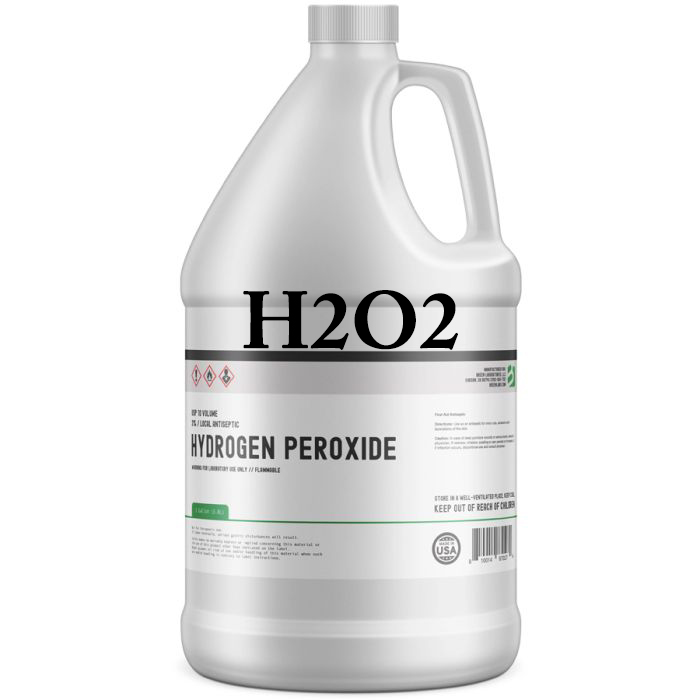
You cannot determine chemical viability by simply looking at the bottle. Because H2O2 eventually turns into pure water, an expired solution looks entirely identical to a fresh one. To avoid false assumptions, you need a reliable, actionable verification method. The most practical approach is the sink or drain test, commonly referred to as the fizz test.
Follow these precise steps to evaluate your supply:
Clear a small section of your sink drain, ensuring it contains some minor organic residue (typical drain environments work perfectly).
Pour a small splash (about one tablespoon) directly over the drain surface.
Observe the immediate visual reaction. You should see rapid, dense bubbling and foaming.
Listen closely for a distinct, sharp fizzing sound accompanying the bubbles.
This sensory evaluation relies on basic biology. Organic material contains an enzyme called catalase. When active peroxide interacts with catalase, it rapidly breaks down, releasing oxygen gas in the form of visible bubbles. The bubbling you see and the fizzing you hear confirm active oxygen release.
We must warn against false positives and negatives. Relying solely on visual inspection inside the bottle guarantees a false negative, as no reaction occurs without a catalyst. Conversely, a weak, barely noticeable fizz might indicate a partially degraded solution. If you only see a few lazy bubbles rather than a vigorous foam, the concentration has likely dropped below the 3% threshold. At this stage, it no longer provides reliable sanitization.
The consequences of using inactive solutions extend far beyond a poorly cleaned kitchen counter. In professional settings, commercial and clinical failures become a severe liability. Frame the business problem clearly: applying degraded liquid results in entirely unsterilized environments. If a healthcare facility uses expired solution to clean patient areas, they invite cross-contamination and compliance failures. Staff members might sign off on sanitation checklists, completely unaware they just wiped down surfaces with plain water.
Specialty applications face even steeper risks. In cosmetic dentistry and teeth whitening clinics, exact concentration levels dictate the success or failure of the outcome. A degraded whitening gel yields zero cosmetic improvement, leading to customer refunds and reputational damage. Similarly, agricultural and hydroponic setups rely on precise oxygenation and root rot prevention. Introducing inactive liquid into a delicate hydroponic reservoir offers no protection against bacterial pathogens, potentially ruining an entire crop yield.
We must offer an important safety clarification here. Expired stock is not inherently toxic, poisonous, or dangerous to touch. It is simply ineffective water. The true danger lies entirely in the false assumption of sanitation. When you trust a degraded chemical to protect you from harmful bacteria, viruses, or fungal spores, you expose yourself to the very pathogens you intended to destroy.
Risk Assessment Chart by Application | ||
Application Sector | Primary Risk of Expired Stock | Business Impact |
|---|---|---|
Medical & Healthcare | Unsterilized surfaces, cross-contamination | Compliance failure, patient infection liability |
Cosmetic & Dental | Zero bleaching or whitening effect | Customer dissatisfaction, service refunds |
Agricultural & Hydroponic | Failure to neutralize root pathogens | Loss of crop yield, systemic plant disease |
Proper inventory management extends the life of your supply and protects your operational budget. By implementing strict environmental controls, you slow the natural degradation curve significantly. Define optimal storage parameters strictly: you must keep bottles in dark, cool environments. Ideally, maintain temperatures below 70°F (21°C). Many laboratories choose to refrigerate their high-concentration stock. While refrigeration does not halt decomposition entirely, the chilled environment drastically reduces the kinetic energy of the molecules, slowing the reaction rate.
Cross-contamination prevention requires behavioral changes among staff and home users alike. Never dip items directly into the primary bottle. Submerging a cotton swab, tweezers, or your fingers into the main container introduces foreign organic matter. As discussed earlier, these contaminants act as catalysts. Once you introduce bacteria or skin cells, the entire bottle begins rapidly decomposing. Instead, advise users to pour the exact required amount into a secondary, disposable receptacle before use. Discard any leftover liquid from the secondary cup; never pour it back into the main bottle.
Drawing from facility rollout lessons, we recommend standardizing your inventory management practices. Consider these best practices:
Write the "Date Opened" in bold permanent marker directly on the front label the moment you break the seal.
Establish a clear timeline for staff, setting a strict discard date (e.g., "Discard 60 days after opening").
Conduct monthly audits using the fizz test on randomly selected open bottles.
Keep bottles away from windows, skylights, and heating vents in supply closets.
When you decide to replace degraded inventory, modern sourcing offers distinct choices. You must compare standard solutions against commercially stabilized variants. Standard hydrogen peroxide works perfectly for fast consumption, but it remains inherently unstable. Today, chemical manufacturers offer stabilized versions, such as silver-ion stabilized peroxide. These advanced formulas use microscopic stabilizers to prevent the oxygen bonds from breaking down prematurely. For facilities struggling with high waste due to expiration, switching to a stabilized variant often justifies the slightly higher upfront cost by delivering a vastly extended shelf life.
Volume sizing logic should dictate your purchasing habits. We strongly advise against buying bulk gallons for low-frequency usage. While a massive jug looks like a great financial deal on paper, it inevitably leads to product waste if you only use a few ounces a month. The moment you open the bulk container, the six-month countdown begins. Instead, recommend matching purchasing volume to strict 30- to 60-day consumption rates. Buying a case of smaller, individually sealed pints ensures you always open a fresh, highly active batch when needed.
Finally, you must address disposal best practices for your expired stock. Because the chemical naturally converts to water and oxygen, it generally poses zero environmental hazards. It is usually completely safe for standard drain disposal. Pouring an old bottle down the sink requires no special neutralization chemicals. Simply flush the drain with cold tap water as you pour. Recycle the empty brown plastic bottle according to your local municipal guidelines.
Managing your chemical inventory effectively requires vigilance and basic scientific understanding. The core decision matrix remains simple: if a bottle has been open for more than a few months and fails the straightforward fizz test, you must replace it immediately. Visual inspections offer no value; you must rely on active chemical reactions to verify potency.
When health, sanitation, or clinical results sit on the line, you cannot afford to gamble with inactive solutions. The remarkably low replacement cost of a fresh bottle heavily outweighs the severe business and health risks of using degraded stock. Implement strict "Date Opened" labeling, store your bottles in cool, dark environments, and align your purchasing volumes with your actual consumption rates. These simple steps guarantee your supply will perform flawlessly exactly when you need it.
A: No, because it is essentially plain water. Once the extra oxygen molecule escapes, the solution loses its oxidative power. It offers no chemical benefit, cannot disinfect surfaces, and will not bleach or whiten materials. You should dispose of it.
A: Yes, keeping it in a cool, dark place like a refrigerator can significantly slow down the natural decomposition process. The lower temperatures reduce molecular kinetic energy. However, refrigeration does not halt degradation entirely, so you must still monitor open bottles.
A: Bloating indicates the release of oxygen gas inside the sealed container, often triggered by transit agitation or temperature shifts. It signifies you have a highly active product. You should open a swollen bottle very carefully, pointing it away from your face to release the pressure safely.


