
Views: 0 Author: Site Editor Publish Time: 2026-06-13 Origin: Site


People often view hydrogen peroxide as just a common household liquid. However, this highly reactive oxidative agent drives critical workflows across commercial, medical, and industrial sectors. It powers everything from municipal water treatment to advanced aerospace propulsion.
A massive gap exists between its public perception as a mild first-aid topical and its commercial reality. In industrial settings, it operates as a highly regulated, concentration-dependent chemical. Facilities must follow strict handling protocols. They do this to mitigate serious safety and combustion risks associated with high concentrations.
This comprehensive guide explores the essential chemistry, grades, and applications of this powerful compound. You will learn how to evaluate different formulations. You will also assess crucial safety compliance standards. Finally, you will select the exact grade your operation demands. Procurement officers and facility managers can use this framework to streamline their chemical sourcing strategies effectively.
Versatility vs. Volatility: H2O2 is highly effective for sustainable oxidation and sanitization, but its efficacy degrades rapidly without proper stabilization and storage.
Concentration Dictates Application: Selecting the correct grade (ranging from 3% household to 35% food-grade or 50%+ industrial) is the most critical factor in procurement.
Compliance is Mandatory: High-concentration hydrogen peroxide triggers strict OSHA and EPA handling, storage, and transport regulations due to combustion and exposure risks.
Sustainable ROI: When evaluated against chlorine or bleach, H2O2 leaves no toxic residue (breaking down into water and oxygen), supporting corporate ESG (Environmental, Social, and Governance) initiatives.
Organizations face a persistent challenge today. They need highly effective sanitization and oxidation solutions. However, they cannot afford harmful chemical byproducts. Traditional industrial cleaners often fail to balance these two priorities. This forces facility managers to compromise between cleaning power and environmental compliance.
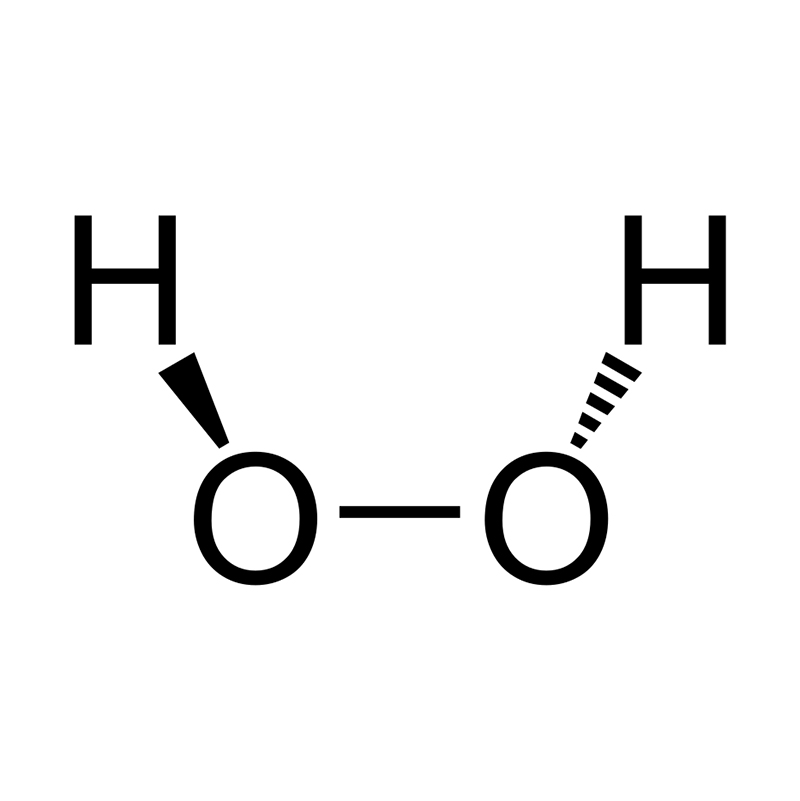
Understanding the chemical mechanism solves this dilemma. The H2O2 molecule holds an extra oxygen atom compared to water. It readily releases this reactive oxygen atom upon contact with organic matter. This rapid oxidation breaks down the lipid bilayers of bacterial cell walls. It dismantles complex organic compounds quickly and efficiently. We see this action as the familiar bubbling effect on surfaces.
The baseline advantage of this chemical becomes clear when we compare it to halogens. Chlorine and bleach dominate many industrial processes. However, these halogens leave behind persistent, toxic residues. Conversely, hydrogen peroxide degrades simply into water and oxygen (H2O + O2). This residue-free breakdown drives its massive adoption in compliance-heavy industries. Facilities avoid toxic accumulation entirely.
Many buyers operate under a dangerous misconception. They assume all formulations of this chemical are the same. We must challenge this assumption. Commercial products rely heavily on chemical stabilizers to prevent premature degradation. Manufacturers add proprietary stabilizers, such as tin or complex phosphates. These additions ensure the chemical survives transit. Without these precise stabilizers, bulk shipments would rapidly convert into useless water and gas before reaching the facility.
Chart: Oxidation Profile Comparison | |||
Chemical Agent | Primary Byproducts | Environmental Impact | Best For |
|---|---|---|---|
Hydrogen Peroxide | Water, Oxygen | Zero toxic residue | ESG compliance, food contact |
Sodium Hypochlorite (Bleach) | Chloramines, Salts | High toxicity in waterways | General, low-cost sanitation |
You cannot buy industrial chemicals blindly. Facilities need a strict evaluation framework. We categorize these solutions by concentration percentage. This aligns the chemical directly with specific business outcomes and safety tolerances. Using the wrong concentration leads to severe operational failures.
The lowest tier covers 3% to 9% concentrations. We classify this as consumer and light commercial grade.
Uses: You will find this grade in surface disinfection, cosmetic formulations, and minor medical sanitation. Many commercial cleaning crews use a stabilized 8% solution for office carpet extraction.
Limitations: This tier suffers from a low shelf life if unstabilized. It also proves insufficient for heavy organic loads. You cannot use it to remediate municipal wastewater.
The middle tier spans 30% to 35%. This encompasses food, medical, and tech grades. This concentration represents the sweet spot for specialized commercial applications.
Uses: Facilities rely on it for aseptic packaging lines and dairy processing. It also handles commercial water treatment and printed circuit board (PCB) etching.
Risk Note: At 35%, the liquid becomes highly corrosive to human skin and eyes. Workers require specialized PPE, including splash goggles and chemical-resistant gauntlets.
The highest tier ranges from 50% to 90%. We categorize this as standard industrial and aerospace grade. Only specialized facilities handle these extreme concentrations.
Uses: Heavy industries use it for pulp and paper bleaching. It drives massive municipal wastewater treatment projects and chemical synthesis. Aerospace sectors even utilize it for propellant applications.
Scalability: Procuring a 50% solution is the most cost-effective method for bulk transport. Enterprise buyers ship these high concentrations to reduce freight costs. They then safely dilute the chemical on-site to their required working percentage.
Different sectors leverage this chemical for unique outcomes. Buyers must evaluate specific performance criteria before finalizing procurement contracts. Let us examine three major industry applications.
Water Treatment and Remediation
Municipalities rely heavily on advanced oxidation processes. They use hydrogen peroxide to remove hydrogen sulfide, iron, and persistent organics from drinking water. The crucial outcome here is safety. The process destroys contaminants without forming toxic Trihalomethanes (THMs), which often plague chlorine-based systems. Engineers evaluate success by measuring dosage rates against the contact time required at a municipal scale.
Healthcare and Infection Control
Hospitals cannot risk healthcare-associated infections. They demand absolute sterilization of medical instruments and surgical cleanrooms. Facilities achieve this outcome using vaporized formulations (VHP). The primary evaluation metric focuses on biological efficacy. The vapor must eliminate resistant bacterial spores reliably. Furthermore, hospital administrators evaluate its material compatibility with highly sensitive electronic medical equipment.
Manufacturing and ESG Initiatives
Textile and paper manufacturers are actively shifting their operational models. Their core outcome involves transitioning away from environmentally damaging bleaching agents. They want to eliminate dioxin creation. Facility managers track a specific evaluation metric for this transition. They conduct life-cycle assessments and measure the drastic reduction in effluent toxicity. This ensures they meet increasingly strict local regulatory compliance.
You cannot treat industrial chemicals like ordinary inventory. High concentrations demand rigorous implementation realities. Facility managers must conduct a thorough hazard assessment prior to delivery. At concentrations above 8%, the chemical becomes a severe corrosive agent. It is a powerful oxidizer. More dangerously, it presents a potential explosive risk if it becomes contaminated with transition metals like iron or copper.
Your storage infrastructure requires specialized engineering. You cannot store this chemical in sealed, rigid containers without proper accommodations.
Venting requirements: Bulk storage tanks require engineered venting systems. The liquid undergoes continuous, slow decomposition, causing off-gassing. Blocked vents lead to catastrophic pressure vessel failures.
Compatible materials: You must use 304L or 316L passivated stainless steel. Certain high-density polyethylene (HDPE) plastics also work well for localized storage.
Incompatible materials: Never let the solution contact iron, copper, brass, or zinc. These metals act as catalysts, triggering rapid and violent decomposition.
Regulatory compliance remains mandatory and non-negotiable. Organizations must strictly adhere to guidelines set by the CDC, OSHA, and EPA. OSHA enforces a strict Permissible Exposure Limit (PEL). Workers cannot be exposed to more than 1 ppm over an 8-hour shift. Facilities must install continuous air monitoring sensors. They must also document and drill emergency decontamination procedures for accidental spills.
Store bulk tanks away from direct sunlight and heat sources.
Ensure secondary containment basins can hold 110% of the largest tank volume.
Keep the storage area free from flammable organic materials like wood pallets or cardboard.
Sourcing bulk chemicals requires precise shortlisting logic. You are not just buying a liquid; you are securing a volatile supply chain. Enterprise buyers must know exactly what to look for when choosing a bulk chemical distributor or manufacturer.
Start with purity and stabilizer transparency. You must ensure the supplier matches the stabilizer profile exactly to your application. For example, you cannot use standard industrial grades in dairy processing. Food-grade applications cannot contain certain heavy-metal industrial stabilizers. If a supplier refuses to disclose their stabilizer category, remove them from your shortlist immediately.
Logistics and shelf-life dictate your purchasing rhythm. Evaluate supplier proximity and supply chain efficiency meticulously. H2O2 naturally degrades over time. Transit time directly impacts the chemical efficacy upon arrival. If bulk storage turnover rates are too slow, you will waste money on degraded, underperforming solutions. A localized supplier often provides better value than a distant, cheaper alternative.
Finally, demand rigorous documentation and support. Do not accept a shipment without an up-to-date Safety Data Sheet (SDS). You must require a Certificate of Analysis (CoA) for every single batch delivery. This certificate proves the concentration matches your purchase order. Additionally, prioritize suppliers who offer on-site handling training programs for your facility staff. Proper training prevents expensive contamination events.
Ordering bulk quantities that exceed a facility's 6-month usage rate.
Failing to cross-reference the CoA against the received batch number.
Ignoring the ambient transit temperature during summer freight shipping.
Sourcing hydrogen peroxide successfully requires a careful balancing act. You must balance your required oxidative power against your facility's safety and storage capabilities. Furthermore, aligning this chemical adoption with your corporate ESG goals provides excellent environmental returns.
Take action by auditing your current sanitization and oxidation processes today. Identify where toxic halogens currently dominate your workflows. Next, consult with a qualified chemical engineer regarding optimal dilution ratios for your specific equipment. Finally, request specific Certificates of Analysis from your shortlisted suppliers to verify their purity claims.
Match the concentration strictly to your operational requirements.
Invest in passivated stainless steel or HDPE storage infrastructure.
Verify stabilizer profiles to ensure regulatory compliance.
Prioritize localized suppliers to minimize transit degradation.
A: The difference lies entirely in the chemical stabilizers. Standard industrial grades use heavy metal stabilizers to extend shelf life. Food-grade formulations strictly exclude these toxic metals. This makes food-grade safe for indirect food contact, like aseptic packaging. However, without those robust stabilizers, food-grade solutions require much stricter temperature and storage controls.
A: Yes, it naturally breaks down into water and oxygen. Stabilized industrial grades typically degrade at a rate of 0.5% to 1% per year under ideal conditions. However, the degradation rate accelerates rapidly if the solution is exposed to direct UV light, high temperatures, or transition metal contaminants.
A: Yes. Vaporized hydrogen peroxide (VHP) is highly safe for electronics when deployed correctly in cleanrooms. Unlike liquid sprays that cause immediate pooling and corrosion, VHP utilizes a dry gas process. It sterilizes surfaces completely while maintaining excellent material compatibility with sensitive circuit boards and hospital equipment.
A: Yes, many facilities dilute 50% concentrations on-site to save freight costs. However, you must use highly purified water, such as reverse osmosis (RO) or deionized water. Using standard tap water introduces microscopic iron or copper impurities. These impurities trigger rapid, dangerous catalytic decomposition of the chemical.


