


Finding an effective, residue-free oxidative agent is a constant challenge for modern industries. Enter H2O2. This simple molecule offers powerful sanitizing and bleaching capabilities. It leaves behind no harsh chemicals. It merely decomposes into water and oxygen. We see it utilized across countless sectors today.
However, scaling its use brings complexities. You must shift your mindset when moving from basic consumer applications to high-stakes commercial environments. Industrial and clinical buyers cannot simply order any available concentration. Facility managers face serious evaluation hurdles regarding safety, storage, and regulatory compliance. Handling bulk quantities requires strict adherence to specialized protocols.
This guide serves a distinct purpose. It helps procurement managers, formulators, and facility operators navigate the varied concentration grades available. You will learn how to evaluate specific regulatory limits for different applications. Furthermore, we will show you how to actively mitigate the implementation risks tied to this volatile chemical. Read on to master the industrial scaling of this powerful compound.
Mechanism: The efficacy of H2O2 in chemistry relies on its rapid breakdown into water and oxygen, leaving no toxic byproducts.
Versatility: Applications range from low-concentration clinical sanitization to high-concentration industrial bleaching and water treatment.
Concentration is Critical: Selecting between 3% standard, 35% food-grade, and 50%+ industrial grades determines both efficacy and regulatory compliance.
Implementation Risk: High-concentration hydrogen peroxide requires specialized storage (vented containers) and strict adherence to CDC/OSHA safety protocols due to its volatile nature.
Industries constantly search for effective oxidizers and bleaches. Unfortunately, traditional options often leave harmful environmental residues. Chlorine and standard chemical bleaches create toxic byproducts. These byproducts complicate wastewater management. They also trigger intense regulatory scrutiny. Modern facilities need powerful cleaning and chemical synthesis tools. Yet, they must avoid introducing new environmental hazards. Finding a solution balancing raw oxidative power and environmental safety remains an urgent business priority.
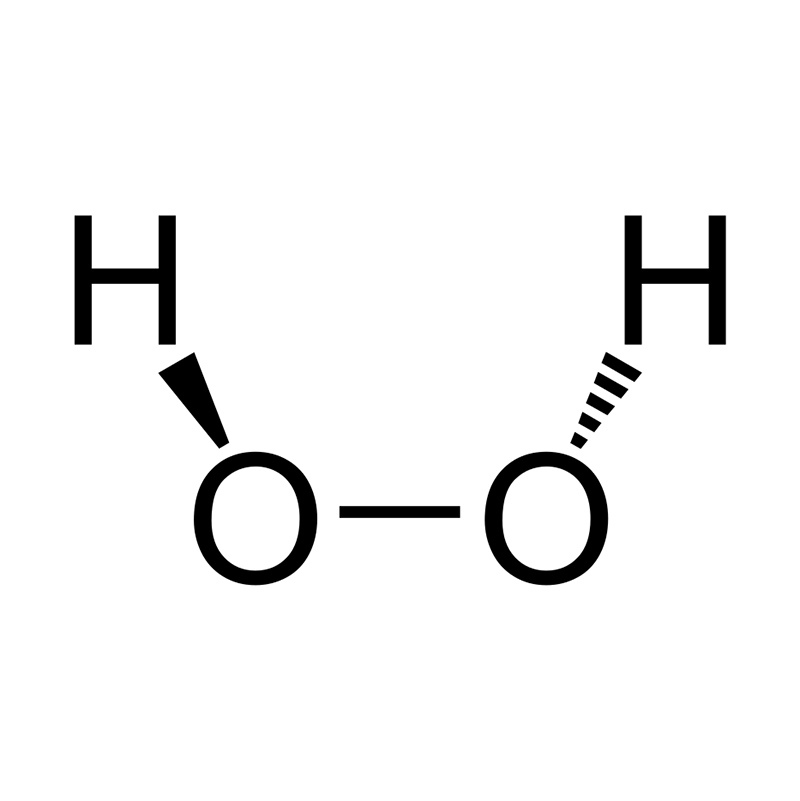
To grasp why this compound works so well, we must look at the science. The foundation of h2o2 in chemistry centers on its volatile peroxide bond (O-O). This specific chemical bond is highly unstable. It actively wants to break apart. When it decomposes, the reaction follows a simple equation: 2H₂O₂ → 2H₂O + O₂.
This breakdown releases an immense amount of energy. The single oxygen atom acts as a potent oxidizing agent. It aggressively rips electrons from other molecules. This destroys bacterial cell walls, breaks down pigment compounds, and neutralizes odors. You get massive oxidizing potential from a remarkably simple reaction.
Procurement teams should focus on outcomes rather than basic chemical features. The primary commercial value of this substance lies in its status as a "green" chemical. It reduces post-treatment cleanup efforts entirely. You do not have to filter out complex toxic residues. The resulting water and oxygen are perfectly safe.
This simplifies environmental compliance standards immensely. When you discharge wastewater, you face fewer regulatory hurdles. Facilities avoid fines associated with chemical runoff. It aligns perfectly with modern sustainability goals. Your operations become cleaner, greener, and far easier to manage environmentally.
Municipalities and private facilities rely heavily on effective water treatment. Analysts frequently evaluate this green oxidizer against traditional chlorine. The results distinctly favor the peroxide approach for environmental safety.
First, it excels at eliminating severe odors. Hydrogen sulfide (H2S) creates a highly toxic, foul-smelling gas in wastewater. Treating the water breaks the H2S down immediately. Second, it reduces Biochemical Oxygen Demand (BOD). High BOD levels suffocate aquatic life in receiving streams. The peroxide treatment lowers BOD effectively. Most importantly, it does this without forming toxic chlorinated byproducts. Chlorine treatments often create trihalomethanes (THMs). These are known carcinogens. Skipping chlorine means skipping THMs.
The pulp, paper, and textile industries require massive amounts of bleaching agents. This chemical serves as the standard industry choice for brightening paper and fabrics. It provides a brilliant white finish without weakening the underlying fibers.
Manufacturers must assess the scalability of using bulk industrial grades. You need continuous-feed manufacturing lines to stay competitive. Formulators pipe the chemical directly into large vat mixtures. Here are key operational considerations for continuous-feed bleaching:
Feed Rate Calibration: Ensure dosing pumps can handle viscous, high-concentration liquids safely.
Temperature Control: The bleaching reaction generates heat. Vats require active cooling systems.
pH Monitoring: Bleaching efficiency drops if the alkaline levels shift unexpectedly.
Ventilation Management: Continuous oxygen release requires robust exhaust hoods over processing vats.
Modern B2B environments demand rigorous hygiene protocols. Facility managers increasingly adopt hydrogen peroxide as a broad-spectrum surface disinfectant. It proves highly effective across office spaces, manufacturing floors, and public transit hubs.
You must evaluate its efficacy against biofilms and spores. Traditional quaternary ammonium compounds (quats) often fail to penetrate tough biofilms. Bleach handles spores but corrodes metal surfaces and leaves toxic fumes. Peroxide-based cleaners bridge this gap perfectly. They penetrate biofilms effectively. They eradicate stubborn spores. Furthermore, they do not degrade stainless steel equipment when used at appropriate concentrations.
Disinfectant Efficacy Comparison Chart | ||||
Disinfectant Type | Efficacy vs. Biofilms | Efficacy vs. Spores | Residue Left Behind | Surface Corrosivity |
|---|---|---|---|---|
Standard Bleach (Hypochlorite) | Moderate | High | Toxic / Salt | High (Damages metals) |
Quats (Quaternary Ammonium) | Low | Low to Moderate | Sticky chemical film | Low |
Hydrogen Peroxide (Clinical Grade) | High | High | None (Water + Oxygen) | Low to Moderate |
Hospitals and clinics utilize low concentrations for critical sanitization tasks. It serves as a potent antiseptic and sterilizing agent. For instance, facilities deploy vaporized delivery systems for hospital room sterilization. These automated machines fill a sealed room with a fine mist. The vapor eradicates deeply entrenched pathogens on all surfaces.
Skeptical Note on Medical Use: We must acknowledge shifting medical consensus regarding wound care. Historically, people poured it directly onto open cuts. Modern medical professionals strongly advise against using it on deep wounds. The aggressive bubbling action destroys healthy tissue alongside bacteria. This delays the natural healing process. Clinical focus has therefore shifted. Today, practitioners prioritize equipment and environmental surface sterilization instead of topical wound application.
The cosmetic industry relies heavily on this chemical's bleaching properties. Hair salons use it to strip melanin from hair follicles. Dental professionals use it for advanced tooth whitening procedures. However, these applications face strict regulatory oversight.
Compliance is a major focus here. The EU Commission regulations and FDA guidelines heavily restrict concentration levels in consumer-facing tooth whiteners. High concentrations cause severe enamel degradation and gum burns. European standards generally restrict over-the-counter dental products to very low percentages (often under 0.1% or up to 6% for professional dental application only). Manufacturers must navigate these legal frameworks carefully. You cannot launch a cosmetic product without verifiable concentration audits and rigorous safety testing.
Procurement teams must match the chemical grade to the specific operational task. Ordering the wrong concentration wastes money and creates severe safety hazards. The shortlisting logic breaks down into three primary tiers.
This lower tier represents the safest and most common variation. It provides gentle but effective oxidation.
Best for: Surface cleaning, minor topical antisepsis, and light cosmetic formulations.
Procurement: It is widely available. It presents a very low regulatory barrier. You do not need specialized hazardous material permits to order or store these volumes.
Do not let the name fool you. "Food-grade" implies purity, not edibility. It simply means the mixture lacks the toxic heavy metal stabilizers found in industrial variations.
Best for: Dairy packaging sterilization, aseptic carton cleaning, and specialized agricultural water treatment.
Note: We must emphasize that "food-grade" is absolutely not safe for ingestion. It will cause severe internal tissue damage. Always handle this tier with professional caution.
This is the most dangerous and strictly regulated tier. Only specialized facilities should ever handle concentrations this high.
Best for: Chemical synthesis, large-scale textile bleaching, and rocket propellants.
Procurement: You face immense hurdles here. It requires rigorous supplier vetting. Facilities must hold specific hazard certifications. Moving the product demands specialized transit protocols, often involving escorted hazmat transport.
Facility managers must understand chemical instability. This compound degrades rapidly when exposed to environmental triggers. Light, ambient heat, and minor organic contaminants trigger violent decomposition.
Your facility must meet stringent storage requirements. You must store it in opaque containers to block all UV light. Furthermore, these containers must be vented. As h2o2 slowly breaks down over time, it constantly releases oxygen gas. If you seal the container completely, the trapped gas builds massive pressure. The container will eventually rupture or explode. Vented caps allow the oxygen to escape safely into the atmosphere.
High concentrations present terrifying occupational hazards. We look to CDC and NIOSH toxicological data for guidance. These agencies document severe risks associated with workplace exposure.
Inhalation of concentrated vapors causes acute respiratory distress and fluid buildup in the lungs. Accidental splashes result in severe, instantaneous skin burns. Tissue turns white and dies rapidly. Eye exposure at industrial concentrations frequently causes irreversible blindness.
Mitigation Strategies: You cannot run a facility without strict mitigation protocols. Employees must wear required PPE. This includes chemical-resistant suits, thick nitrile gloves, and full-face splash shields. You must install emergency eyewash stations within seconds of the handling zone. Finally, proper ventilation systems are non-negotiable. Industrial fans must continuously scrub the air to prevent vapor accumulation during your facility rollout.
Navigating the industrial use of this powerful chemical requires careful planning and strict discipline. The evaluation framework always comes down to matching your specific application to the correct concentration grade. A hospital needs broad-spectrum surface cleaning. A paper mill needs aggressive, continuous-feed bleaching. A laboratory requires high-purity chemical synthesis. You must select the right tier for the right job.
Furthermore, you must balance raw oxidative power with safety and storage compliance. The stronger the chemical, the heavier the regulatory burden. You cannot cut corners on hazardous material storage.
Next-Step Action: We advise buyers to take immediate protective steps. Request a Material Safety Data Sheet (MSDS) from potential vendors today. Consult with a specialized chemical supplier to audit your facility's storage capabilities. Make sure your ventilation, PPE, and containment systems meet regulatory standards before you ever order high-concentration bulk supplies.
A: No. While both are powerful oxidizers used for cleaning and whitening, their chemical structures differ completely. Standard bleach uses sodium hypochlorite. Bleach leaves behind harsh chemical salts and toxic byproducts. Peroxide simply decomposes into pure water and oxygen gas, leaving absolutely no toxic residue behind.
A: When it expires, it simply decomposes into water and oxygen. It loses its oxidative efficacy entirely. However, it poses no new chemical dangers. You are essentially left with slightly acidic water. It will not clean or bleach effectively, but it is harmless to dispose of.
A: Absolutely not. This is a dangerous misconception. "Food-grade" simply means it lacks toxic chemical stabilizers used in industrial manufacturing. Ingesting a 35% concentration is highly toxic. It causes immediate, severe internal burns, tissue necrosis, and potentially fatal internal gas expansion.
A: They are vented to prevent explosive ruptures. The liquid continuously off-gasses oxygen as it naturally degrades over time. If a container is hermetically sealed, this trapped oxygen builds immense internal pressure. Vented caps allow the gas to escape safely without compromising the liquid inside.


