
Views: 0 Author: Site Editor Publish Time: 2026-04-01 Origin: Site


Nitric acid is one of the most important industrial chemicals in the world, widely used in fertilizers, metal treatment, chemical manufacturing, and laboratory processes. Because it is highly corrosive and reactive, many people ask a very practical safety question: is nitric acid flammable?
The direct answer is no, nitric acid is not flammable. It does not burn the way fuels, solvents, or other combustible liquids do. However, that does not mean nitric acid is safe around fire. In fact, nitric acid can create serious fire hazards because it is a strong oxidizing agent. It may not ignite on its own, but it can intensify combustion, react violently with incompatible materials, and make surrounding fires much worse.
To use nitric acid safely, it is important to understand the difference between a flammable substance and a powerful oxidizer. This article explains what nitric acid is, why it is often misunderstood, and what real fire risks users must pay attention to.
Nitric acid is a mineral acid with the chemical formula HNO₃, so it is often written as nitric acid HNO₃ in technical documents and product descriptions. It is usually a clear, colorless to yellowish liquid with a sharp, irritating odor. In industrial and laboratory settings, nitric acid is valued for its acidity, corrosiveness, and strong oxidizing power.
Nitric acid is commonly used in the production of fertilizers, dyes, explosives, intermediates, and metal treatment chemicals. It is also used in pickling, etching, passivation, and cleaning operations. Because of its broad range of applications, nitric acid is a key raw material in many industries.
At the same time, nitric acid is classified as a hazardous chemical because it is highly corrosive to skin, eyes, metals, and many other materials. It must be handled with strict attention to storage, compatibility, labeling, and emergency response.
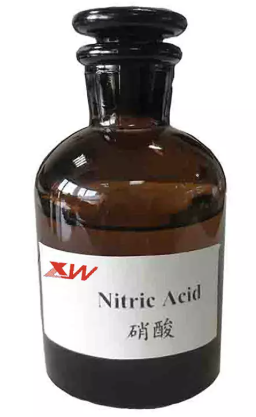
Nitric acid is not flammable. It does not qualify as a fuel, and it does not burn in the same way as gasoline, ethanol, acetone, or other combustible liquids. If you expose pure nitric acid to a flame, it does not behave like a typical flammable chemical.
But this point often causes confusion. People may see nitric acid associated with fire incidents and assume that the acid itself is flammable. The real issue is different: nitric acid is a strong oxidizer, which means it can provide oxygen or otherwise promote oxidation reactions that cause other materials to ignite or burn more intensely.
So the correct safety message is this: nitric acid itself is not flammable, but it can greatly increase the risk and severity of fire.
There are several reasons why nitric acid is frequently misunderstood.
First, nitric acid reacts strongly with many organic and combustible materials. If it contacts wood, paper, cloth, sawdust, oils, greases, solvents, or other organic substances, the reaction may produce heat, smoke, and sometimes ignition. When people see fire appear in these situations, they may assume nitric acid is burning, when in reality it is causing another substance to burn.
Second, concentrated nitric acid can produce brown or yellow fumes, especially when decomposing or reacting. These toxic fumes make incidents look dramatic and dangerous, which adds to the impression that the acid is somehow flammable.
Third, nitric acid is used in industries connected with energetic reactions, including explosives manufacturing and nitration chemistry. That industrial association often leads non-specialists to assume the acid itself is combustible.
The truth is that nitric acid is dangerous not because it is a fuel, but because it is highly reactive and strongly oxidizing.
Yes, nitric acid is a strong oxidizing agent, and this is the key to understanding its fire behavior.
An oxidizer is a substance that can support or accelerate combustion, even if it does not burn itself. In practical terms, nitric acid can make flammable materials ignite more easily, burn faster, or burn hotter. This is especially true when the acid is concentrated or contaminated.
Nitric acid may react dangerously with:
Paper, cardboard, wood, cloth, leather, and many packaging materials can react with nitric acid. These materials may char, smoke, or ignite under certain conditions.
Contact with hydrocarbons, lubricants, or fuel-like substances can lead to violent oxidation reactions. Even a small amount of contamination can create a serious hazard.
Nitric acid must be kept away from reducing chemicals because these combinations can trigger rapid and hazardous reactions.
Nitric acid reacts with many metals and may release heat and corrosive fumes. Fine metal powders can be especially reactive.
Because of this oxidizing power, nitric acid should never be treated like an ordinary liquid chemical.
Even though nitric acid is not flammable, it can still be involved in dangerous fire situations.
One major hazard is that nitric acid can intensify a nearby fire. If there is a fire in an area containing combustible packaging, pallets, organic residues, or other flammable chemicals, nitric acid may make the fire more severe.
Another hazard is toxic gas release. When heated or decomposed, nitric acid can generate nitrogen oxides, including nitrogen dioxide, which are highly irritating and dangerous to inhale. This means a nitric acid fire emergency is not only a fire problem but also a toxic exposure problem.
Nitric acid spills are also hazardous because they can spread over surfaces and contact incompatible materials. If spilled acid reaches combustible materials or reactive chemicals, secondary reactions may follow quickly.
For this reason, fire planning around nitric acid should focus not only on the acid itself, but also on the environment around it.
Several physical and chemical properties of nitric acid HNO₃ influence how dangerous it can be during a fire or chemical incident.
It is highly corrosive, meaning it can damage containers, surfaces, and equipment over time if not properly stored. If a container fails, the released acid may contact incompatible substances and create further hazards.
It is also highly reactive. The stronger the nitric acid concentration, the greater the oxidizing power tends to be. Concentrated nitric acid usually presents more severe hazard potential than diluted solutions.
Contamination is another critical factor. Clean, properly stored nitric acid is dangerous enough on its own, but contaminated nitric acid can become much more unpredictable. Foreign materials such as oils, dust, metal particles, organic residues, or wrong transfer equipment can trigger unwanted reactions.
This is why chemical compatibility and housekeeping are so important in nitric acid storage areas.
Nitric acid should always be segregated from incompatible materials.
When it contacts metals, the reaction may produce heat and hazardous gases. When it contacts bases, it neutralizes violently and may splash. When it reacts with organic compounds, the danger increases even more because heat, oxidation, discoloration, and ignition are all possible.
Particularly hazardous contacts include:
These may react strongly, especially in concentrated systems.
These can become ignition risks when mixed with nitric acid.
Improper cleanup materials such as sawdust, rags, or paper absorbents can make a spill worse rather than safer.
If nitric acid is stored too close to reducing agents, fuels, or incompatible acids and bases, a single leak can escalate rapidly.
The lesson is simple: nitric acid must be handled within a controlled chemical management system, not as a routine liquid product.
In general, diluted nitric acid is less aggressive than concentrated nitric acid, but it is still hazardous and should never be treated casually.
Higher concentrations usually mean stronger oxidizing behavior, more severe corrosion, and a greater chance of dangerous reactions with incompatible substances. Concentrated nitric acid also tends to fume more and requires tighter control over storage and handling.
That said, even lower concentrations can still damage skin, corrode metals, and react dangerously under the wrong conditions. Safety decisions should never be based only on the assumption that “diluted means safe.” The exact concentration should always be known, labeled, and communicated clearly.
Proper storage is essential to controlling nitric acid fire and reaction hazards.
Nitric acid should be stored in compatible containers made from approved materials for corrosive oxidizers. The storage area should be cool, dry, well ventilated, and protected from direct sunlight and heat sources. Containers must remain tightly closed and clearly labeled.
Segregation is one of the most important rules. Nitric acid should be stored away from:
organic materials
flammable liquids
reducing agents
combustible packaging
incompatible metals
alkalis and other reactive chemicals
Secondary containment should also be used to manage leaks or spills. Storage areas should be inspected regularly for corrosion, residue buildup, damaged containers, and labeling issues.
Just as importantly, nitric acid should not be stored in areas where cross-contamination can occur during filling, transfer, or repackaging.
Anyone handling nitric acid should wear proper personal protective equipment, including chemical-resistant gloves, eye protection, protective clothing, and face protection where needed. Adequate ventilation is important, especially where fumes may accumulate.
Transfer operations should be performed carefully to avoid splashing, contamination, and overfilling. Equipment used with nitric acid should be clean and chemically compatible. Workers must be trained not only in normal handling but also in spill response, first aid, and incompatibility hazards.
One of the biggest mistakes in nitric acid handling is focusing only on corrosion and forgetting oxidizer risk. Safe handling requires both perspectives.
Nitric acid is not explosive by itself under normal conditions, but it can contribute to explosive or violent reactions when mixed with incompatible substances. This is especially true with organic materials, reducing agents, or contaminated systems under heat or confinement.
So while the question “is nitric acid flammable” can be answered with “no,” the broader safety answer is more serious: nitric acid can still be involved in fires, violent reactions, and dangerous pressure buildup if it is mismanaged.
As a trusted supplier of nitric acid HNO₃, Shijiazhuang Xinlongwei Chemical Co., Ltd. provides stable product quality, flexible packaging options, and dependable global delivery. Backed by professional export experience and customer-focused service, we are ready to support your business with safe and efficient nitric acid solutions.
So, is nitric acid flammable? No, nitric acid is not flammable. It does not act as a combustible fuel and does not burn like a typical flammable liquid.
However, nitric acid is still a major fire hazard because it is a strong oxidizing agent. It can intensify combustion, react violently with organic and incompatible materials, generate toxic fumes, and turn a small incident into a serious emergency.
The most important takeaway is this: the danger of nitric acid lies not in flammability, but in reactivity and oxidizing power. Anyone storing, transporting, selling, or using nitric acid HNO₃ must understand that difference. With proper segregation, compatible packaging, trained personnel, and strict handling procedures, nitric acid can be managed safely and responsibly.


