
Views: 0 Author: Site Editor Publish Time: 2026-04-03 Origin: Site


Nitric acid is one of the most widely used mineral acids in modern industry. Known chemically as nitric acid HNO₃, it is a highly corrosive, strongly oxidizing liquid used in fertilizers, explosives, metal treatment, laboratory work, and chemical manufacturing. Its industrial importance comes from the fact that it can react, oxidize, nitrate, dissolve, and convert other substances in ways that are essential to large-scale production.
In simple terms, nitric acid does not serve just one purpose. It acts as a raw material, a reaction agent, and a processing chemical across many industries. It helps make ammonium nitrate fertilizer, supports nitration in explosives and intermediates, oxidizes metals, and contributes to the production of dyes, drugs, and many specialty chemicals. That is why nitric acid remains a core industrial chemical worldwide.
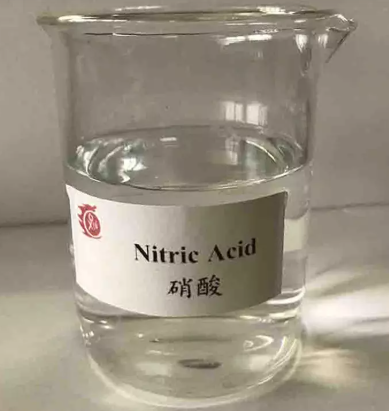
Nitric acid is an inorganic acid with the formula HNO₃. Standard safety references describe it as a colorless, yellow, or red fuming liquid with an acrid, suffocating odor, depending on concentration and decomposition conditions. It is highly corrosive and toxic, and its fumes can seriously affect the respiratory system.
What makes nitric acid especially valuable is the combination of two properties. It is a strong acid, which allows it to react readily in acid-based chemistry, and it is also a strong oxidizing agent, which allows it to drive oxidation reactions and alter other materials aggressively. Those two characteristics explain why nitric acid is so useful in both bulk industrial manufacturing and more specialized chemical processes.
The single most important thing nitric acid does in global industry is support fertilizer production. Britannica identifies the production of ammonium nitrate as a major use of nitric acid, and Essential Chemical Industry notes that about 80% of nitric acid use goes into fertilizer manufacturing, mainly ammonium nitrate and calcium ammonium nitrate.
This role makes nitric acid a key part of the agricultural supply chain. By helping produce nitrogen-based fertilizers, nitric acid contributes to soil fertility and crop productivity. In business terms, nitric acid is not just another chemical input; it is a major upstream raw material that supports food production at scale.
Nitric acid also plays a major role in explosives manufacturing and nitration chemistry. Britannica lists nitroglycerin and trinitrotoluene (TNT) among the products made using nitric acid, while ScienceDirect notes that a second major use of nitric acid is in the explosives sector and as a nitrating agent for organic derivatives.
The reason is chemical rather than mechanical. Nitric acid helps introduce nitro functionality into molecules, making it central to nitration reactions used in explosives, intermediates, dyes, and other organic products. This ability to transform organic compounds is one of the clearest answers to the question of what nitric acid does: it helps manufacturers convert raw molecules into more useful or more reactive compounds.
Another important function of nitric acid is metal treatment. Britannica specifically notes that nitric acid is used for oxidizing metals, and industry references describe applications such as etching, cleaning, and passivation, especially for stainless steel and other processed metal surfaces.
In these applications, nitric acid helps remove contaminants, alter surface conditions, and support controlled reactions that improve the quality or performance of metal parts. That is why nitric acid is widely relevant in sectors tied to metal finishing, component preparation, precision manufacturing, and surface conditioning. Its usefulness here comes directly from its corrosive strength and oxidizing behavior.
Nitric acid is also a major feedstock chemical in broader chemical manufacturing. It is used to produce nitrate compounds, nitro compounds, dyes, intermediates, drugs, and many specialty chemicals. Reliable reference sources consistently describe nitric acid as an important building-block chemical for both inorganic and organic manufacturing.
This is one of the reasons nitric acid is so commercially valuable. Many buyers do not purchase nitric acid for direct end use. Instead, they purchase it because it enables the next manufacturing step. In that sense, nitric acid helps businesses build intermediates, support oxidation, drive nitration, and produce downstream chemicals needed in multiple industries.
One of the most important things nitric acid does chemically is act as a powerful oxidizing agent. This means it can react with many substances by promoting oxidation, often producing dramatic chemical change. Britannica and other chemistry references emphasize this property as central to nitric acid’s industrial usefulness.
Because of this oxidizing power, nitric acid can attack or alter metals, react with many organic materials, and support the formation of nitrates and oxidized products. This explains why nitric acid is effective in metal treatment, nitration chemistry, and reactive process systems. It also explains why nitric acid must be handled carefully around combustible or incompatible materials.
Nitric acid is also used in laboratories and analytical settings. Educational and scientific references describe it as a common laboratory chemical because its strong acidity and oxidizing properties make it useful in sample preparation, reagent systems, and certain cleaning or reaction processes.
In practical terms, nitric acid helps researchers and technicians carry out demanding chemical tasks where a reactive mineral acid is required. High purity and correct concentration matter greatly in these settings because even small variations can affect results, compatibility, and safety. The same properties that make nitric acid useful in the lab also make it hazardous if used without proper ventilation, protective equipment, and suitable containers.
Another way to understand what nitric acid does is to look at what it does to materials.
Nitric acid can corrode metals, attack tissues, react strongly with organics, and produce toxic fumes. NIOSH states that exposure can irritate the eyes, skin, and mucous membranes and can also lead to delayed pulmonary edema, pneumonitis, bronchitis, and dental erosion.
Its effect on a substance depends on the material involved, the concentration of the acid, temperature, and contamination. On some metals, nitric acid is used in controlled industrial processes. On incompatible materials, however, it can cause severe damage or dangerous reaction. This is why nitric acid must always be managed as an active chemical rather than a passive liquid.
The concentration of nitric acid strongly affects what it does in practice. NIOSH notes that fuming nitric acid is concentrated nitric acid containing dissolved nitrogen dioxide, which is associated with more severe fumes and handling concerns. Commercial nitric acid is often sold at around 68% concentration in water, while more concentrated grades are classified as fuming nitric acid.
This matters in industrial purchasing and application decisions. A concentration suitable for one use may be inappropriate for another. Stronger grades may provide greater reactivity or process efficiency, but they also create greater corrosion, fume, and hazard concerns. That is why buyers and users need clear product specifications, accurate labeling, and supplier support when sourcing nitric acid HNO₃.
Nitric acid is extremely useful, but its value depends on disciplined handling. NIOSH identifies it as highly corrosive and recommends preventing skin and eye contact, along with providing emergency eyewash and quick-drench facilities where exposure is possible.
Nitric acid also increases broader process risk because it is noncombustible yet can increase the flammability of combustible materials, and red fuming nitric acid can accelerate burning or even ignite some combustibles on contact. That means nitric acid management is not just about corrosion control. It also requires compatibility control, ventilation, segregation, and trained personnel.
For industrial users, the best understanding of nitric acid is practical: it is a chemical that performs essential work, but only when supported by correct packaging, correct storage, and correct process discipline.
At Shijiazhuang Xinlongwei Chemical Co., Ltd., we supply high-quality nitric acid HNO₃ with stable quality, reliable packaging, and dependable delivery. With professional experience in hazardous chemical export and customer-focused service, we are committed to supporting your industrial needs safely and efficiently.
Nitric acid performs many critical functions across modern industry. It helps produce fertilizers, supports nitration in explosives and intermediates, oxidizes and treats metals, and enables the manufacture of dyes, drugs, nitrates, and many other chemical products. In short, nitric acid HNO₃ helps industry react, convert, process, and manufacture on a large scale.
The clearest answer to the title is this: nitric acid is a strong acid, strong oxidizer, and essential industrial raw material. Its importance comes from what it can do chemically, while its risk comes from how reactive and corrosive it is. When sourced correctly and handled professionally, nitric acid remains one of the most valuable chemicals in industrial production.
What does nitric acid do in industry?
Nitric acid is mainly used in fertilizer production, especially for making ammonium nitrate. It is also used in explosives manufacturing, metal oxidation and treatment, and the production of dyes, drugs, and other chemicals.
What does nitric acid do to metals?
Nitric acid can oxidize and corrode metals, which is why it is used in metal treatment, surface processing, and certain cleaning or passivation applications.
What does nitric acid do in fertilizer production?
Nitric acid is a key raw material for producing ammonium nitrate, an important nitrogen fertilizer used to support crop growth and improve soil fertility.
What does nitric acid HNO₃ do in chemical manufacturing?
Nitric acid HNO₃ acts as a strong acid and oxidizing agent. It helps manufacturers produce nitrate compounds, nitro compounds, explosives, dyes, drugs, and other industrial chemicals.
What does nitric acid do in laboratories?
In laboratories, nitric acid is used as a strong reagent for chemical reactions, oxidation, and analytical or preparation work that requires a highly reactive mineral acid.
Is nitric acid dangerous to handle?
Yes. Nitric acid is highly corrosive and toxic. It can irritate or burn the eyes, skin, and respiratory system, so it must be handled with proper protective equipment, ventilation, and emergency washing facilities.


