
Views: 0 Author: Site Editor Publish Time: 2026-06-17 Origin: Site


Pure nitric acid and aqueous acid solutions are completely homogeneous, not heterogeneous. Distinguishing between pure chemical compounds and uniform aqueous mixtures represents a crucial industrial task. You will need this precise understanding in both laboratory and large-scale manufacturing settings. Understanding the exact phase behavior, concentration, and purity of HNO₃ sets a vital operational baseline. It directly informs chemical procurement decisions. It guides complex process engineering protocols. Strict compliance with environmental and safety standards also relies on this chemical profile. In this comprehensive technical guide, you will explore the foundational phase behavior of this compound. We will examine how a uniform chemical state impacts processing reliability. You will learn practical strategies for evaluating various solution grades. Finally, we will detail crucial handling practices to maintain material purity safely.
Phase Classification: Pure nitric acid is a homogeneous chemical compound; when dissolved in water, it forms a homogeneous solution.
Industrial Impact: The homogeneous nature of HNO₃ ensures uniform reaction rates in critical applications like metal passivation, etching, and fertilizer production.
Quality Degradation: Improper storage can lead to decomposition, releasing nitrogen dioxide (NO₂) gas, which can temporarily create a multi-phase (heterogeneous) system requiring strict venting and safety protocols.
Sourcing Criteria: Evaluating HNO₃ suppliers requires verifying concentration consistency, heavy metal impurity limits (ACS vs. technical grade), and EPA-compliant handling frameworks.
Anhydrous nitric acid exists as a pure chemical compound. It possesses a completely uniform molecular structure. Chemists classify it strictly as a homogeneous substance. You will never observe distinct physical layers in the pure liquid. The molecules arrange themselves uniformly throughout the entire volume. It remains a single continuous phase under standard conditions.
Commercial products typically arrive as aqueous solutions. A standard industrial concentration often reaches 68 percent. The acid molecules and water molecules mix completely. They integrate flawlessly at the fundamental molecular level. Water molecules surround the acid components uniformly. They do not separate into different layers over time. They do not precipitate out of the liquid. Because of this complete integration, the aqueous form remains a classic homogeneous mixture. It behaves consistently from the top of a storage tank to the bottom.
However, you must understand the one significant heterogeneous exception. Visual heterogeneity can occur during thermal or photolytic decomposition. Excessive ambient heat or direct ultraviolet light breaks down the compound. This specific degradation reaction produces visible nitrogen dioxide gas bubbles. The sudden formation of these bubbles alters the system. It creates a temporary gas-liquid multi-phase environment. This bubbling action acts as a clear visual warning. It indicates severely degraded purity within your chemical supply. You must vent the gas safely.
Absolute chemical homogeneity prevents dangerous localized concentration spikes. These spikes pose major operational risks during industrial mixing. You must verify complete uniformity when sourcing raw materials. Highly predictable reactions depend entirely on a perfectly mixed solution. If a fluid separates, chemical reactions become highly unpredictable. Process engineers demand absolute phase stability to ensure safety.
Consider the strict requirements of metal finishing and surface etching. Completely uniform aqueous HNO₃ guarantees consistent oxidation. It ensures reliable, defect-free passivation on sensitive stainless steel components. Passivation works best on 300-series stainless alloys. The uniform liquid contacts the entire surface simultaneously. It prevents localized pitting corrosion. The solution strips away free surface iron evenly. It promotes a robust, uniform chromium oxide layer. If the solution degrades or separates, etching rates will fluctuate wildly. This inconsistency leads to rejected parts. It causes severe financial losses through wasted materials and increased rework.
Scale-up scenarios amplify these physical effects significantly. Transitioning a process from a small lab beaker demands extreme caution. Moving into continuous manufacturing requires total bulk chemical homogeneity. It helps maintain highly predictable exothermic reaction rates. Consistent product yields rely entirely on this physical uniformity. Any variation in the fluid phase disrupts the entire production line. It forces operators to halt processes for emergency safety reviews.
Different grades serve distinct industrial and scientific purposes. You must select the correct concentration carefully. Evaluate your specific application requirements thoroughly before making a procurement decision.
Technical or commercial grade typically ranges between 52 and 68 percent. Bulk agricultural operations rely heavily on it. They use it specifically for ammonium nitrate fertilizer production. Manufacturing facilities also deploy this grade for general cleaning applications. Food and dairy plants utilize it for cleaning-in-place (CIP) systems. It offers a highly cost-effective solution for large-scale operations requiring moderate purity.
Azeotropic or reagent grade sits tightly at approximately 68 percent. This precise concentration forms a stable azeotropic mixture. It boils at a constant temperature without changing its internal concentration. It provides immense value for strict laboratory standards. Precision manufacturing environments depend closely on its reliable consistency. You must evaluate the balance between cost and purity here. You weigh slightly higher procurement costs against exceptional chemical stability.
Fuming nitric acid represents a highly specialized category. Concentrations range from 86 percent up to 99 percent. High-tech industries use it for aerospace propulsion systems. Laboratories use it for highly aggressive oxidation procedures. White and red variations exist in the market. Red fuming acid contains dissolved nitrogen dioxide. It remains homogeneously dissolved only under sufficient pressure. Your evaluation must focus heavily on severe handling requirements and extreme reactivity limits.
Grade Category | Typical Concentration | Primary Industrial Use Cases | Phase Characteristics |
|---|---|---|---|
Technical Grade | 52% - 68% | Fertilizer synthesis, industrial CIP cleaning | Homogeneous aqueous mixture |
Reagent Grade | ~68% (Azeotrope) | Laboratory standards, precision metal etching | Highly stable homogeneous liquid |
White Fuming | 97.5% - 99.9% | Aerospace engineering, explosive synthesis | Pure homogeneous compound |
Red Fuming | 86% - 95% | Rocket propellants, extreme oxidation processes | Homogeneous primarily under pressure |
Storing these reactive chemicals introduces significant real-world implementation risks. Photolytic degradation remains a primary operational concern. Storing the acid in transparent or translucent containers poses a severe danger. Ambient room light or direct sunlight triggers rapid molecular breakdown. This breakdown severely compromises the initially homogeneous state. Nitrogen dioxide gas bubbles form and disrupt the liquid phase completely. You lose chemical potency rapidly and introduce venting hazards.
Material compatibility also demands strict engineering evaluation. Improper containment introduces severe structural corrosion risks. Using incorrect plastics or non-passivated metals represents a critical mistake. Standard plastics like PVC often fail over time. Polypropylene also degrades quickly under strong oxidation. The acid attacks these weak vessel walls aggressively. It leaches metallic or polymer impurities directly into the fluid. This process turns a pure solution into a dangerously contaminated mixture. You must always consult material resistance charts. Do this before selecting bulk storage tanks or piping networks. We recommend advanced fluoropolymers or specifically rated stainless steel.
Handling exothermic dilution requires extreme operational caution. Mixing the acid into water generates massive amounts of heat. You must always follow the strict "acid into water" rule. Pouring water directly into acid causes violent localized boiling. This creates a highly hazardous, heterogeneous state instantly. Steam and acid splatter outward violently. Safety-focused risk assessments must highlight these strict dilution protocols continuously.
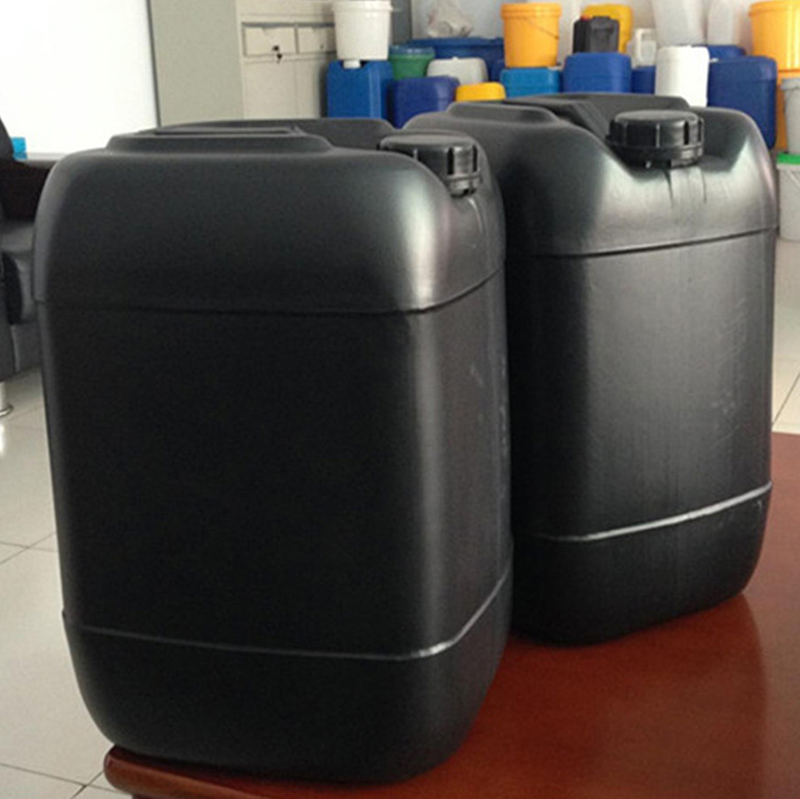
Deploy opaque containment: Block ambient ultraviolet light to prevent photolytic breakdown and preserve uniformity.
Select compatible tank materials: Store bulk quantities only in specialized stainless steel or approved fluoropolymer vessels.
Regulate storage temperatures: Keep the surrounding environment cool to minimize thermal degradation and prevent outgassing.
Implement safe dilution sequences: Always add the acid to water slowly while stirring the mixture continuously.
Evaluating vendor documentation forms your first critical line of defense. You must scrutinize the Certificate of Analysis (CoA) carefully. Look closely at the provided specific gravity readings. Verify the exact assay percentage matches your requirements. Check the strictly defined limits on non-volatile matter. Consistent batch numbers prove you are receiving a uniform chemical. They indicate a reliable manufacturing process. They protect your facility from unexpected variations.
Vendor selection must also align with broader environmental frameworks. EPA guidelines dictate highly specific rules for acid production facilities. They monitor subsequent industrial emissions very closely. Your supplier must utilize proper nitrogen oxide scrubber technology. They must follow proper hazardous material logistics. Regulatory alignment prevents unexpected supply chain disruptions. It protects your operation from severe compliance penalties. Reliable vendors provide transparent compliance documentation immediately upon request.
Chemical buyers should follow a clear next-step checklist. You need actionable criteria before signing any long-term procurement contract. A systematic approach guarantees you receive stable, pure materials consistently.
Audit your facility infrastructure to ensure total storage compatibility and adequate emergency ventilation.
Verify the supplier utilizes stringent internal quality control for guaranteed batch homogeneity.
Review the vendor's transport logistics specifically for tight temperature and light exposure control.
Establish highly visible, safe handling standard operating procedures (SOPs) for all floor staff.
Nitric acid functions fundamentally as a stable, homogeneous substance. However, maintaining that completely uniform state requires rigorous, ongoing storage protocols. You must prioritize strict quality control constantly. Selecting the appropriate concentration directly impacts your overall process safety. The right purity grade also maximizes your final production yield. You must avoid photolytic degradation at all costs to preserve phase stability.
Evaluate your current handling systems today. Assess your current supplier's Certificate of Analysis thoroughly. Review your facility storage tanks immediately. Ensure they provide adequate, continuous protection against heat and ambient light. Train your staff aggressively on proper dilution techniques. Protect your valuable chemical assets carefully. This proactive approach guarantees highly predictable, safe, and efficient manufacturing operations.
A: No, under normal stable conditions. It only exhibits heterogeneous properties if it decomposes to form gas bubbles or if insoluble impurities are introduced.
A: It is a homogeneous mixture (an aqueous solution) because it consists of nitric acid molecules uniformly dissolved in water.
A: A color change indicates decomposition into dissolved nitrogen dioxide (NO₂). While technically still a homogeneous solution, it signifies a loss of purity and concentration.
A: By checking the Certificate of Analysis (CoA) for uniform specific gravity and ensuring the absence of particulate matter or excessive NO₂ off-gassing upon delivery.


