
Views: 0 Author: Site Editor Publish Time: 2026-06-18 Origin: Site


Are you questioning whether to classify your industrial chemicals as strong or weak? You can definitively categorize nitric acid as a strong acid due to its near-complete dissociation in water. This fundamental chemical trait drives its aggressive reactivity in industrial environments.
This chemical classification heavily influences industrial procurement, facility safety, and chemical processing. Misunderstanding its strength can lead to severe safety hazards. Facility managers must account for its intense corrosive power. Plant operators rely on its predictable dissociation to maintain efficient manufacturing yields.
Safely integrating HNO₃ into your manufacturing or laboratory environment requires specialized knowledge. You must understand not just its acidic strength, but its unique oxidizing properties. Facility leaders must adhere to rigid storage requirements. We will explore how its chemistry dictates industrial applications, safety compliance, and smart procurement strategies.
Nitric acid is a **strong acid** because it completely dissociates into hydrogen and nitrate ions in aqueous solutions.
Beyond its acidic strength, HNO₃ is a highly reactive oxidizing agent, fundamentally changing how it must be stored compared to other strong acids (like hydrochloric acid).
Selecting the right grade (e.g., 68% azeotropic vs. fuming) depends strictly on the application's required reaction rate and yield requirements.
Proper procurement requires evaluating suppliers based on stabilization methods, packaging material compatibility, and compliance documentation.
Scientists classify acids based on their behavior in water. We define a strong acid by its ability to completely dissociate. When you mix nitric acid with water, nearly every molecule splits apart. The chemical reaction ($HNO_3 + H_2O \rightarrow H_3O^+ + NO_3^-$) demonstrates this mechanism. Hydrogen ions flood the aqueous solution. This complete ion separation is the defining hallmark of acidic strength.
We can look at objective thermodynamic data to prove this strength. Chemists use the dissociation constant (pKa) to measure acidity. A lower pKa value indicates a stronger acid. HNO₃ possesses a pKa of approximately -1.4. This negative value provides authoritative evidence. It leaves no doubt regarding its aggressive nature compared to other compounds.
This complete dissociation delivers a specific industrial outcome. A high concentration of protons guarantees aggressive, predictable reaction rates. Industrial plants rely heavily on this predictability. For example, metal etching requires fast and uniform corrosion to succeed. Fertilizer production demands rapid neutralization with ammonia to yield ammonium nitrate. Partial dissociation would disrupt these time-sensitive chemical processes.
Always calculate dosing based on complete dissociation models.
Monitor temperature closely, as thermal changes accelerate proton activity.
Use precision metering pumps to control the rapid chemical reactions.
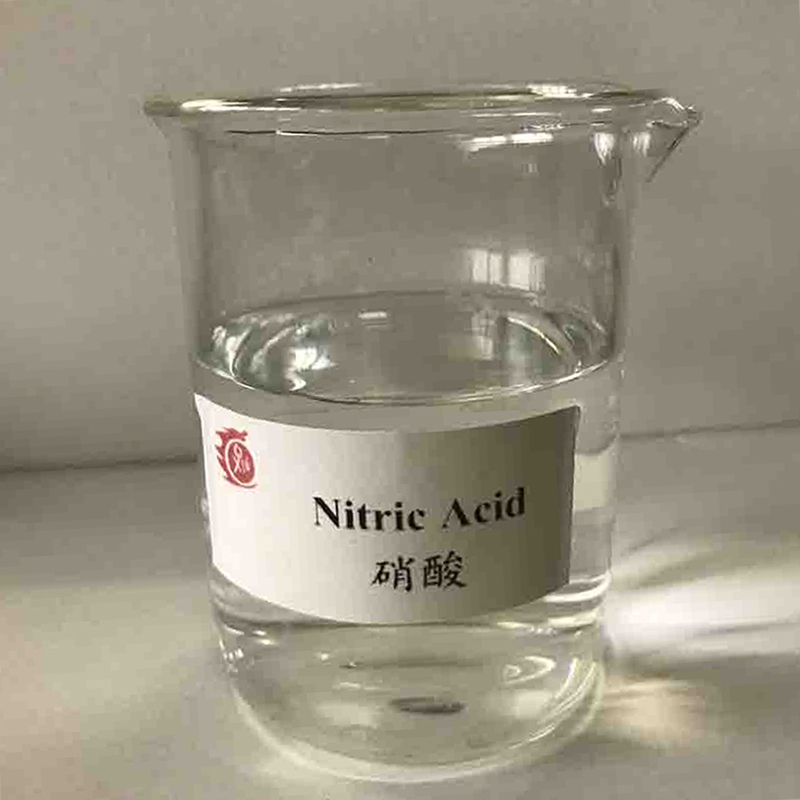
You must evaluate acids by contrasting their dissociation behaviors. Compare our core strong acid to a common weak industrial acid. We can look at acetic acid as a prime example. Acetic acid only partially dissociates in water. It leaves many intact molecules floating around the solution. Conversely, nitric acid fully breaks down into active ions. This difference fundamentally changes how you design a manufacturing process.
Complete dissociation supercharges your overall process efficiency. You need significantly less volume of a strong acid to achieve your target pH. Contact time shrinks drastically when ions are freely available. Manufacturing cycles speed up. Engineers can design smaller reaction vessels. Weak acids require massive tanks and prolonged soaking times to achieve similar results.
Using a concentrated strong acid deeply impacts your financial bottom line. You might initially pay a higher price per gallon for strong acids. However, you use far less raw material per batch. This favorable cost-to-yield ratio improves profitability. You must also factor in waste neutralization. Neutralizing a small volume of strong acid waste is often simpler. Managing massive vats of weak acid effluent drains operational budgets.
Evaluation Dimension | Nitric Acid (Strong) | Acetic Acid (Weak) |
|---|---|---|
Dissociation | Complete (~100%) | Partial (<5%) |
Process Volume Required | Very Low | High |
Reaction Speed | Immediate / Aggressive | Slow / Gradual |
Waste Management | Low volume, high hazard | High volume, moderate hazard |
Calling it a strong acid only tells half the story. The term merely describes hydrogen ion donation. You must manage its secondary, often more dangerous characteristic. HNO₃ acts as a remarkably powerful oxidizing agent. It strips electrons from other substances rapidly. This dual threat complicates handling far beyond standard acidic concerns.
This oxidizing nature dictates strict material compatibility limitations. It reacts violently with many common organic materials. You cannot treat it like hydrochloric or sulfuric acid. If it touches organic solvents, it can cause immediate combustion. Wood, paper, and certain plastics will degrade or ignite upon contact. You must enforce absolute separation in your storage facilities to prevent catastrophic fires.
Regulatory bodies take this dual threat extremely seriously. OSHA and EPA frameworks outline specific mandates for strong oxidizers. You must store them away from flammables, bases, and reducing agents. Inspectors will cite facilities that place oxidizers near combustible materials. Compliance requires rigorous hazard assessments and specialized infrastructure.
Storing it in standard flammable liquid cabinets.
Using organic spill absorbents (like sawdust) instead of inert materials.
Assuming standard acid-resistant gloves can withstand prolonged oxidizer exposure.
Finding the right chemical partner dictates your operational success. You must match the exact concentration to your specific application. Purchasing the wrong grade wastes money and introduces severe safety risks. The commercial market categorizes solutions based on purity and water content.
We can break down standard commercial availability into distinct solution categories. First, consider Standard Industrial Grade. This typically sits around 68% concentration. It represents the azeotropic mixture. This grade is optimal for general manufacturing and metal passivation. Second, look at Fuming grades. These exceed 86% concentration. They come in white and red varieties. Fuming grades are specialized for explosives, aerospace propellants, and strict nitration reactions.
Batch-to-batch consistency: Demand verifiable Certificates of Analysis (CoA) for every shipment.
HazMat capabilities: Ensure they possess supply chain transparency and legal hazardous materials shipping licenses.
Appropriate packaging solutions: Require specialized stainless steel or specific fluoropolymers. Explicitly avoid standard plastics that degrade under oxidative stress.
Stabilization methods: Ask how the supplier prevents degradation and gas buildup during transit.
Grade Type | Typical Concentration | Primary Industrial Applications |
|---|---|---|
Dilute / Reagent | 10% - 30% | Laboratory analysis, light cleaning, pH adjustment. |
Standard Industrial (Azeotropic) | 67% - 68% | Fertilizer production, stainless steel passivation, etching. |
White Fuming (WFNA) | > 98% | Explosives manufacturing, specialized nitration. |
Red Fuming (RFNA) | > 86% (with dissolved NO₂) | Aerospace propellants, rocket fuel oxidizers. |
Scaling your chemical usage demands thorough facility preparation. You cannot simply place a drum of nitric acid on the factory floor. Proper infrastructure separates safe operations from major industrial accidents. Facility managers must audit their physical space before accepting any chemical deliveries.
Your facility readiness dictates your safety baseline. You need dedicated, oxidizer-safe acid cabinets. Secondary containment is non-negotiable to prevent catastrophic floor spills. You must install highly specific ventilation systems. These systems capture dangerous nitrogen oxide (NOx) fumes. Standard exhaust fans will degrade quickly if they lack corrosion-resistant coatings.
You must enforce strict handling protocols on the floor. Establish uncompromising baseline requirements for Personal Protective Equipment (PPE). Workers must wear unvented splash goggles and heavy-duty acid-resistant aprons. Require specific glove materials. Heavy-duty neoprene or butyl rubber provide adequate protection. Never allow standard thin nitrile gloves during high-concentration handling.
Do not overlook your disposal operations. Neutralizing strong acid waste streams creates a heavy operational burden. You must achieve strict environmental compliance before releasing any effluent. Plant operators often use sodium hydroxide or lime for neutralization. However, this process generates immense heat. Operators must cool the reaction carefully to prevent boiling and hazardous splashing.
The chemical classification of HNO₃ dictates your entire operational strategy. Its status as a strong acid provides immense utility for rapid, predictable manufacturing reactions. However, its secondary role as a powerful oxidizer mandates strict, non-negotiable handling requirements. You cannot treat it like other common industrial chemicals.
Decision-makers must rely on sound shortlisting logic. Audit your current infrastructure thoroughly. Check your storage cabinets, ventilation, and spill response kits for strong-oxidizer compatibility. Do this before initiating any procurement orders. Discovering infrastructure gaps after delivery invites unacceptable regulatory and physical risks.
Take immediate action to secure your supply chain safely. Consult directly with a specialized industrial chemical supplier. Have them audit your facility and process goals. They will help you match the precise concentration and purity grade to your exact manufacturing needs. Proper alignment ensures high yields while safeguarding your workforce.
A: Yes. Complete dissociation in aqueous solutions is the exact scientific definition of a strong acid. Every molecule splits apart, resulting in exceptionally high concentrations of reactive hydrogen ions.
A: The pH depends on the exact molarity of the solution. However, for standard industrial concentrations (like 68%), the pH is extremely low, generally sitting well below 1.0. This low pH confirms its aggressive acidic strength.
A: Classification relies on the percentage of molecules that split into ions. Acetic acid only partially dissociates, leaving most molecules intact. HNO₃ achieves complete dissociation, releasing all possible hydrogen ions into the solution.
A: No. It must be isolated. While it is a strong acid, it is also a powerful oxidizer. Mixing it with organic acids (like acetic acid) or specific reducing agents can trigger violent reactions, toxic gas release, or spontaneous combustion.


