
Views: 0 Author: Site Editor Publish Time: 2026-06-15 Origin: Site


In modern manufacturing, material processing, and large-scale agriculture, few chemicals drive production quite like nitric acid. This highly reactive compound sits at the core of heavy industry. It powers everything from heavy-duty fertilizer creation to the intricate etching of silicon wafers. Its unique chemical structure enables rapid reactions across multiple industrial sectors.
However, you must immediately distinguish between industrial HNO₃ and dietary nitric oxide supplements. They serve entirely different purposes and cater to completely separate search intents. For facility managers and procurement teams, selecting the correct chemical grade is a critical operational decision. You must navigate severe implementation risks, stringent storage protocols, and complex supplier evaluations. These steps ensure safe operational integration and prevent costly manufacturing downtime.
In this guide, we explore the exact commercial applications of this powerful acid. You will learn how to evaluate purity grades for your specific facility needs. Finally, we break down actionable strategies for safe handling, regulatory compliance, and reliable sourcing. We will guide you through the decision-stage problems procurement teams face daily.
Nitric acid is a highly corrosive mineral acid and powerful oxidizing agent, strictly regulated for industrial, laboratory, and agricultural use.
Core commercial applications depend heavily on concentration grades, ranging from fertilizer manufacturing (lower purity) to aerospace metal passivation and semiconductor etching (ultra-high purity).
Safe implementation requires stringent facility compliance, specialized PPE, and dedicated storage protocols to mitigate severe reactivity risks.
Supplier evaluation must prioritize verified Certificates of Analysis (CoA), secure supply chain logistics, and compliance with hazmat transport regulations.
Engineers and chemists frequently face a choice when selecting industrial chemicals. Why should your facility specify nitric acid over alternatives like hydrochloric acid or sulfuric acid? The answer lies in its unique chemical profile. It acts simultaneously as a strong mineral acid and a incredibly powerful oxidizing agent. This dual functionality allows it to break down complex molecular bonds rapidly.
When evaluating performance against alternatives, this dual action becomes a decisive factor. Consider these success criteria for choosing HNO₃ in manufacturing:
Superior Metal Dissolution: It readily dissolves almost all common metals except noble metals like gold and platinum.
Chloride-Free Processing: Unlike hydrochloric acid, it leaves a clean, highly oxidized surface without leaving corrosive chloride residues behind.
Controlled Passivation: It selectively targets and removes free iron from alloy surfaces while leaving chromium intact.
Facility managers must also weigh the cost-to-outcome ratio. Some proprietary etching formulas or specialized cleaning agents present lower acute safety risks. However, they often lack economic viability at a massive industrial scale. Using raw nitric acid requires substantial upfront investment in safety infrastructure and compliance tracking. Yet, the chemical efficiency and unparalleled reaction speeds usually offset these initial setup costs. It delivers predictable, highly repeatable outcomes for continuous production environments.
The agricultural sector consumes the vast majority of globally produced HNO₃. Manufacturers use it as the primary chemical precursor in producing ammonium nitrate. This process involves neutralizing the acid with ammonia. The resulting compound delivers highly concentrated nitrogen to depleted soils, significantly boosting crop yields.
This application demands massive scale. Fertilizer plants rarely require ultra-high purity grades. Instead, they utilize standard industrial concentrations, typically around 60%. At this scale, the primary operational focus shifts toward bulk pipeline transport, thermal management during the exothermic neutralization process, and bulk storage logistics.
In metallurgy, precision matters immensely. Manufacturers rely heavily on this acid to passivate stainless steel. During machining or fabrication, free iron particles embed themselves into the steel surface. If left untreated, these particles cause localized rust and pitting. Exposing the steel to a controlled acid bath dissolves this tramp iron. Furthermore, the oxidizing nature of the acid promotes the immediate formation of a passive, protective chromium-oxide layer.
This process is non-negotiable for highly regulated industries. Aerospace components, implantable medical devices, and food-grade fabrication equipment require flawless passivation. A common mistake in this sector involves using incorrect concentrations. If the bath is too weak, it fails to remove the iron. If it is too strong, it can flash-etch the metal surface, ruining tight mechanical tolerances.
The semiconductor industry relies on electronic grade versions of this chemical. Fabrication facilities use it extensively for wet etching silicon and cleaning raw wafers. Microelectronics require an environment virtually free of trace metals or particulate matter. High-purity nitric acid removes organic contaminants and unwanted metallic impurities from silicon substrates.
It often acts in concert with hydrofluoric acid to form specialized etching solutions. Together, they dissolve silicon rapidly and uniformly. This precision enables the creation of the microscopic circuitry found in modern computer processors and memory chips.
Organic chemistry heavily leverages nitration processes. By adding a nitro group (NO₂) to organic molecules, chemists create entirely new compounds. Manufacturers use these nitration processes to produce commercial polyurethanes, artificial dyes, and aniline.
Additionally, it is the cornerstone chemical for producing regulated explosive materials. Trinitrotoluene (TNT) and Research Department Explosive (RDX) both require highly concentrated fuming grades for their synthesis. Because of this specific application, regulatory agencies maintain strict oversight over the chemical's sale, transport, and facility storage. Purchasing agents must maintain flawless documentation when acquiring high-concentration batches.
Procurement teams must match the chemical grade precisely to their operational use case. Specifying a purity level higher than necessary wastes budget. Conversely, selecting an inferior grade can cause catastrophic batch failures.
Industrial Grade (50-70%): This remains the standard workhorse for agricultural fertilizers, basic metal cleaning, and general chemical synthesis. It represents the most cost-effective option for bulk processing. It contains trace impurities but perfectly suits applications where microscopic contamination does not impact the final product.
Reagent Grade / ACS (Typically 68-70%): Analytical laboratories and precision manufacturing facilities require this classification. The American Chemical Society (ACS) sets rigorous standards for allowable trace impurities. If you manufacture medical devices or pharmaceuticals, trace heavy metals can ruin a production run. Reagent grade guarantees a highly controlled chemical profile.
Fuming Nitric Acid (>86% to 99%): This category encompasses White Fuming Nitric Acid (WFNA) and Red Fuming Nitric Acid (RFNA). These represent niche, extremely high-volatility compounds. RFNA contains dissolved nitrogen dioxide, giving it a characteristic red color and aggressive oxidizing power. Industries use fuming grades for aerospace liquid propellants and intense organic nitration processes.
Use the following framework to match your operational purity requirements with budget and storage constraints. High concentrations demand significantly higher security and specialized storage materials.
Grade Classification | Typical Concentration | Primary Use Case | Cost Profile |
|---|---|---|---|
Industrial | 50% - 70% | Fertilizers, large-scale metal pickling | Low / Bulk Pricing |
ACS / Reagent | 68% - 70% | Medical passivation, lab analytics | Moderate to High |
Electronic | 70% (Ultra-pure) | Semiconductor wet etching | Very High |
Fuming (WFNA/RFNA) | 86% - 99% | Aerospace propellants, explosive synthesis | Variable / Heavily Regulated |
Decision Logic Chart: Sourcing the Right Grade | |
|---|---|
If your priority is: Lowest price for massive scale (Agriculture) | Action: Source 60% Industrial Grade in bulk rail or tanker trucks. |
If your priority is: Medical or Aerospace compliance | Action: Source 70% ACS Grade with a verified Certificate of Analysis. |
If your priority is: Microchip fabrication yield | Action: Source Electronic Grade specifically packaged in cleanroom materials. |
Introducing HNO₃ into your facility introduces significant hazard vectors. Safe implementation requires rigorous engineering controls, strict administrative procedures, and proper personal protective equipment (PPE). You must respect its dual nature as both a corrosive liquid and a reactive oxidizer.
Storage infrastructure demands careful planning. You cannot store this chemical in standard flammable material cabinets. It requires dedicated, corrosion-resistant acid cabinets. Facilities must implement secondary containment trays to catch potential leaks. The 110% containment rule serves as a standard best practice. This means the secondary tray must hold 110% of the volume of the largest primary container.
A common operational mistake involves placing it near organic solvents, alcohols, or reducing agents. Because it is a powerful oxidizer, contact with organics can trigger spontaneous, violent combustion. Keep it isolated from all incompatible materials.
Handling realities dictate specialized gear. The Occupational Safety and Health Administration (OSHA) sets the Permissible Exposure Limit (PEL) at a very low 2 parts per million (ppm) over an 8-hour shift. Inhalation of the fumes causes severe respiratory tract damage. Delayed pulmonary edema can occur hours after initial exposure.
Standard latex or nitrile gloves offer inadequate protection against high concentrations. Facilities must provide specific protective gear:
Heavy-duty butyl rubber or fluorinated rubber gloves.
Full-length, acid-resistant aprons.
Fitted chemical splash goggles combined with full-face shields.
Properly ventilated fume hoods for any manual pouring or dilution tasks.
Even with excellent protocols, spills happen. Facilities must establish baseline requirements for emergency response. Never use organic materials like sawdust to absorb a spill, as this will cause a fire. Instead, use specific neutralization protocols to comply with OSHA and EPA standards.
Follow these standardized incident management steps during a spill:
Evacuate the immediate area and secure the perimeter against unprotected personnel.
Don appropriate PPE, including respiratory protection if fumes are visible.
Contain the liquid perimeter using inert, inorganic absorbent materials like dry sand or specialized silica pads.
Apply a weak base, such as calcium carbonate or soda ash, to the spill. Calcium carbonate is preferred over strong bases to prevent violent exothermic heat generation.
Collect the neutralized sludge using non-sparking tools and place it into chemically compatible, clearly labeled hazardous waste drums for professional disposal.
Choosing a chemical supplier goes beyond securing the lowest per-gallon price. You must evaluate their regulatory transparency, logistical capabilities, and overall supply chain stability. A weak link in any of these areas creates massive liability for your facility.
Instruct your procurement team to demand impeccable documentation. Suppliers must provide up-to-date Safety Data Sheets (SDS) matching the specific concentration ordered. More importantly, require a batch-specific Certificate of Analysis (CoA) before accepting delivery.
When reviewing a CoA, look for:
Exact percentage assay to confirm concentration.
Specific gravity measurements.
Parts-per-million (ppm) breakdowns of trace impurities like heavy metals or chlorides.
A clear date of manufacture and lot number for traceability.
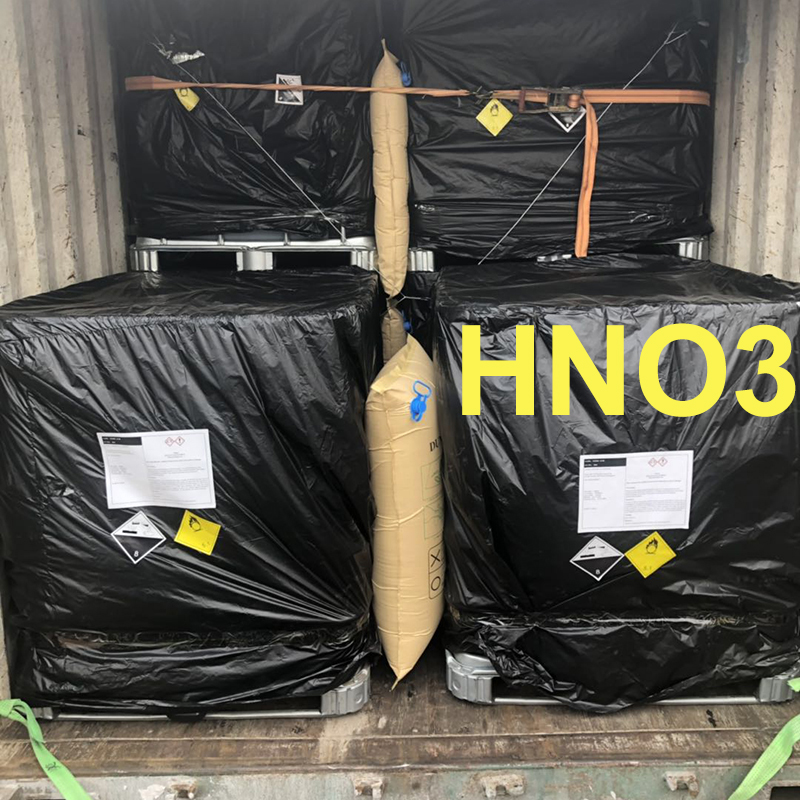
Evaluate how the vendor handles highly regulated hazmat shipping. The Department of Transportation (DOT) categorizes it under Class 8 (Corrosive) and often Class 5.1 (Oxidizer). Transport logistics vary wildly based on concentration. Lower concentrations safely travel in specific high-density polyethylene (HDPE) drums or totes. However, fuming grades degrade standard plastics rapidly. They require heavy glass carboys, specialized Teflon-lined containers, or specific stainless steel drums. Ensure your supplier uses UN-rated packaging compliant with current shipping regulations.
Finally, assess the vendor's ability to scale with your production demands. Frequent stockouts paralyze manufacturing floors. Ask potential suppliers about their typical lead times and local inventory buffers. Evaluate their bulk delivery options. Transitioning from 55-gallon drums to 275-gallon Intermediate Bulk Containers (IBC totes) can drastically reduce material handling risks and lower your unit costs. Ensure the vendor guarantees consistent supply agreements to protect your operations against market shortages.
Specifying nitric acid requires balancing its incredible performance benefits against rigorous safety and logistical demands. It remains irreplaceable for fertilizer production, stainless steel passivation, and semiconductor manufacturing. However, its reactive nature demands total respect.
We recommend conducting a thorough audit of your current chemical procurement process. Review your facility's safety infrastructure, particularly your acid storage cabinets and ventilation systems. Verify that your spill kits contain proper inorganic absorbents and weak base neutralizers. Finally, contact a certified distributor today to request a material quote or a sample Certificate of Analysis for your required purity grade.
A: They are entirely different substances. Nitric acid (HNO₃) is a highly corrosive, liquid industrial chemical used for metal etching, fertilizers, and manufacturing. Nitric oxide (NO) is a gas produced naturally in the human body. It is often associated with biological functions and dietary supplements designed to improve blood flow. Do not confuse the two.
A: You must handle it using specific compatible materials. Safe options include specific stainless steel alloys (like 304L and 316L), heavy glass, and fluoropolymers like PTFE (Teflon). You must strictly avoid standard plastics, rubber, copper, brass, and standard carbon steel, as the acid will aggressively degrade or dissolve them.
A: First, put on appropriate protective gear. Never use organic materials to absorb it. Safely neutralize the spill using a weak base, such as calcium carbonate, sodium bicarbonate, or soda ash. Apply the base slowly. Be prepared for an exothermic reaction that releases heat and potentially toxic carbon dioxide or nitrogen oxide gases.
A: Yes. Because bad actors can use high concentrations of it to manufacture explosives and illicit drugs, it is subject to strict tracking. Local, state, and federal authorities enforce rigorous reporting, storage, and purchase restrictions. Buyers typically must provide legitimate business credentials and end-use declarations to certified distributors.


